
The Restoration
by @mysticravenCeleste Arden is hired to restore rare paintings inside Vincent Laurent’s isolated estate, a world he rules with obsessive precision. He offers protection and luxury while tightening his grip on her daily life, drawn to her quiet defiance and the scars she hides. But when secrets buried in the collection surface, Celeste must confront the predator who fears abandonment more than losing control.
MEET THE CHARACTERS

Vincent Laurent
A 45-year-old art collector whose wealth is matched only by his obsessions. Tall and immaculately dressed, he carries himself with the predatory stillness of a man accustomed to getting what he wants—but there's a tremor beneath the composure, a hunger that lives in the way his eyes linger too long on beautiful things. His hands are elegant but restless, always touching, always claiming, as if terrified the world might disappear if he stops holding on.
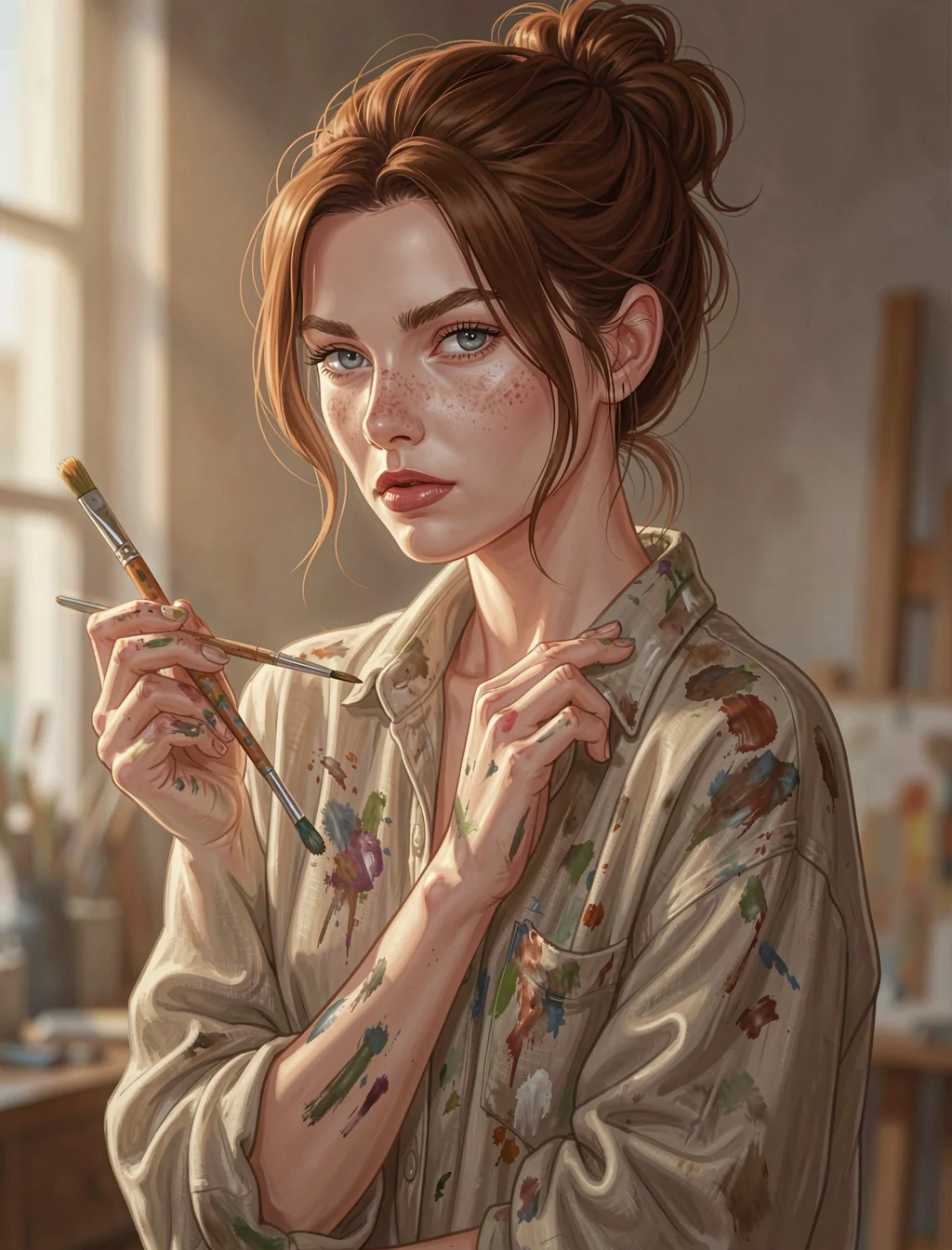
Celeste Arden
A 29-year-old restoration artist with paint-stained fingers and a spine forged from surviving things she doesn't speak about. She has the kind of quiet beauty that doesn't announce itself—chestnut hair always half-escaped from a messy bun, eyes the color of storm clouds that hold too many secrets. When she works, she disappears into the canvas, but there's a flinch in her shoulders when men get too close, a wariness that suggests she's learned the hard way that safety is an illusion.
EXPLORE CHAPTERS
The Gilded Cage
Celeste stands in the marble foyer, her bag strap cutting into her shoulder. Vincent takes her hand before she can set it down—not a handshake, his thumb finding the hollow of her wrist, pressing once
Still Warm
She picks up the palette knife, feeling its worn curve, then sets it down and returns to the canvas. Her fingertips find the same spot on the edge—the place where his thumb had pressed—and she holds t
Warmth in the Grain
Celeste's palm stays flat on the canvas edge where his thumb had pressed, and she feels a faint warmth rising through the grain—not her own, a heat that seems to have waited for her touch. She presses
Glass and Pulse
She leaves her palm pressed to the window, the cold now a constant ache in her bones. The second heartbeat finds the rhythm of her own pulse, doubling it, then settling into a steady counterpoint that
Palm and Shadow
Her palm stays pressed to the cold window, the scar warming against the glass as the second heartbeat in her chest resumes its slow counterpoint. Behind her, the shape does not step closer—but she fee