The palette knife sat where she'd left it, the blade catching a sliver of afternoon light. She picked it up, ran her thumb along the worn curve of the handle—someone had held this for years, decades, the wood polished to a smoothness that felt almost liquid. She set it down again, precise, aligned with the edge of the worktable like the other tools. Like she was proving something to the empty room.
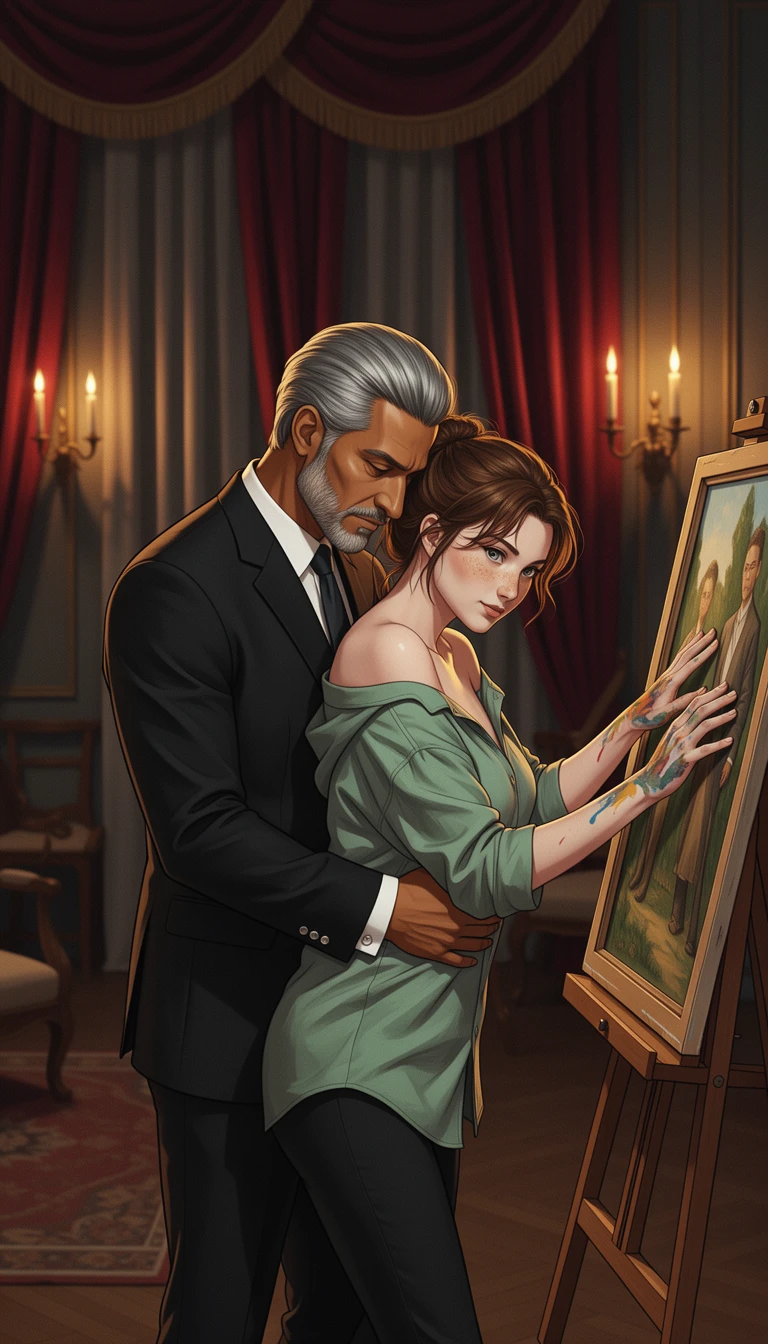
She turned back to the canvas. Her fingertips found the same spot on the wooden edge—the place where his thumb had pressed, she was certain of it, the grain still holding the ghost of his warmth. She didn't hover. Didn't push. Just let her fingers rest there, her own heat seeping into the wood, mingling with whatever trace of him remained. The silence thickened, pressed against her ears like a held breath.
She was listening for his footsteps. The realization arrived without permission—she'd been listening since the door clicked shut, her body tuned to the hallway beyond, waiting for the rhythm of his stride to return. She pulled her hand back, shoved it into her pocket. The canvas stared at her, patient and empty.
The Fragonard. Third door on the left. She could hear his voice saying it, measured and deliberate, each word placed like a brushstroke. She hadn't moved toward the door yet. Hadn't even looked at it. The studio felt smaller now, the light shifting as the afternoon leaned toward evening, and she was still standing at the easel, her hand in her pocket, her pulse a quiet drum against her ribs.
She crossed to the worktable instead, ran her fingers along the line of tools—brushes with stiff bristles, a jar of solvent, a roll of cotton cloth. Professional. Familiar. She picked up a brush, tested the give of the bristles against her palm, set it back. The gesture was muscle memory, the way she anchored herself before beginning any restoration: inventory the tools, map the space, breathe.
The third door was a rectangle of darker wood at the edge of her vision. She didn't look at it. Instead, she moved to the cot pushed against the wall—the single unmade mattress, the thin pillow, the rough blanket folded at the foot. Someone had slept here. Recently. The sheets were rumpled, the indent of a body still visible in the thin mattress.
She didn't sit. Didn't touch it. Just stood there, looking at the evidence of a life reduced to a cot in a studio, and felt something twist in her chest—recognition, maybe, or the sharp edge of a mirror held too close. She'd slept in worse places. Smaller rooms. Rooms with locks on the outside.
Her hand found the edge of the blanket, rubbed the fabric between thumb and forefinger. Cheap wool, worn soft at the folds. She let it drop.
The light through the windows had shifted to amber, long and low, casting the studio in a honeyed glow that made the dust motes visible, suspended and spinning. She watched them for a moment, letting herself be nowhere, be nothing, just a body in a room with light and dust and the smell of turpentine.
A floorboard creaked in the hallway. Her breath caught. She held it, waiting, her body turned toward the door before her mind had finished deciding to move. The creak didn't repeat. The silence settled back, heavier than before.
She let her breath out slowly, and her hand found the edge of the canvas again, fingers brushing the wood where his thumb had been. Still warm. Or maybe that was her own heat now, impossible to tell where he ended and she began. She pressed her palm flat against the grain, held it there, and did not look at the third door.
She turned.
The motion was deliberate, almost ceremonial—her palm leaving the canvas edge, her shoulders squaring, her gaze traveling across the studio as if measuring the distance one last time before crossing it. The third door sat at the edge of her vision, dark wood against darker shadow, the frame slightly warped from decades of coastal humidity. She hadn't looked at it directly since Vincent left. Had kept it in her periphery like something dangerous that could be charmed by inattention.
Now she looked.
The door was closed. Of course it was. But the handle gleamed—brass, worn bright at the curve where countless hands had grasped it, polished by use into something almost golden. She could see the faint smear of oil where someone's fingers had turned it last. Vincent's fingers. The thought arrived with a certainty she couldn't justify and didn't need to. She knew the shape of his hands now. Knew the weight of them.
She took a step toward the door. The floorboard creaked—the same one that had shifted under her feet when she'd first entered, the one that had made her pause and look back at the easel. The sound was different from the hallway creak she'd heard minutes ago. Thinner. A question, not an answer.
The third door waited. She could open it. Walk through. Find the Fragonard and begin the work she'd been hired to do. The thought was clean and professional, a rope she could hold onto in the current of everything else. But her hand stayed at her side, fingers curling into her palm, and she didn't reach for the handle.
She was waiting. Listening again. The silence in the studio had changed—no longer expectant, but watchful, as if the room itself was holding its breath alongside her. The dust motes still spun in the amber light. The cot still held the shape of a body. The palette knife still lay aligned with the worktable edge. Everything was exactly as she'd left it, and nothing was the same.
Her thumb found the scar on her wrist, the one she'd earned at nineteen in a room she didn't think about. The pressure was grounding, a physical anchor in the tide of the moment. She pressed harder, felt the old tissue give slightly, and let her breath out in a long, steady stream.
The third door didn't move. Didn't offer anything. It was just a door, wood and brass and intention, and she could walk through it or she could walk away, and either choice would change something she couldn't name yet. She could feel the weight of that knowledge settling into her bones, heavy and quiet and absolute.
She didn't walk away. She also didn't reach for the handle. She stood in the amber light, her thumb pressed against the scar on her wrist, and let herself feel the shape of the decision without making it. The door waited. The silence waited. And somewhere in the house, she could almost feel him waiting too, patient and predatory, giving her room to choose.
Her hand dropped from her wrist. She turned back to the easel. The third door remained closed behind her, a question she'd opened without touching it, a threshold she'd crossed without moving an inch.
Her fingers found the brass handle before her mind caught up with the decision. The metal was warm—warmer than it should have been, as if someone had been standing here moments ago, palm pressed to the same curve, waiting. She could feel the oil from Vincent's skin, a faint slickness against her pads, and she didn't pull away.
The door didn't move. She wasn't turning the handle—just touching it, her thumb resting in the groove where countless hands had gripped before hers. The brass held the heat of the afternoon, the memory of every person who'd stood here and wondered what lay beyond. She wondered if any of them had hesitated like this. If any of them had felt the weight of a choice pressing against their sternum.
Her reflection ghosted in the polished metal—a distorted version of herself, gray eyes stretched and warped, chestnut hair a dark smear. She looked like someone she didn't recognize. Someone who stood in strangers' studios and pressed her palm where their hands had been. Someone who listened for footsteps in the silence.
The scar on her wrist ached, a phantom memory of pressure. She didn't look at it. Kept her eyes on the door, on the grain of the wood, on the thin line of light beneath the frame that suggested a room beyond, waiting, patient, full of Fragonard and secrets and the shape of Vincent's obsession.
She could open it. Just turn her wrist, feel the mechanism give, step through. The thought was simple, almost seductive in its clarity. She was here to work. The Fragonard was her job. Everything else—the cot, the silence, the way his voice had dropped when he said her name—was noise she could filter out.
Her fingers tightened on the handle. Not turning. Just holding. The brass bit into her palm, warm and unyielding, and she felt the tremor run up her arm—not fear, not quite, but something adjacent to it. The body recognizing a threshold before the mind could name it.
Behind her, the studio held its breath. The easel, the worktable, the cot with its rumpled sheets—all of it waiting for her to commit to one direction or the other. She could feel the weight of the choice in her chest, a physical pressure behind her ribs, and she didn't move.
Her thumb traced the curve of the handle once. A question. A farewell. A promise she wasn't ready to make.
She let go.
The brass cooled instantly, the ghost of her warmth fading into the metal, joining the layers of everyone who'd stood here before. She stepped back, her palm tingling where the handle had pressed, and the third door stood closed and silent and unchanged, a question she'd touched but not answered.
Her palm found the brass again. The metal had cooled—not cold, but neutral now, stripped of her warmth and his, returned to its own temperature. She pressed flat, her fingers splayed across the curve, and felt the grain of old polish beneath her skin. The door didn't move. Didn't offer anything. Just stood there, wood and intention, waiting for a decision she wasn't ready to make.
She held the position longer than necessary. Her palm against the handle, her arm straight, her shoulder locked in a posture that could have been preparation or surrender. The scar on her wrist pressed against the metal, a thin line of raised tissue that she'd earned in a room she didn't think about, and she felt the old ache rise—not pain, exactly, but memory, the body's way of keeping score.
A floorboard creaked. Not in the hallway this time. Under her feet. The same board that had announced her presence when she'd first entered the studio, the one that had made her pause and look back at the easel. It creaked again, as if the house itself was asking her to make up her mind, to commit to one direction or the other, to stop standing in the threshold and choose.
She didn't choose. She stayed, her palm flat against the brass, her breath slow and measured, and let the silence hold her. The light through the windows had shifted further toward evening—amber deepening to ochre, the dust motes catching fire in the dying sun. The studio was beautiful in this light, almost sacred, and she felt like an intruder in her own body, standing at a door she hadn't earned the right to open.
Her thumb traced the edge of the handle once. Not a question this time. Not a farewell. Just a touch, a recognition of the moment's weight, a small ritual of acknowledgment. She could feel the shape of Vincent's hand in the curve—the way his fingers would wrap around the brass, the pressure of his grip, the certainty in his movement. She imagined him standing here, palm against the metal, the same hesitation she felt now. The thought was unsettling and intimate in equal measure.
She pulled her hand back slowly, her palm tingling where the brass had pressed, and let her arm fall to her side. The door was still closed. Still waiting. Still a question she'd touched twice now and refused to answer. She could feel the weight of that refusal in her chest, a pressure behind her ribs that had nothing to do with the Fragonard or the work she'd been hired to do.
Her eyes found the easel across the room, the empty canvas catching the last of the amber light. The edge where Vincent's thumb had pressed was a darker line against the pale wood, a shadow that hadn't been there before. Or maybe it had. Maybe she was just seeing it now, the way light revealed what had been present all along.
She crossed to the easel, her steps measured and deliberate, and reached for the canvas. Her fingers found the same spot—the place where his thumb had pressed, where her own warmth had soaked into the grain—and she held them there, not hovering, not pushing, just letting her palm rest against the wood. The surface was cool now. Neutral. Impossible to tell where he ended and she began.
She didn't turn back to the third door. Didn't look at it. She kept her hand on the canvas, her eyes on the empty expanse of linen, and let her breath settle into the rhythm of the room. The silence had changed again—no longer watchful, but patient, as if the house had accepted her hesitation and was willing to wait.
Her thumb pressed into the wood once, a small pressure, almost unconscious. The edge of the canvas held her weight. The third door stayed closed behind her. And somewhere in the house, she could feel him waiting too—patient, predatory, giving her room to choose, knowing that every moment she didn't open the door was itself a choice.