
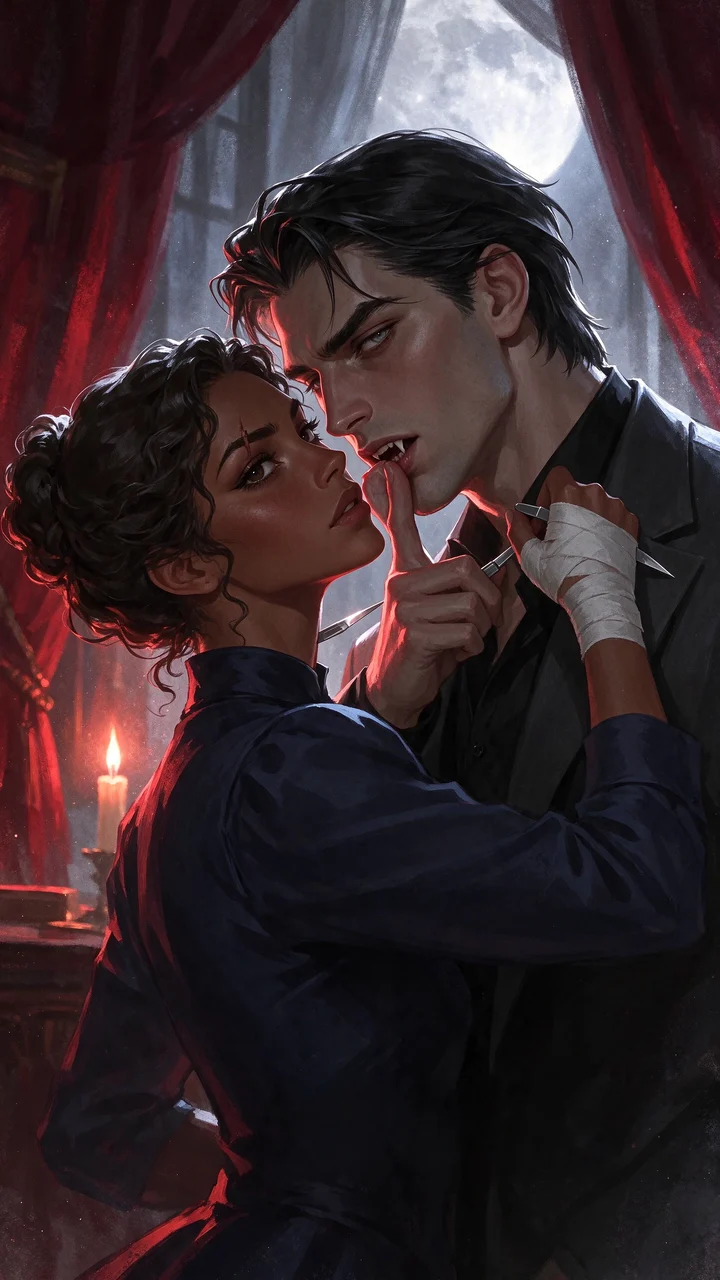
“You dropped something, doc.”
Josette didn’t turn around. She had the deadbolt key in the lock and a double shift in her shoulders, and she had not dropped anything. She knew exactly what she carried: keys, penlight, a phone on four percent.
“Clinic’s closed,” she said. “Urgent care on Claiborne’s open till six.”
“We’re not sick.”
No, she thought. You’re not.
She turned the key. The bolt slid home with its old pawnshop clunk, the sound it had made when the place sold wedding rings and trumpets instead of insulin and suture kits. Then she turned around, because the only thing worse than looking at men like this was not looking.
Three of them stood on her steps. Rain sheeted off the tin awning, and the neon cross above the door buzzed and stuttered, painting them red, then dark, then red. Good coats. Wet shoes that cost more than her rent. The one in front had a face she’d have called pleasant on a bus, and teeth she’d have called something else.
“We’re looking for a friend,” he said. “He came this way. Bleeding.”
“I see a lot of bleeding. It’s the job.”
“Tall. Rude. Expensive.”
“Haven’t seen him.”
The second one had come around her left side, and she hadn’t seen him move. That was what six years of night work on this street had taught her about them: you never saw them move. You saw the after. The girl who came in grey and giggling with two neat holes she swore were from a curling iron. The old man who sold to them on Tuesdays and couldn’t remember Wednesdays.
“Get off my steps,” Josette said.
She had her keys between her fingers. She knew how stupid that was. She swung anyway, at the pleasant one’s eye, and he caught her wrist without looking and laughed. The quiet one took her left hand almost gently, turned it palm up, and drew one long fingernail across it.
It didn’t hurt at first. Cuts that clean never did. Then it burned, and her blood welled up black in the red light and ran off the heel of her hand onto the step.
“There,” the quiet one said, and lifted his wet fingers to his mouth. The others did the same, almost politely, the way men take canapés at a party. “Now we’ll all calm down.”
She stood with her hand open and dripping and thought, very clearly: oh no. Not for her. For them.
The quiet one went first. He made a small surprised sound, a hiccup, and touched his throat. Then the pleasant one’s smile slid sideways off his face, and dark lines came up under his skin, branching from his lips across his cheeks and down his neck in fine black lace, ink dropped into milk.
He reached for her. She stepped back. He fell.
Eleven seconds. She counted, because counting was what her body did with emergencies. Three men convulsed on the wet concrete with their heels drumming the iron rail, and then they didn’t, and the neon went red, dark, red over three faces gone grey and still.
Josette stood under the awning and listened to the rain hit tin.
Nineteen years old, an alley behind the Saint Claude bus stop, a stranger’s mouth at her neck and then gone. The next morning the paper said a man had been found dead of an apparent overdose, with unusual discoloration of the face. She had decided it was an overdose. She’d kept deciding it for twelve years.
“Okay,” she said aloud. “Okay.”
She knelt to check for pulses out of habit, and that was when the pile breathed.
It wasn’t one of the three. It was something under them. The quiet one had fallen across the alley mouth, half on top of a shape she’d taken for garbage bags, and the garbage bags had a hand. Long-fingered. The fingertips black and curved as fishhooks.
She hauled the dead man off. He was heavier than he looked, and cold.
The man beneath had been opened from collarbone to hip by claws that meant it. She could see the white gleam of rib through ruined charcoal wool, a waistcoat still buttoned over the wreck. Fine dark veins threaded his cheekbones and throat. His lips were drawn back from teeth too long to be teeth.
And his eyes were open. Gold, molten, fixed on her.
“Don’t,” he said. It came out wet. She couldn’t tell if he meant don’t touch me or don’t leave.
Tall. Rude. Expensive. They’d come to finish him and found her instead.
Every rule she had made about this street said walk away. Call nobody. Hose down the step at dawn.
Josette wrapped her bleeding hand in her bandana, knotted it with her teeth, and got her arms under his.
. . .
“You said supplies,” Odile said from the doorway. “You did not say vampire.”
She had a crowbar in one hand and a red cooler in the other, rain streaming off her paramedic jacket, bleached curls plastered flat. She’d had to step over three bodies to get in.
“Shut the door.”
“Jo.”
“The door, Odile.”
Josette was kneeling on the treatment room floor because she hadn’t been able to lift him onto the table. The breaker had tripped around her second hour, so she was working with the silver penlight clamped in her teeth and the neon bleeding red through the blinds. Her left hand was rewrapped in clean white gauze, and she kept it tucked against her ribs, as far from his mouth as the room allowed.
Fourteen stitches in the deepest part of his chest. The rest packed and taped. None of it should have mattered against a wound like that, except that under her hands the edges were drawing together on their own, slow as a tide pool filling.
Odile flipped the cooler lid. Six bags of O-neg, frosted.
“Expiring Friday. I signed them out as wastage, which is a firing offense, which I want noted.” She pointed the crowbar at the floor. “Now let him die.”
“No.”
“He’s not a person.”
“He’s breathing.”
“So’s a shark.”
Josette took the penlight out of her mouth. “Hand me a bag.”
“There are three dead men on your steps, and I’m guessing you didn’t do it with your keys. Somebody wanted him dead bad enough to send three. When his people come, they’ll find you with your hands inside him.”
“Then they’ll find I did good work.”
“That’s not funny.”
“It’s a little funny. Bag.”
Odile said a word her grandmother would have slapped her for and passed it over. Josette bit the port open and held it to his lips, and his mouth found it without his eyes opening.
“You’re going to die over a patient,” Odile said.
“That’s basically the oath.”
“It is not basically the oath.”
He took four bags. Somewhere in the third, the claws drew back into fingertips and the gold sank under his lids, and the black veins faded until he was only a man on a clinic floor: pale olive skin, black hair swept back and too long, a face cut from something harder than skin. Odile sat on the front desk with the crowbar across her knees and didn’t sleep. Neither did Josette.
At ten past six the blinds went from black to dishwater. Josette was writing his vitals on the back of an intake form, because she didn’t know what else to do with them, when she felt him look at her.
Storm-grey eyes now. Clear and wide awake.
He didn’t look at her face. He looked at the bandage on her left hand, at the small brown bloom where it had seeped through, and his stillness became something stiller.
“Mademoiselle,” he said quietly. His voice was low and courteous and much older than his face. “Who sent you to kill my family?”