
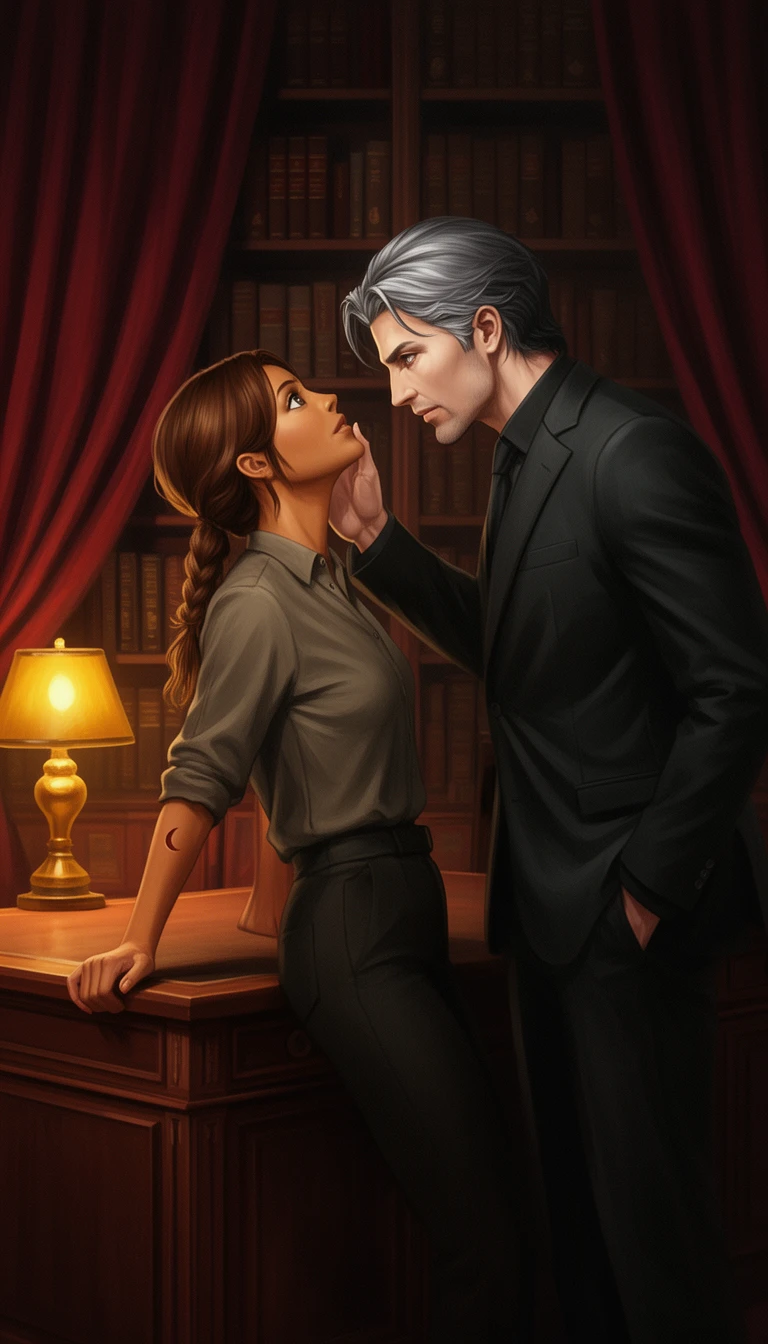
The question hangs between them, a living thing. The clock ticks once, twice. She doesn't breathe. His eyes haven't left hers, and she watches his throat work again—a slow, deliberate swallow, as if he's tasting the words she just spoke.
"What happens," he repeats, and his voice is quieter now, almost a murmur. "When staying becomes the thing you're running from." He doesn't look away. "I don't know. I thought I'd find the answer by the time I got here."
She shifts her weight. The bag strap cuts deeper, but she doesn't adjust it. "And did you?"
His mouth curves, but it's not a smile. "I found someone else asking the same question." He lifts his hand—slow, palm open, fingers loose—and stops it inches from her face. Not touching. Waiting.
Her breath catches. She feels it in her chest, a small hitch. His hand hovers there, close enough that she could lean into it, could press her cheek against his palm. She doesn't move.
"What are you afraid of?" she says. Her voice is steadier now, but only barely.
He lets his hand fall to his side. "That when I stop running, there's nothing left to find."
The clock ticks again. The hallway feels smaller. She can smell him—cedar, something clean and sharp—and the warmth of his body is a shape in the air between them.
"And what if there is?" she says. "What if stopping is the only way to find it?"
He looks at her for a long moment. Then he turns, just slightly, and gestures down the hall. "Third door on the right. Your quarters." He doesn't wait for her to answer. He walks back toward the study, and the door clicks shut behind him, leaving her alone in the silent hallway with the question still ringing in her ears.
She doesn't move. The study door is a slab of dark wood, grain swirling in the low light, and she stands with her hand frozen at her side, the question he left hanging still pulsing in the air. The bag strap burns. The hallway is silent except for the clock's steady tick from somewhere deeper in the house, and she can feel the shape of his absence through the door—the warmth he carried, the cedar-and-clean scent still clinging to the air where he stood.
She takes a breath. Lets it out slow.
Her hand lifts before she decides it will. Palm open, fingers loose—the same gesture he offered her, the one that stopped inches from her face. She presses it flat against the study door, and the wood is cool against her skin, solid, final. She feels the grain beneath her fingertips, a small ridge where two planks meet, and she doesn't push. Just holds it there. A question she can't speak. An answer she's not ready to hear.
The clock ticks three times.
She wonders if he's still standing on the other side. If he hears her breathing. If his hand is pressed to the same door, separated by inches of oak and the space between two people who have both admitted they're running.
Her palm leaves a faint print on the wood. She can see it in the dim light—the outline of her fingers, the heel of her hand, the slight smear where her skin met the grain. Evidence. She doesn't wipe it away.
"Third door on the right," she says to the empty hallway, and her voice sounds strange—too loud in the silence, too small for the weight of what she's carrying.
She lets her hand fall.
The bag shifts on her shoulder as she turns, and she feels the ache in her neck where the strap has been digging. She walks past the first door, the second. Her quarters stand at the end of the hall, closed, waiting. Behind her, the study is still. The clock keeps ticking.
She reaches her quarters door. Her hand closes around the brass knob, cool and solid, but she doesn't turn it. The hallway behind her is silent, the study door a dark rectangle at the far end, and she can still feel the warmth of his hand hovering inches from her face, the space where he almost touched her.
Her fingers leave the knob. She turns.
The carpet swallows her footsteps as she walks back down the hall. Past the second door, the first. The study door grows larger with each step, the grain of the wood resolving into the same ridges she pressed her palm against minutes ago. The faint print is still there—she can see it, the ghost of her hand on the oak.
She stops in front of it. The clock ticks somewhere deeper in the house, steady, unhurried. She wonders if he's still standing on the other side, if he heard her footsteps approach and stop. If he's watching the same door, waiting the same way she was waiting before she walked away.
She presses her ear to the wood.
The surface is cool against her skin. She holds her breath, and the silence on the other side is thick, layered—the crackle of embers in the fireplace, the faint rasp of fabric shifting, the almost imperceptible rhythm of someone breathing. He's there. He hasn't moved.
Her hand finds the door. Palm flat, fingers splayed, the same gesture from before. She doesn't push. She doesn't knock. She just holds it there, her ear pressed to the wood, her breath shallow, her heart beating a slow, heavy rhythm that feels too loud in the quiet hallway.
She can almost hear him thinking. The silence has a weight to it, a presence, and she wonders if he can feel her through the wood—the heat of her palm, the shape of her body leaning into the door, the question she can't bring herself to speak aloud.
Minutes pass. Or seconds. She loses count.
Then—a sound. Soft. Deliberate. The scrape of a chair being pushed back. Footsteps crossing the room, slow and unhurried, heading toward the door. Her breath catches. She doesn't move. The footsteps stop on the other side, close enough that she imagines she can feel the vibration of his weight through the floorboards, through the wood pressed against her cheek.
Neither of them moves. The door is a breath between them, a held note, a question that neither will answer first.
She pulls back slowly. Her palm leaves the wood, and she looks at the door—the space between her face and his, inches of oak and the silence of two people who have both admitted they're running and neither knows where to stop.
She turns and walks back to her quarters. This time, she opens the door. The room is dark, unfamiliar, smelling of lavender and old linen, and she closes the door behind her without looking back. In the hallway, the study is still. The clock keeps ticking. The handprint on the door stays where she left it, evidence of a moment neither of them will name.
She stands in the dark of her quarters, her back to the closed door, the smell of lavender and old linen settling around her like a layer she doesn't recognize. Her hand is still warm where it pressed against the study door, and she can feel the ghost of the wood grain on her palm, a phantom texture she can't shake. The room is silent—no clock here, no footsteps, nothing but her own breathing and the distant pulse of the house settling around her. She should unpack. She should sleep. She should do any of the things a person does when they arrive somewhere new and intend to stay.
Instead, she opens the door.
The hallway is the same as she left it. Dim. Quiet. The carpet runner swallows her footsteps as she steps out, leaving the door ajar behind her, a dark rectangle in the wall. The study door is at the far end, closed, the faint handprint still visible on its surface—the ghost of her palm, her fingers splayed, the moment she pressed herself against the wood and waited for him to answer through the silence. She walks toward it, and each step feels heavier than the last, as if the hallway is pulling her forward, as if the house itself wants her to finish what she started.
She stops in front of the door. The handprint is clearer now that she's closer—the slight smear where her skin met the grain, the outline of her thumb, the heel of her hand. Evidence of something she can't name. A mark that says she was here, she was scared, she wanted something she couldn't ask for.
She raises her hand. Palm open, fingers loose—the same gesture from before, the one he offered her in the hallway, the one she pressed against the door when she couldn't bring herself to knock. Her hand hovers over the print, close enough that she can feel the cool air between her skin and the wood, and she holds it there, suspended, her breath shallow in her chest.
The clock ticks somewhere inside the study. She wonders if he's still on the other side. If he heard her approach. If he's watching the door the same way she's watching it, waiting for one of them to cross the threshold they've both been circling since he signed his name beside her lie.
She touches the handprint. Her fingers find the exact place where her palm pressed earlier, and the wood is cool beneath her skin, smooth where the oil from her hand has already begun to settle into the grain. She holds contact for a moment—just her fingertips resting against the outline of her own body, a conversation between two versions of herself: the one who pressed and waited, and the one who came back to undo it.
Then she wipes it away.
Her palm drags across the surface, a deliberate, unhurried motion that smears the print into nothing. She rubs once, twice, until the wood is clean, until there's no trace of her hand left on the door, no evidence that she stood here breathing shallow and pressed her body against the oak. She lets her hand fall to her side.
The door is clean. The hallway is silent. The clock keeps ticking on the other side, and she stands in front of a door that no longer holds her mark, a woman who has erased herself from a threshold she was too afraid to cross.
She turns and walks back to her quarters. The door is still ajar, a sliver of darkness waiting for her, and she steps through and closes it behind her, the latch clicking into place with a finality that feels like surrender. In the study, the clock keeps ticking. The door is clean. Evidence erased, or close enough.