
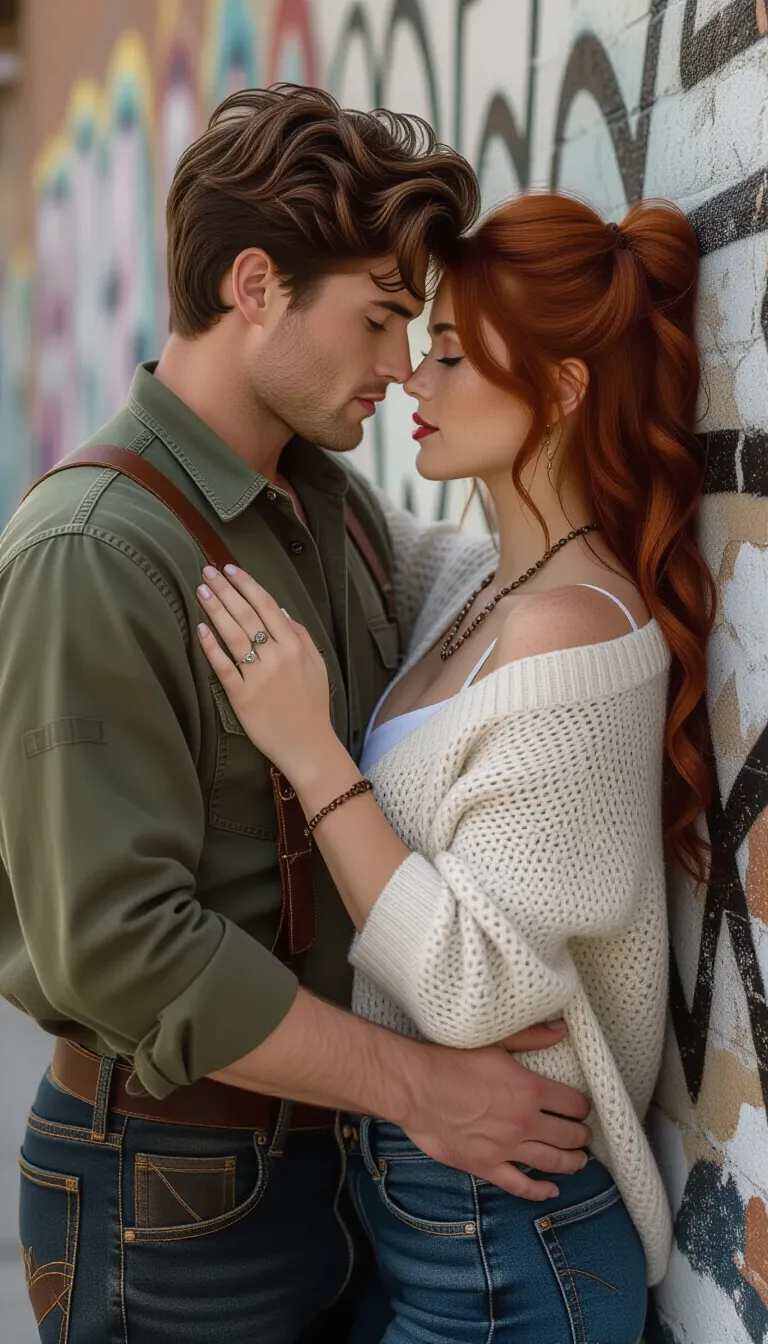
The church vestry smelled of old paper, beeswax, and the lingering heat from the afternoon sun trapped in the dark wood paneling. A single lamp cast a low, yellow circle onto the worn floorboards, the silence broken only by the rustle of Siobhan's skirt and the click of the door latch falling shut behind Father Kearney.
"Your father," the priest said, and the two words hung in the air like smoke. He was a small man, sixty if he was a day, with a face that had seen too many confessions and too few answers. He folded his hands at his waist and looked at Declan with something that wasn't quite pity. "William Morrow. He didn't die in a robbery, son."
Declan's hand found Siobhan's before the priest finished the sentence. His grip tightened until her fingers ground together, but he couldn't stop it—couldn't unclench the fist his chest had become. "What are you saying?"
"He was killed." Father Kearney's voice was soft, deliberate. "By loyalists. The same men who took your mother."
The vestry breathed around them. Dust motes drifted through the lamplight like slow snow.
"The RUC never solved it," the priest continued, "because they never tried. Your father had been passing information to the other side. To us. For years."
Declan's jaw worked. He didn't blink. "That's not—"
"I heard his confession the week before he died." Father Kearney's eyes held Declan's. "He told me everything. The names he'd given. The men who knew. He said if anything happened to him, I was to watch for you. Make sure you got out if it ever came to it."
The grip on Siobhan's hand was bone-white now. She felt the tremor run through him—fine and deep, like a wire pulled taut and humming. She stepped closer, pressed her body against his side, the rough wool of his coat against her cardigan. An anchor. A spine.
"You knew," Declan said. Not a question.
"I knew."
"All these years." His voice cracked. "You knew and you never—"
"I made a promise to a dying man, Declan. He said not to tell you until you needed to know. Until the crossing was real." The priest's gaze shifted to Siobhan, then back. "I think you've crossed, son. I think you crossed the day you chose her."
Siobhan felt the words land—not for her, but through her. She was the crossing. She was the line he'd stepped over, the line that had cost him a father and a brother and a city. She pressed harder against him, her free hand finding the small of his back, feeling the tension there like stone.
"Why?" Declan's voice was raw. "Why did he do it?"
"Because he saw what was coming." Father Kearney's face softened. "He saw his sons growing up in a war that wouldn't end, and he couldn't stand it. So he tried to end it from the inside. Small pieces. A shipment here. A name there. He believed peace would come, Declan. He believed it was worth dying for."
The silence stretched. A clock somewhere in the church ticked, a sound so steady it felt like breathing.
"He left you a letter." The priest reached into his cassock and pulled out a folded envelope, yellowed at the edges, sealed with wax. "I was to give it to you when you were ready. I think you're ready now."
Declan didn't move. His hand was still locked around Siobhan's, and she felt the fight in him—the wanting to take it and the wanting to burn it and the wanting to not know at all.
"Take it," she said, her voice barely a whisper.
He looked at her. His gray eyes were wet, the cracks in his armor showing through like light through a broken wall.
"Take it," she said again. "I'm here."
He turned back to the priest. His hand released hers slowly, finger by finger, as if letting go of her was the hardest thing he'd done all day. He took the envelope. Held it. Didn't open it.
"There's a car waiting," Father Kearney said gently. "Michael O'Shea. He'll take you to the border. From there, you're on your own."
Declan nodded. The motion was stiff, mechanical, like a man moving through water.
"I need a moment," he said. "Alone."
The priest hesitated. Looked at Siobhan.
"No," Siobhan said. Her voice was quiet but absolute. "We're together."
Father Kearney nodded once, then turned and left, the door clicking shut behind him, the latch falling home with a sound like a sentence ending.
They stood in the yellow lamplight. Declan stared at the envelope in his hands, the wax seal unbroken, the weight of his father's last words pressing against his palms.
"I don't know if I can read it," he said.
"You don't have to right now." Siobhan's hand found his again, lacing their fingers together over the envelope. "We can wait. We can read it together, when we're safe."
He looked at her. The light caught the red of her hair—cropped now, shorter than he'd ever seen it, her mother's scissors leaving an uneven edge at her jaw. She was beautiful. She was his.
"He died for this," Declan said. "For a future he never saw."
"Then we live for it." She squeezed his hand. "We build it. Every day. That's how we honor him."
Declan's breath shuddered out of him. He didn't let go of her hand, but he raised the envelope—raised it to his chest, pressed it against his heart, and held it there for a long, silent moment.
"He would have liked you," he said finally. "My da. He would have liked you."
Siobhan's eyes burned, but she didn't cry. She blinked, swallowed, and let the feeling settle into her bones. "Then let's make sure it wasn't for nothing."
She reached up, her free hand finding his cheek, her thumb tracing the line of his jaw. He leaned into the touch, the cracks in his armor widening, letting her in.
"When this is over," he said, "I want to build a house. By the sea. With a door that's always unlocked."
"And a garden?"
"And a garden." His voice cracked again, but this time it was almost a smile. "You can teach the children."
"Our children," she said.
He looked at her—really looked—and something in his chest unspooled, some knot he'd been carrying since he was fifteen years old, watching his father's coffin lower into the wet ground.
"Our children," he echoed.
They stood in the vestry, hands intertwined, the envelope pressed between them. Outside, the Border waited. Outside, a car engine rumbled, low and patient, and the road ahead was dark and unreadable.
But they were together. That was the crossing. That was the point.
Declan tucked the envelope into his coat pocket, over his heart, next to the Saint Christopher medal Siobhan had given him in the cottage. He took her hand, looked at her, and let the last of his armor fall away.
"Let's go," he said.
They walked to the door. He opened it. The night air hit them—cold and damp, carrying the smell of rain and exhaust and the distant salt of the sea.
They stepped out together.
The night air hit them—cold and damp, carrying the smell of rain and exhaust and the distant salt of the sea. Declan's hand found hers as they stepped off the church steps, the gravel crunching beneath their feet, and he felt her fingers weave through his, tight and certain.
The car waited at the curb. A battered Ford Cortina, dark blue, the paint chipped along the driver's door. The engine idled, a low rumble that vibrated up through the soles of his boots.
The driver's face was unfamiliar.
He was maybe fifty, gray at the temples, with a hard jaw and eyes that had seen too much. He didn't get out. Didn't roll down the window. Just watched them approach through the windshield, his hands resting on the wheel at ten and two, patient as stone.
Siobhan's hand tightened. Her fingers ground against his knuckles, and he felt the tremor run through her arm, up into her shoulder.
"It's all right," he said, but the words came out rougher than he meant, and she didn't relax.
Father Kearney appeared at Declan's elbow, his breath fogging in the cold air. "Michael O'Shea," he said, nodding toward the car. "He's done this run a hundred times. You'll be safe with him."
"You know him?" Declan asked.
"I know his mother." The priest's smile was thin, almost apologetic. "That's a different kind of knowing. But it's enough."
Declan looked at the driver again. The man hadn't moved. His face was a wall, giving nothing away—not impatience, not welcome, not threat. Just a man waiting to do a job.
"He's not one of them," Father Kearney added, quieter now. "Not RUC. Not loyalist. He's a smuggler. Fish and diesel and the occasional person who needs to disappear. He doesn't ask questions, and he doesn't talk."
"That's a lot of trust for a man who doesn't talk."
"It's the ones who talk who bury you." The priest met Declan's eyes. "Your father trusted me. I'm trusting Michael. That's the chain. It's all we have."
Declan's hand moved to his coat pocket, where the envelope rested against his chest. His father's last words, unread, waiting. The chain. His father had trusted a priest. The priest had trusted a smuggler. And now Declan had to trust a stranger with Siobhan's life.
He looked at her. She was watching the driver with the same wariness he felt, her jaw set, her breath misting in short, controlled bursts. She was cataloging escape routes, exits, the shape of the man behind the wheel. He could see it in the way her eyes moved—quick, precise, survivor's eyes.
"Siobhan."
She looked at him. Her grip didn't loosen.
"We don't have to get in," he said. "We can walk. Find another way."
"To where? The border's twenty miles. We don't know the roads. We don't know who's watching." She shook her head. "We get in the car. We trust the chain."
"You don't trust him."
"I trust you." She said it simply, like a fact she'd known longer than she'd spoken it. "You're the one who decides. I follow."
He stared at her. The weight of her words settled into his chest, warm and heavy, pressing against the envelope, against the medal, against the ache that had been living there since he was fifteen.
She trusted him. Not the priest, not the smuggler, not the chain. Him.
He turned back to the car. The driver still hadn't moved, but his eyes had shifted, tracking them through the windshield, waiting for a decision.
Declan walked to the passenger door. He opened it—the hinge groaned, a sound that seemed too loud in the quiet street—and leaned in, one hand on the roof, his body blocking Siobhan from the driver's view.
"I'm Declan Morrow," he said. "This is Siobhan Connolly. We need to cross."
The driver looked at him. Up close, his face was weathered, lined, the kind of face that had been shaped by wind and salt and long nights. His eyes were a pale blue, almost colorless in the dim light, and they held nothing but patience.
"I know who you are," the driver said. His voice was low, rough, like gravel rolling in a drum. "Get in."
Declan didn't move. "Where are we going?"
"South. Over the border. Then you're on your own."
"Where south?"
The driver's eyes narrowed, just slightly. "You don't trust me."
"I don't know you."
A beat. Then the driver's mouth twitched—not quite a smile, but something close. "Fair enough. There's a farm outside Monaghan. The woman who owns it, she takes people like you. Gives them a night's rest, a hot meal, and directions to wherever they're going next. I leave you at the gate. What happens after that is between you and her."
Declan searched the man's face for a lie. Found nothing. Just the hard lines of a man who'd seen too much to bother with deception.
"How do I know you'll take us all the way?"
"You don't." The driver reached into his coat, slow and deliberate, and pulled out a folded photograph. He handed it to Declan. "This is my daughter. She lives in Dublin now. Works in a bookshop. Has a flat with a blue door and a cat that's too fat to jump."
Declan looked at the photograph. A woman in her twenties, dark hair, smiling, holding a book in front of her face like she was about to read aloud.
"She's why I do this," the driver said. "Every run, I think of her. If I was the kind of man who betrayed the people I carried, she'd be the one who suffered for it. That's not a risk I take."
Declan handed the photograph back. The driver tucked it away, his movements unhurried, deliberate.
"I understand," Declan said.
"Good. Now get in. We've got a long drive, and the roads are watched."
Declan straightened. He looked at Siobhan, still standing on the curb, her hand gripping the strap of her bag, her eyes fixed on him.
He held out his hand. She took it, and he helped her into the back seat, then slid in beside her, closing the door with a soft thud that sealed them into the dark, warm interior.
The car smelled of cigarettes and old leather and something metallic—blood, maybe, or the ghost of it. The driver adjusted the rearview mirror, meeting Declan's eyes for a moment before pulling away from the curb, the engine humming as they picked up speed.
They drove through the narrow streets of Derry, past shuttered shops and empty pubs, past walls graffitied with slogans Declan had seen a thousand times—slogans he'd believed once, before everything got complicated. The streetlights flickered past, casting shifting shadows across Siobhan's face, catching the red of her cropped hair, the freckles scattered across her cheeks.
She was watching the window. Her hand was in his, but her grip had loosened, her fingers resting in his palm like she was letting him hold her even when her mind was elsewhere.
"What are you thinking?" he asked.
She didn't look away from the window. "I'm thinking about my mother. Whether she's safe. Whether the RUC has been to her house yet, asking questions."
"She'll be all right."
"You don't know that."
"No," he admitted. "But I know she raised you. And anyone who raised you is too stubborn to break."
She turned to him then, a ghost of a smile crossing her lips. "That's a nice thing to say."
"I mean it."
She squeezed his hand. "I know you do."
The car turned onto a winding road, leaving the city lights behind, the darkness pressing in around them. The driver hadn't spoken since they left, his eyes fixed on the road ahead, his hands steady on the wheel.
Declan reached into his coat, his fingers brushing the envelope. He could feel the wax seal, smooth and cool, the paper soft with age. His father's last words, written years ago, waiting for him to have the courage to read them.
"Not yet," Siobhan said softly, as if she could read his mind. "Wait until we're safe."
"I don't know if I can."
"You can." She shifted closer to him, her shoulder pressing against his, her warmth seeping through the layers of their coats. "I'll be right here. When you're ready."
He looked at her. The darkness hid the details of her face, but he could see her eyes, green even in the dim light, watching him with an intensity that made his chest ache.
"I love you," he said. The words came out rough, unpolished, but true.
She didn't say it back. She didn't have to. She just leaned into him, her head resting on his shoulder, her breath warm against his neck, and let the silence carry them forward.
The road unwound before them, dark and winding, lined with hedgerows and the occasional glimpse of a farmhouse light in the distance. The driver took a turn onto an even narrower road, the wheels crunching over gravel, the headlights cutting a pale tunnel through the darkness.
Declan's hand found the envelope again, traced its edges through the fabric of his coat. He thought about his father—the man he'd known, the man the priest had described, the man who had died for a future he never saw. He thought about the house by the sea, the unlocked door, the garden Siobhan would plant, the children who would never know the sound of gunfire.
He thought about the crossing. The one they were making now, in a battered Ford with a stranger at the wheel. And the one they'd been making since the first moment he saw her across the butcher's back room—the crossing from the people they'd been into the people they were becoming.
The car slowed. The driver pulled over at a crossroads, the engine idling, the headlights illuminating a signpost that pointed toward Monaghan.
"We're about ten minutes out," the driver said, his voice low. "The farm's off the main road. I'll drop you at the gate and leave. You walk up the lane, knock on the door, tell the woman Michael sent you."
"What's her name?" Siobhan asked.
"She'll tell you if she wants you to know." The driver's eyes found hers in the rearview mirror. "She's careful. That's why she's still alive."
Siobhan nodded, accepting the answer.
The driver pulled back onto the road, and they continued, the darkness pressing in around them. Declan felt the envelope against his chest, the weight of his father's words, the weight of the future they were driving toward.
He looked at Siobhan, her head still resting on his shoulder, her eyes closed now, her breathing slow and even. She was trusting him. She was sleeping in a stranger's car, on a dark road, in a country that wanted them dead—because she trusted him.
He pressed his lips to her hair, the short, uneven strands soft against his mouth. She stirred, just slightly, her hand tightening on his.
"Almost there," he murmured.
She didn't open her eyes. "I know."
The car turned onto a dirt track, the wheels bumping over ruts and stones, the headlights bouncing across a field of dark grass. A gate appeared in the light—iron, rusted, held closed by a loop of rope.
The driver stopped. Cut the engine.
"This is you," he said.
Declan opened the door, the cold air rushing in, carrying the smell of wet earth and hay. He stepped out, his boots sinking slightly into the muddy ground. He reached back for Siobhan, helping her out, her hand warm in his as she stepped onto the track.
The driver didn't get out. He just watched them through the open door, his face unreadable in the dark.
"The road you came from," he said, "the RUC will be watching it by morning. Don't go back. Don't call anyone you know. Disappear for a while. Let the dust settle."
"How long?" Declan asked.
"Months. Maybe longer." The driver shrugged. "Or forever. Some people never come back."
Declan nodded. He understood.
"Thank you," Siobhan said. Her voice was steady, clear, carrying across the dark field.
The driver's eyes flicked to her. For a moment, something softened in his face—a crack in the stone. Then it was gone.
"Take care of each other," he said. And he reached across, pulled the door closed, and started the engine.
The Ford reversed, turned, and drove back down the track, its taillights shrinking to red points, then vanishing around a bend. The sound of the engine faded, swallowed by the darkness, until there was nothing but the wind and the rustle of the grass and the distant hoot of an owl.
They stood at the gate, hand in hand, alone in the dark field under a sky heavy with clouds.
Declan looked at the iron gate, the loop of rope holding it closed. Beyond it, a lane wound up a low hill, lined with hedgerows, leading toward a light in the distance—a farmhouse window, warm and yellow, promising shelter.
"Ready?" he asked.
Siobhan looked at the light. Then at him. Her eyes were dark in the night, but he could see the shape of her smile, the curve of her jaw, the set of her shoulders.
"Together," she said.
He lifted the rope, pulled it free, and pushed the gate open. It groaned on its hinges, a sound that carried into the darkness, announcing their arrival.
They walked up the lane together, side by side, their footsteps crunching on the gravel. The farmhouse grew closer, the light in the window steady and warm, a beacon in the dark.
Declan's hand found the envelope in his coat, pressed it against his heart, and kept walking.
The lane curved, and the farmhouse grew larger in the dark. The light in the window was steady, a square of gold against the black of the hillside. Declan felt the gravel under his boots, heard Siobhan's breathing beside him, the rustle of her coat. The envelope was a hard rectangle against his chest, pulsing with the beat of his heart.
They reached the door. It was old wood, painted white once, now chipped and gray with weather. A brass knocker in the shape of a woman's hand, polished bright. Declan looked at Siobhan. She nodded. He lifted the knocker and let it fall.
The sound was sharp, final, swallowed by the night. Three beats of silence. Then footsteps inside, slow and careful, as if the floorboards were being tested. A pause at the door. A scrape of a bolt being drawn back, slow, one inch at a time.
The door opened a crack. A woman's face appeared in the gap—sharp cheekbones, dark eyes, graying hair pulled back tight. She studied them without a word, her gaze moving from Declan to Siobhan, then back. Her hand stayed on the edge of the door, ready to close it.
"Michael sent us," Declan said. His voice came out rougher than he'd meant, raw from the long night and the weight of the letter. "He said you'd help."
The woman's eyes narrowed. She looked past them, into the dark, scanning the lane behind them, the field, the gate. Satisfied they were alone, she opened the door wider. "Get inside. Quickly."
They stepped over the threshold. The door closed behind them with a soft click, and the bolt slid back into place. The woman turned to face them, her arms crossed, her stance guarded.
She was older than Declan had first thought—fifty, maybe more—with a face that had seen hard winters. The kitchen behind her was warm, lit by an oil lamp on the table, a kettle on the stove, a single plate with bread crumbs.
"I'm Eileen," she said. "Though Michael's the only one who calls me that anymore. Sit." She gestured to the chairs around the table. "You look like you've walked through hell to get here."
Declan took a seat, the chair creaking under him. Siobhan sat beside him, her leg pressed against his, her hand finding his under the table. Eileen poured three cups of tea from the kettle, set them on the table, and sat opposite them.
"You're the ones," Eileen said. Not a question. "The ones from Belfast. The Catholic girl and the Protestant boy." She looked at Siobhan. "I heard about Billy Patterson. Word travels fast."
Siobhan's jaw tightened. She didn't blink. "He had my mother. He would have killed her."
Eileen held her gaze for a long moment, then nodded. "I'm not judging. I'm just saying—you're not easy to miss. Half the RUC in the north are looking for you."
"We know," Declan said. "That's why we're here."
Eileen took a sip of her tea, studying them over the rim. "Michael told me you needed a place to stay. A few days, maybe a week. Then he'd take you south himself." She set the cup down. "I can give you a room. Food. But there are rules."
"What rules?" Siobhan asked.
"You don't go outside. You don't answer the door. You don't make any phone calls. If anyone comes—and they will, because strangers are noticed here—you stay in the back room and you don't make a sound." Eileen's voice was flat, matter-of-fact. "If you follow the rules, you're safe. If you don't, you're on your own."
Declan felt the weight of the envelope against his chest. "We understand."
"Good." Eileen stood, picked up her cup, and walked to the sink. "Finish your tea. I'll show you to the room. There's only one bed, but it's clean. You'll have to share."
Siobhan's hand tightened on his. Declan didn't look at her. He kept his eyes on Eileen, on the slope of her shoulders, the way she moved like a woman who'd learned to be invisible.
"One more thing," Eileen said, not turning around. "There's a letter in your coat, son. I can see the outline of it through the fabric. I don't know what's in it, but I know the shape of bad news when I see it. You should read it. Before it eats you alive."
Declan's throat tightened. He didn't answer. He just lifted his cup and drank, the tea bitter on his tongue, the heat spreading through his chest.
Eileen turned back, her expression unreadable. "Room's down the hall, first door on the left. I'll be up for another hour. If you need anything, you know where I am."
She walked past them, into the shadows of the house, and was gone.
Declan set his cup down. His hand was trembling. He pressed it flat on the table, trying to steady it, but the tremor wouldn't stop. Siobhan's hand covered his, warm and sure.
"Do you want to read it?" she asked. Her voice was soft, careful, as if she were asking him to take a step off a cliff.
He looked at the envelope, the wax seal intact, the paper warm from his body. His father's handwriting on the front: For Declan.
"Not yet," he said. "Not tonight."
Siobhan didn't push. She just nodded, her fingers lacing through his, and stood, pulling him gently to his feet.
They walked down the narrow hallway, past a closed door, past a small window that showed only darkness, and found the room at the end. The door opened onto a small space: a bed with a patchwork quilt, a wooden chair, a washstand with a basin and a pitcher of water. A single candle burned on the nightstand, casting shadows that danced on the walls.
Declan closed the door behind them. The lock clicked. He leaned against it, his eyes closed, his breath coming slow and deep.
Siobhan stood in front of him, her hands on his chest, one over the envelope, one over his heart. "We're safe," she said. "We're here. We made it."
He opened his eyes. Her face was close, her green eyes bright in the candlelight, her short red hair catching the gold. She was beautiful. She was the only thing in the world that made sense.
"I love you," he said. The words came out raw, broken, like they'd been trapped inside him for years.
She kissed him. Soft, slow, her lips warm and tasting of tea. She pulled back just enough to whisper, "I know. I love you too."
He felt the tension in his shoulders loosen, just a fraction. He wrapped his arms around her, pulled her close, buried his face in her hair. She smelled of the road, of sweat, of the lavender soap she'd used at Mary's flat—a ghost of a scent, fading but still there.
"We need to sleep," she murmured against his chest. "We need to be ready for whatever comes next."
He nodded. But he didn't let go. Not yet. He held her in the quiet room, the farmhouse settling around them, the wind brushing against the window, the distant sound of a dog barking somewhere in the hills.
Outside, the night was cold and dark. Inside, they were together.
Declan pulled back, looked at the bed. The quilt was worn but clean, the pillows plump and inviting. He sat on the edge, pulled off his boots, set them beside the bed. Siobhan did the same, then slipped off her coat, hanging it on the back of the chair.
He lay down, still in his clothes, the envelope pressed against his skin. She curled beside him, her head on his shoulder, her hand on his chest, over the letter.
Their breathing slowed together. The candle flickered.
The knock came from somewhere distant—front door, maybe the side of the farmhouse. Not loud. Three beats, spaced apart. Knuckles on wood. Declan's eyes opened in the dark. The candle had burned low, the flame almost touching the last inch of wick. Siobhan stirred against his chest, her hand already tightening on his shirt.
"Someone's here," she whispered. Her voice was flat and clear, not a question.
He eased her off him, swung his legs over the edge of the bed. The floorboards were cold through his socks. His boots sat beside the washstand where he'd left them, and he reached for them without making a sound, the leather creaking under his grip. Siobhan was already off the bed, pulling her cardigan on over her blouse, her eyes fixed on the door.
The knock came again. Quicker this time. Three fast raps, then a pause, then two more. A pattern.
Declan stood, the revolver cold and heavy in his belt. He slipped to the door and pressed his ear to the wood. Nothing but the sound of his own breathing, the rustle of Siobhan behind him, the distant creak of floorboards from the front of the house. Eileen was moving. He heard her footsteps slow and deliberate on the stone floor of the kitchen. Then a latch being drawn back.
"Who is it?" Eileen's voice carried down the hall, calm and unhurried, as if she'd expected this. As if strangers at her door in the middle of the night were part of the rhythm of this house.
A man's voice answered. Low, rough, carrying the shape of rural Monaghan. "Michael sent me. He said you'd have a kettle on."
Declan went still. Michael O'Shea's name was the key—if this man knew that, he was either who he said he was, or he'd gotten it out of Michael under duress. The revolver was in his hand now. He didn't remember drawing it. The weight of it was familiar, wrong, necessary.
"He did, did he?" Eileen's voice was neutral. "And what else did Michael tell you?"
"That you keep your hens in the back shed and your good whiskey under the sink." A pause. "And that I'd find a sore back and a warm fire inside a house with a blue door."
A beat of silence. Then the scrape of a bolt being drawn. The door opened. Declan heard the hinge—a high, thin whine that cut through the quiet like a blade. Footsteps crossed the threshold. The door closed again. The bolt slid home.
Declan looked at Siobhan. She was standing close, her hand on his arm, her thumb resting in the hollow of his wrist, where his pulse was hammering. Her face was calm, but her eyes were sharp, reading the room, parsing the sounds.
"Wait," she breathed. "We wait."
He nodded. They stood in the narrow hall, barely breathing, the candlelight pooling behind them. The voices in the kitchen were too low to make out words—only the rise and fall of speech, the rhythm of two people who knew each other, or were pretending to.
Then footsteps. Coming closer.
Declan raised the revolver. The footsteps stopped at the end of the hall. The frame of a man appeared in the doorway—tall, broad-shouldered, with the weathered face of someone who'd spent years in weather. He wore a flat cap pulled low, a dark coat that hung loose over a thick sweater. His hands were empty. He held them at his sides, palms open.
"Declan Morrow." The man's voice was quiet, rough, and carried the weight of certainty. "Your mother sent me."
The revolver didn't lower. Declan's finger rested on the trigger guard. "Who are you?"
"Name's Sean Rafferty. I was with your father in Derry. Before he died." The man's eyes moved to Siobhan, taking her in without judgment, then back to Declan. "I've been looking for you for three days. Michael O'Shea radioed ahead tonight, said you were here. I came as fast as I could."
"Why?" The word came out flat, hard. "Why would my mother send you?"
"Because she knows I'm the only one left who knows the whole truth about your father's death." Sean took a slow step forward, hands still open. "And because there's a meeting happening in Dundalk tomorrow morning. People who need to see you. People who've been waiting for William Morrow's son to step forward."
Declan's grip on the revolver wavered. He felt Siobhan's hand on his arm, steadying him. "I don't understand."
"I know you don't." Sean's voice softened, just slightly. "That's why I'm here. To explain. To bring you to the men who can help you get across the border—really across, not just into Monaghan. A new life. A new name. Everything your father wanted for you."
"My father," Declan said, and the words came out thick, "was a British informant. That's what I was told. That's what the priest told me tonight."
Sean was silent for a long moment. Then he shook his head. "The priest told you half the truth, son. The half that would hurt you. The other half—the part about why your father did what he did—that's not a story for a hallway with a gun in your hand." He nodded toward the room behind Declan. "Sit down. Read the letter. Then we'll talk."
Declan didn't move. The envelope was still pressed against his chest, warm from his body, a weight he'd carried for hours without opening. He felt the edges of it through his shirt, the wax seal a small, smooth circle he'd traced a hundred times in the dark.
"Declan." Siobhan's voice was soft, but it cut through everything. "Maybe you should read it."
He looked at her. Her green eyes held his, steady and sure. She reached up and touched his face, her palm cool against his stubbled jaw. "Whatever it says, I'm here. I'm not going anywhere. But you need to know."
He let out a breath he hadn't realized he'd been holding. The revolver lowered to his side. He looked at Sean, who nodded once, turned, and walked back toward the kitchen, leaving them alone in the candlelit hall.
Declan stepped into the room. Siobhan followed, closing the door behind them. The bed was still rumpled, the quilt twisted, the pillow dented where his head had been. He sat on the edge of the mattress, the wood frame creaking under his weight. The envelope was in his hands now. He'd taken it out without thinking, the paper crinkling between his fingers.
Siobhan sat beside him, close enough that their shoulders touched. She didn't say anything. She just waited.
He broke the seal. The wax cracked cleanly, a small red shard falling onto his knee. He pulled the letter out—a single sheet of paper, folded in thirds. His father's handwriting. The same slanted letters he'd seen on grocery lists and notes left on the kitchen table. Gone to the yard. Back by tea. Don't let the fire go out. Ordinary words from a man who'd been anything but ordinary.
The first line read: Dearest Declan, if you're reading this, I'm gone. And you're old enough to know the truth.
He stopped. His throat closed, his chest tight. He couldn't breathe. The words blurred and swam. Siobhan's hand found his, her fingers lacing through his, squeezing once.
"Take your time," she said. Her voice was barely a whisper.
He read. The words came slow, each one a stone placed in his chest. His father had been a member of the Irish Republican Army in the early seventies, a volunteer in the Derry Brigade. He'd fought, killed, lost friends. But after Bloody Sunday—after watching British paratroopers shoot unarmed civilians on the streets of his own city—he'd made a choice. He'd become an informant, feeding information to British intelligence not for money, not for safety, but because he believed the only way to stop the killing was to give both sides enough truth to push for peace. He'd been betrayed by a loyalist handler who sold his name to the UVF in exchange for a shipment of weapons. They'd shot him in the back on his way home from work. The robbery story had been a cover, arranged by his handler to protect Declan and Mary from reprisals.
The letter ended with a single line: I loved you more than I loved Ireland. I hope that's enough.
Declan let the paper fall into his lap. His hands were shaking—full, visible tremors that he couldn't stop, couldn't hide. Siobhan pulled him close, wrapped her arms around him, held him while he shuddered. He didn't cry, but his whole body was shaking, as if the grief had been waiting for this permission to break free.
"I didn't know," he said into her shoulder. His voice was wrecked, barely a rasp. "All these years, I thought—I thought he was a coward. I thought he'd just been in the wrong place at the wrong time. I was angry at him for dying. For leaving us." He pulled back, wiped his face with the heel of his hand. "He was the bravest man I ever knew. And I never got to tell him."
Siobhan cupped his face in both hands, her forehead touching his. "He knows, Declan. Whatever you believe—he knows. He wrote that letter for you, to tell you the truth. He wanted you to have it. He wanted you to know."
He closed his eyes. Breathed. Let the weight of the words settle into his bones. When he opened them again, the room looked different—the candlelight softer, the shadows less menacing. He folded the letter carefully, slid it back into the envelope, and tucked it inside his shirt, next to his heart.
"Sean said there's a meeting. People who need to see me." He looked at her. "I don't know what that means. I don't know who these people are. But if my father's life meant something—if there's a reason for all of this—I need to find out."
She nodded, her eyes steady on his. "Then we go."
"You don't have to—"
"Declan." Her voice cut through, firm and warm. "We. I told you. I'm not going anywhere. If you're walking into a room full of strangers with secrets, I'm walking in beside you."
He kissed her. Hard and fast, his hand in her hair, the way he'd kissed her in the rain beneath the dolmen. She kissed him back, her fingers gripping his collar, pulling him closer. When they broke apart, they were both breathing hard, her lips pink and slightly swollen.
"Okay," he said. "Okay."
He stood, pulled on his boots, laced them tight. Siobhan grabbed her coat from the chair, shrugged it on, checked the revolver was still in her pocket. Declan picked up the St. Christopher medal from the nightstand—the one the woman in the blue door cottage had given them—and fastened it around his neck. The metal was cool against his skin, a small weight, a reminder of the kindness of strangers.
They walked down the hall together. The kitchen was warm, lit by a single oil lamp. Eileen sat at the table, a cup of tea in front of her. Sean stood by the stove, his hands wrapped around a mug of something steaming. They both looked up when Declan and Siobhan entered.
"You read it?" Sean asked.
Declan nodded.
Sean set down his mug. "Then you know what kind of man your father was. And you know why I came."
"You said there's a meeting. In Dundalk." Declan's voice was steadier now. "Who's there?"
"Survivors," Sean said. "Men who fought alongside your father. Men who've been waiting for a reason to push back against the peace that never came. They need a name to rally behind. A face. A Morrow."
Declan looked at Siobhan. She gave a small, almost imperceptible nod.
"Then let's go," he said. "Take us to Dundalk."
Declan turned from the kitchen doorway, and Siobhan was already there. Her hand found his chest, palm flat against his sternum, feeling the ragged beat of his heart through the fabric of his shirt. Her green eyes held his, steady and sure, and without a word she pulled him close and kissed him slowly.
Not the desperate kiss of the warehouse, not the frantic kiss of the tunnel, not the hard kiss of relief in the stairwell. This was different. Her lips moved against his with a deliberate tenderness, a slow unraveling of everything that had coiled tight in his chest since he'd read the letter. Her fingers slid up his neck, into his hair, cradling his skull like something precious, something breakable. He let out a sound he hadn't meant to make—a low, raw exhale against her mouth—and his hands found her waist, pulling her into him, needing the warmth of her body pressed against his to prove he was still here, still alive, still real.
She kissed him through the tremor in his hands. She kissed him through the grief he couldn't name. She kissed him until his breathing slowed, until the shaking stopped, until the only thing in the world was the wet heat of her mouth and the soft scrape of her teeth against his lower lip and the way she tasted of salt and tea and something sweet he couldn't place.
When she pulled back, her forehead rested against his. Her breath was warm on his face, her lashes dark against her freckled cheeks. Her thumb traced the line of his jaw, feather-light, a question and an answer all at once.
"Better?" she whispered.
He couldn't speak. He just nodded, his throat too tight for words. His hands were still on her waist, gripping the wool of her coat like she might vanish if he let go.
She smiled. A small, private thing, meant only for him. Then she stepped back, took his hand, and laced her fingers through his. "Come on. Sean's waiting."
The kitchen smelled of paraffin and old wood. Eileen was at the table, her hands wrapped around a chipped mug, her face a map of quiet endurance. Sean stood by the back door, a canvas bag slung over his shoulder, his eyes moving between Declan and Siobhan with a knowing patience.
"There's a car," Sean said. "An old Morris Minor, green. Parked behind the hay barn. Keys are in the visor." He reached into his coat and pulled out a folded map, creased and soft with use. "Take the back roads through Kilcurry. Avoid the main N1—there's a checkpoint outside Dundalk that the RUC and the Gardaí share, and they'll have your names by now."
Declan took the map, his fingers brushing Sean's. "How do you know all this?"
Sean's mouth twitched, not quite a smile. "Because I've been doing this longer than you've been alive, Declan Morrow. And because your father saved my life twice. Once in seventy-two, when I was bleeding out in a ditch on the Creggan. And once in seventy-four, when he could have named me to save himself, and he didn't." He looked at the floor, then back up. "I owe him a debt I can never repay. Driving you to Dundalk is the least of it."
The words settled in Declan's chest like stones, heavy and warm. He folded the map, tucked it into his coat pocket. His father's letter was still pressed against his heart, the paper rustling with every movement.
Eileen stood. She was smaller than Declan had realized—barely five feet, with iron-gray hair and eyes that had seen too much. She walked over to Siobhan and took her hands, holding them between her own dry, callused palms. "You take care of each other," she said. Her voice was rough, the accent thick as peat smoke. "The road ahead is hard, and it'll get harder before it's done. But I've seen the way you look at him, and I've seen the way he looks at you. That's a rare thing. Don't let anyone take it from you."
Siobhan's eyes glistened, but she didn't cry. She squeezed Eileen's hands and nodded. "We won't."
Eileen released her, turned to Declan, and reached up to touch the St. Christopher medal around his neck. Her fingers brushed it, a benediction, a goodbye. "Go on, then. Before the light fails."
They stepped out into the cold evening air. The sky was the color of a bruise, deep purple and gray, the first stars pricking through above the dark silhouette of the Cooley Mountains. The hay barn was a black shape against the field, and behind it, just visible, the dull gleam of a car roof.
Declan's hand found Siobhan's as they crossed the yard. The grass was wet with dew, soaking through the soles of his boots, but he didn't care. The air smelled of earth and hay and the distant salt of the sea. Somewhere to the east, the Irish Sea was rolling against the shore, indifferent to the lives being broken and remade on this patch of ground.
The Morris Minor was older than him, its paint faded to a dusty green, one headlamp cracked. He opened the passenger door for Siobhan, and she slid in, the leather seat creaking beneath her. He closed the door, walked around the front, and got in behind the wheel. The key was in the visor, just as Sean had said. The engine coughed twice before turning over, the dashboard lights flickering to life in a dim amber glow.
He pulled the map from his pocket and spread it across the steering wheel, tracing the route with his finger. Kilcurry. The back roads. Avoid the N1. He memorized it, folded the map, and tucked it away.
"Are you ready?" he asked.
Siobhan looked at him. In the dim light of the dashboard, her face was all shadows and angles, her red hair dark as wine. She reached over and took his hand, her fingers cold but steady.
"I was ready the moment I walked into that butcher's back room," she said. "I've been ready every day since."
He brought her hand to his lips and kissed her knuckles, one by one. Her skin tasted of salt and lavender soap. Then he put the car in gear, pulled out from behind the barn, and drove toward the dark road that wound through the hills toward Dundalk.
The headlights cut a narrow tunnel through the twilight, the hedgerows closing in on either side. The engine hummed, a steady, rhythmic sound that filled the silence between them. Declan drove with one hand on the wheel, the other still holding Siobhan's, her thumb tracing slow circles on the back of his hand.
The road curved, climbed, dropped into the shadow of a dark valley. A fox crossed the road ahead, its eyes catching the light for a moment before it vanished into the undergrowth. Declan slowed, then accelerated again, his eyes scanning the road ahead, the rearview mirror, the dark fields on either side.
"What do you think we'll find?" Siobhan asked. Her voice was quiet, almost lost in the hum of the engine.
Declan was quiet for a long moment. The road curved again, and the lights of a distant farmhouse flickered through the trees. "I don't know," he said. "My father's past. His friends. His enemies. Maybe something I can carry forward." He glanced at her. "Maybe something I can leave behind."
"What do you want to leave behind?"
He thought about it. The anger he'd carried since he was fifteen, the bitterness at a father who'd died and left him with nothing but questions. The weight of a name that had meant something in Belfast, in the narrow streets where loyalist and republican blood had soaked into the cobblestones. The fear that he was doomed to repeat the same cycle of violence and loss.
"The hate," he said. "I want to leave behind the hate."
Siobhan squeezed his hand. She didn't say anything. She didn't need to.
The road climbed again, emerging from the valley into open moorland. The sky had darkened to full night now, the stars scattered across it like spilled salt. The headlights picked out a narrow stone bridge ahead, spanning a dark stream that glittered in the moonlight.
Declan slowed as they approached the bridge. His eyes scanned the far side, the shadows beneath the arch, the dark line of the hedgerow. Old habits. The instincts of a boy who'd grown up in a war zone, who'd learned to read danger in the way a street fell silent, in the angle of a parked car, in the absence of birdsong.
Nothing. Just the empty road, the cold air, the sound of water running beneath the stone arches.
He crossed the bridge, the tires humming on the old stone. The road narrowed ahead, winding through a copse of ash and hawthorn, their branches reaching across like dark hands. The headlights flickered as the engine coughed, then steadied.
"Declan." Siobhan's voice was low, alert. "There's a car behind us."
He looked in the rearview mirror. A pair of headlights had appeared at the crest of the hill behind them, maybe a mile back, maybe less. They were moving fast, the beams bouncing as the car took the curves at speed.
"Could be anyone," he said, but his hands were already tightening on the wheel.
"Could be." She reached into her coat pocket, her fingers finding the cold weight of the revolver. "But we don't know that."
He pressed the accelerator, the Morris Minor's engine complaining as he pushed it faster. The road was too narrow for speed, the hedgerows too close, the curves too sharp. The headlights in the mirror grew larger, closer, the car behind them gaining ground.
"There's a turn-off ahead," he said, his voice tight. "A farm track, about half a mile. If we can make it—"
The car behind them blinked its lights. Once. Twice. A long flash.
"That's not a coincidence," Siobhan said.
The farm track appeared on the left, a gap in the hedgerow barely visible in the dark. Declan wrenched the wheel, the Morris Minor's tires skidding on the gravel as they lurched onto the track. The headlights swept across a field of dark grass, a stone wall, a derelict barn with a sagging roof.
He killed the lights and the engine, and they sat in the sudden silence, breathing hard. The track was narrow, barely wide enough for the car, overhung with brambles that scraped against the roof. The smell of damp earth and rotting leaves filled the cabin.
The car on the main road passed. Its headlights swept across the entrance to the track, illuminating the brambles, the stone wall, the dark mouth of the lane. Declan held his breath. Siobhan's hand was on the revolver, her knuckles white.
The lights passed. The sound of the engine faded, swallowed by the distance and the dark.
They sat in the dark for a long minute. Declan's heart was pounding, his palms slick on the steering wheel. Siobhan let out a slow breath, her grip on the revolver loosening.
"That was close," she whispered.
He nodded, his throat dry. He waited another minute, then turned the key. The engine turned over, sputtered, caught. He flicked the headlights back on, illuminating the overgrown track ahead.
"We can't go back to the main road," he said. "Not yet. We'll take this track as far as it goes, find another way."
Siobhan nodded. Her hand found his, cold and steady. "Together," she said.
He put the car in gear and drove forward, the Morris Minor lurching and bumping over the rutted track. The headlights cut through the dark, showing nothing but grass and stones and the distant silhouette of a mountain against the stars.
The track ended at a gate. Beyond it, a field stretched toward the dark mass of a hillside, and beyond that, the faint glow of a town's lights. Dundalk, maybe. Or some village he couldn't name.
Declan stopped the car, killed the engine, and sat in the silence. The headlights faded after a moment, leaving them in the deep country dark, the only sound the wind in the grass and the distant bark of a dog.
"We walk from here," he said. "The car's too easy to spot. And if they're looking for us, they'll be watching the roads."
Siobhan opened her door, the cold air rushing in. She stepped out, her boots crunching on the gravel. Declan followed, grabbing the map from the seat and tucking it into his coat. He locked the car, though he didn't know why—it was a habit, a gesture of normalcy in a world that had stopped making sense.
They climbed the gate, dropping into the field on the other side. The grass was wet, soaking through his trousers, the ground soft and uneven. Siobhan walked beside him, her hand in his, the revolver in her other hand, ready.
The hillside rose ahead, dark and steep, crowned with a line of trees that swayed in the wind. Behind them, the lights of the road they'd left faded as they climbed. Above them, the stars were cold and distant, indifferent witnesses to the small drama unfolding below.
Declan stopped halfway up the hill. He turned and looked down at the valley, the dark patchwork of fields, the distant glimmer of the main road. Somewhere down there, a car was still looking for them. Somewhere, a man named Sean Rafferty was waiting in Dundalk, expecting them to arrive.
He didn't know what he'd find when they got there. Friends or enemies. Answers or more questions. A path forward or a dead end.
But Siobhan's hand was warm in his, her breath misting in the cold air, her profile sharp against the stars. And that, for now, was enough.
He turned back to the hill and kept walking.
They found a shepherd's shelter halfway up the hillside, a stone bothy with a sagging roof and a door that hung on one hinge. Declan pushed it open, the wood scraping against the flagstone floor, and stepped inside. The air was cold and damp, thick with the smell of dry rot and sheep wool long since gone. A rusted stove stood in the corner, its pipe reaching up through a hole in the roof. A wooden bench, splintered and stained, ran along the back wall.
Siobhan followed him in, closing the door as best she could. The gap let in a sliver of moonlight, just enough to see by. She brushed dust from the bench with her sleeve, then sat, her hands in her lap, watching him.
Declan stood in the center of the room, the letter still pressed against his chest. His breath came slow and shallow, his shoulders tight, his jaw locked. He hadn't spoken since they'd left the car. He hadn't let go of the letter.
"Declan." Her voice was soft, careful. "Sit with me."
He looked at her. The moonlight caught the edge of her face, the line of her jaw, the curve of her lip. She looked tired, haunted, beautiful. She looked like the only thing in the world he could trust.
He crossed the room and sat beside her, the bench creaking under his weight. His hand found hers, cold and steady, their fingers intertwining. He stared at the letter, at the paper creased and worn from being folded and unfolded, at the ink that had bled from damp, at the words he hadn't yet read.
"I don't know if I can," he said, his voice barely a whisper.
"Then we'll do it together." She squeezed his hand. "I'll be right here."
He held her gaze for a long moment. The silence stretched between them, filled with the wind outside, the creak of the bothy's timbers, the distant bark of a fox on the hillside. Then he unfolded the letter, his hands trembling, the paper crackling in the stillness.
The writing was small, cramped, pressed hard into the page. His father's handwriting. Declan had seen it a thousand times—shopping lists, notes left on the kitchen table, the careful script in the margins of his engineering manuals. But this was different. This was frantic, urgent, the letters pressing into each other as if William had been running out of time.
Declan read aloud, his voice rough and low, stumbling over the words.
"Son."
He stopped, swallowed, read on.
"If you're reading this, I'm already gone. And you're already old enough to understand what I've done, or at least old enough to decide what you think of it.
They'll tell you I died in a robbery. A hold-up at a filling station on the Antrim Road. Three men, a shotgun, a till with maybe forty pounds in it. That's the story the papers ran. That's the story your mother told you. That's the story I told her to tell, because it was the only one that kept you both safe.
But you're reading this now. So you already know it's a lie."
Declan's voice cracked. He stopped, pressed his palm against his mouth, his eyes wet. Siobhan's hand tightened on his. She didn't speak. She just waited.
He read on, forcing the words out.
"I'm writing this in a room I don't know, in a house I'll leave before dawn. I've been running for three weeks. I made a mistake, Declan. I trusted a man I shouldn't have trusted. His name is in the margin of this letter, written in pencil because I didn't want it to last.
I wasn't a hero. I wasn't a traitor. I was a man who believed the killing had to stop, and I thought I could help from the inside. I passed names, dates, movements—small things, things I thought wouldn't hurt anyone. I did it because a priest told me it was the right thing. I did it because I wanted to live long enough to see you marry someone you loved.
I was wrong. The names I passed got people killed. Not soldiers. Farmers. Shopkeepers. A boy named Rafferty, seventeen years old, shot in the back of the head on his own doorstep because someone thought he was a tout. I didn't know his name until after. I didn't know his mother.
I'm sorry.
I'm writing this in case the men I've been working for find me before I find them. If you're reading this, they did. I've left a box with a solicitor in Belfast—no name, just a number. It has what I have left. Money. Papers. The names of the men who can help you if you need to run.
I haven't been a good father. I've been a liar and a coward, and I've hidden from you the only thing that matters: that I chose this. I chose to put you and your mother at risk. I chose to believe I could walk the line between two sides without falling off.
I chose wrong. And I paid for it.
But I chose you first. Every day, I chose you. When I gave them names, I thought of your face. When I ran, I ran toward you, even when I was running away. You were the only thing I did right.
Don't make my mistakes. Don't trust men who promise peace with one hand and hold a gun with the other. Don't let anyone tell you that silence is loyalty, or that blood is worth more than love.
And don't let them take what you've found. If you've found someone who makes you believe the world is worth saving—hold onto her. Let her hold onto you. Let her be the reason you walk out the door in the morning and the reason you come home at night.
I never had that. I wish I had.
Be safe, son. Be better than I was.
Your father."
Declan lowered the letter. His hand was shaking, the paper trembling in the dim light. He stared at it, at the words that seemed to swim on the page, at the final line—"Your father"—written in the same cramped hand, the same pressure, the same desperation.
He didn't cry. He sat in silence, his jaw tight, his hand gripping Siobhan's until his knuckles went white. She didn't pull away. She let him hold on, let the pressure become a conversation.
The wind pushed against the stone walls, finding every crack, whistling through the gaps. The bothy creaked and settled around them. Somewhere on the hillside, an owl called, low and hollow, and then fell silent.
"He wasn't a coward," Siobhan said quietly. "He was frightened. That's not the same thing."
Declan's voice, when it came, was barely audible. "He knew he was going to die. He wrote this knowing."
"And he used the last of his time to tell you who he really was. That's not a coward's act."
Declan looked at her. Her face was soft in the dark, her eyes holding his, her hand steady in his grip. He saw the faith in her, unconditional and unshakeable, and he felt something crack inside him—the armor he'd built so carefully, so deliberately, since the day he'd heard the news at fifteen.
"I hated him," he said, his voice raw. "For years. For leaving. For dying in a robbery that never happened, for leaving us with nothing but a lie." He pressed his free hand against his chest, over his heart. "And I didn't even know him. I didn't know any of this."
"You know him now." Siobhan reached up, her fingers brushing his cheek, tracing the line of his jaw. "He's not a stranger anymore. He's your father. Flawed and frightened and trying to do the right thing in a world that made it impossible. That's who he was."
Declan closed his eyes. His shoulders shook, once, twice, then stilled. He leaned into her touch, his forehead finding hers, their breath mingling in the cold air.
"I don't know what to do with this," he said. "I don't know how to carry it."
"You don't carry it alone." She kissed him, soft and slow, her lips warm against his. "That's what I'm for. That's what we're for."
He held her, his arms wrapping around her, pulling her close. The letter crumpled between them, pressed against their hearts. The bothy was cold, the night endless, the hillside dark and indifferent. But in that small stone room, in that fragile circle of warmth, they held each other, and the weight of the world was just a little more bearable.
He pulled back, his hands cupping her face, his thumbs tracing the freckles on her cheekbones. "I love you," he said. "I don't know how to do any of this right. But I love you."
"I know." She smiled, a faint, rueful thing. "I love you too."
He folded the letter carefully, reverently, and tucked it into the inner pocket of his coat, next to his heart. It felt heavy there, heavier than paper had any right to be. But it also felt right. A truth finally held, finally claimed.
The owl called again, closer now. The wind shifted, carrying the sound of a car engine, distant and thin. They both stiffened, their eyes meeting in the dark.
"We can't stay here," Siobhan said.
"No." He stood, pulling her to her feet. "The town's that way. Dundalk. We'll find another way."
He looked around the bothy one last time. It had given them shelter. It had given them space to breathe. But it wasn't safe, and neither was the hillside, and neither was the road.
He pushed the door open, the gap letting in the cold air and the moonlight. The hillside stretched before them, dark and steep, the lights of the town flickering in the distance.
Siobhan stepped out beside him, her hand finding his, the revolver heavy in her coat pocket. She looked up at the stars, at the indifferent sky, then at him.
"Together," she said.
He nodded. "Together."
They walked down the hillside, hand in hand, the letter pressed against his heart, her warmth against his side, the town's lights growing closer with every step. The wind carried the sound of the owl, and the car, and somewhere, far off, the faint echo of a dog barking.
They didn't look back.
The hillside steepened as they descended, the grass slick with dew, the stones loose underfoot. Declan kept his hand tight around Siobhan's, guiding her around the worst of it, his eyes scanning the dark for movement. The town lights flickered ahead, scattered and uneven, a constellation of yellow windows and streetlamps that marked the edge of Dundalk.
"How far?" Siobhan's voice was low, breathless from the pace.
"Mile. Maybe less." He didn't slow. The car engine he'd heard on the hillside had faded, but that didn't mean it was gone. That didn't mean it wasn't circling, waiting for them to emerge onto open ground.
The wind shifted, carrying the smell of wet earth and diesel. Somewhere below, a dog barked—closer now, insistent, the kind of bark that meant a man had set it loose.
Siobhan heard it too. Her grip tightened on his hand. "They're using dogs."
"Aye." He pulled her faster, half-sliding down a stretch of loose gravel, his boots skidding until he caught himself against a gorse bush. Thorns scraped his palm, drew blood he didn't feel. "We need to reach the road. Find cover before they get close."
The bark came again, sharper. Closer.
They hit the bottom of the hill at a run, stumbling onto a narrow lane that ran between high hedgerows. The tarmac was cracked, weeds pushing through, but it was solid ground and it led toward the town. Declan didn't hesitate—he turned south, pulling Siobhan with him, their footsteps loud in the silence.
"There." Siobhan pointed ahead, where a gap in the hedge opened onto a field. "We can cut across, come out near those houses."
He followed her lead, crashing through the gap, brambles tearing at his coat. The field was rough, uneven, studded with thistles and hidden ditches. He stumbled once, caught himself, kept moving. Siobhan was faster than him now, her shorter frame finding the easier ground, her breath coming in sharp bursts that steamed in the cold air.
The dog barked again. Behind them. On the lane.
They didn't look back.
The houses grew closer—a row of council cottages with lit windows and smoke rising from chimneys. A dog in one of the back gardens started barking in response, a deep, territorial sound that echoed across the field. Declan swore under his breath. Every dog in the county would be awake now, every light a potential witness.
They reached the first garden wall, low and crumbling, and vaulted over it without breaking stride. The garden was small, a patch of grass and a clothesline with sheets hanging limp in the still air. Declan pressed himself against the wall, pulling Siobhan beside him, his hand over her mouth before she could speak.
Footsteps on the lane. Fast. Boots. Two men, maybe three, the sound of their breathing carrying in the quiet.
Declan's hand stayed over her mouth, his other arm wrapped around her waist, pulling her tight against him. She didn't move. Her heart was hammering—he could feel it through her coat, through his own chest, a double pulse that seemed to fill the night.
The footsteps slowed. Stopped.
A voice, low and rough: "They came through here. Hedge is broken."
Another voice, farther back: "Check the gardens. I'll take the road."
Declan's jaw tightened. He scanned the garden—a back door, dark windows, a coal bunker against the far wall. No cover. No exit except the way they'd come or through the house itself.
The footsteps started again, heading toward the gap in the hedge they'd used.
Declan made a decision. He took his hand from Siobhan's mouth, grabbed her wrist, and pulled her toward the back door. The handle turned. Unlocked. He pushed it open, easing it closed behind them as the first man's boots crunched into the garden they'd just left.
They stood in a narrow kitchen, dark except for the glow of a stove's pilot light. The air smelled of boiled potatoes and coal dust. A clock ticked somewhere, loud in the silence. Declan didn't breathe. He listened to the footsteps outside, the murmur of voices, the sound of a gate creaking open and then—after an eternity—closing again.
The footsteps faded.
Siobhan exhaled, a long, shaky breath. Her hand found his in the dark, squeezing hard. "We can't stay here."
"No." He moved through the kitchen, his eyes adjusting to the dim light. A door at the far end led into a narrow hallway. Stairs going up. A front door with a frosted glass panel, the streetlight outside casting a faint, watery glow.
He checked the front window, staying low. The street was empty. The men had moved on, heading south toward the town center.
"We go out the front. Walk. Don't run." He turned to her, his face hard in the half-light. "If anyone stops us, we're coming from a pub. We had a fight. We're looking for a taxi."
She nodded, her hand already reaching for the door.
He stopped her, his hand on her arm. "Siobhan."
She looked at him.
"Whatever happens out there—"
"Don't." Her voice was sharp, cutting him off. "Don't you dare start saying goodbye again."
He held her gaze. "I'm not saying goodbye. I'm saying I mean it. Every word. By the sea. A life. I mean it."
Her expression softened, just a fraction. She stepped close, pressed her forehead against his, her breath warm on his lips. "Then let's go live it."
He opened the door.
The street was quiet, the houses dark and shuttered. They stepped out together, hand in hand, walking at a steady pace toward the town center. The streetlamps cast long shadows, their footsteps echoing off the walls. A cat watched from a windowsill, unblinking.
They passed a pub, the noise of laughter and a piano spilling out through the cracked door. A man stumbled out, laughing, and nodded at them as they passed. Declan nodded back, his face neutral, his pulse racing.
The town square opened ahead of them, empty and floodlit, a war memorial at its center. A taxi sat idling outside a chip shop, the driver reading a newspaper in the glow of the dashboard.
Declan didn't hesitate. He walked straight to the taxi, opened the back door for Siobhan, and slid in beside her.
"Where to?" The driver didn't look up from his paper.
Declan's mind raced. The border was north, but that was where they'd be watching. South wasn't safe either—the Republic had its own loyalist sympathizers, its own informants.
"Dublin," he said. "Connolly Station."
The driver folded his paper, glanced at them in the rearview mirror. "That'll cost you."
"I've got it." Declan pulled a crumpled wad of notes from his pocket—Eileen's money, pressed into his hand before they'd left the farmhouse. "Just drive."
The driver shrugged, started the engine, and pulled away from the curb.
Siobhan leaned her head against Declan's shoulder, her eyes closing. He felt the tension in her body slowly ease, the adrenaline fading. He wrapped his arm around her, pulling her close, his hand finding hers in the dark of the back seat.
The town fell away behind them, the lights growing smaller, the road opening onto the dark countryside. The taxi hummed over the tarmac, the driver silent, the radio playing a low, mournful fiddle tune.
Declan stared out the window, watching the fields and hedgerows blur past. His father's letter pressed against his heart, a weight he was still learning to carry. He thought of the bothy, the hillside, the cold wind and the owl's call. He thought of his mother in Derry, alone now, facing whatever came with the same stubborn silence she'd always worn.
He thought of Siobhan, warm against his side, her breath slow and even, her hand loose in his.
They drove south, into the dark, into the unknown. The night stretched ahead of them, endless and uncertain, and for the first time in days, Declan felt something that might have been hope.
It was fragile. It was terrifying. It was enough.
The taxi hummed south through the dark, the fiddle tune on the radio fading into static. Declan watched the headlights sweep across hedgerows and stone walls, the occasional farmhouse glowing like a ship on a black sea. Siobhan's weight settled against him, her breathing slow and even, her hand loose in his.
Dublin. He'd said it without thinking, the name rising from somewhere deep, a city he'd never seen but had heard about his whole life—a place of possibility, of escape, of people who didn't care what church you came from. Or so they said. He didn't know if he believed it.
The driver cleared his throat. "You two heading somewhere special?"
Declan's eyes met the rearview mirror, the driver's gaze steady and curious. "Visiting family," he said, the lie smooth and automatic.
"Long way to go this time of night." The driver tapped the steering wheel, his fingers stained with nicotine. "Dublin's a big place. You know where you're staying?"
Declan didn't. The thought hit him like a cold wave. He had Eileen's money, a letter from his dead father, and the woman sleeping on his shoulder. That was all. No plan, no contact, no destination beyond a train station in a city he'd never set foot in.
"We'll find something," he said, keeping his voice flat.
The driver nodded, said nothing more.
Siobhan stirred, her fingers tightening around his. "Declan." Her voice was thick with sleep, barely a whisper. "Where are we going?"
"Dublin." He said it softer this time, for her. "We'll figure it out when we get there."
She lifted her head, blinked at the dark fields rushing past. Her hair—shorn short, uneven, still strange to see—fell across her face. She pushed it back, her green eyes finding his in the dim light. "Dublin." She tested the word like it might break. "I've never been."
"Neither have I."
She was quiet for a moment, then leaned her head back against his shoulder. "We'll figure it out together."
The words settled into him, warm and steady. Together. He pressed his lips to her hair, the short strands soft against his mouth, and closed his eyes.
The taxi drove on, the road unspooling through the dark countryside. They passed through small towns, their streets empty and silent, the occasional dog barking from a garden. A police checkpoint loomed ahead, a patrol car parked across the road, a torch beam sweeping the night. Declan's heart seized, his hand tightening on Siobhan's.
The driver slowed, rolled down his window. The officer leaned in, his face bored, his eyes scanning the back seat. "Where you headed?"
"Dublin," the driver said. "Just the fare and his missus."
The officer's torch swept across Declan and Siobhan, lingered a moment too long. Declan kept his face neutral, his breathing steady. Siobhan's hand was cold in his, but she didn't flinch.
"Right," the officer said, stepping back. "On you go."
The window rolled up. The taxi pulled forward, the checkpoint shrinking in the rear window until it was gone.
Declan exhaled, a long, shaky breath. Siobhan pressed closer, her forehead against his jaw.
"That was close," she whispered.
"Too close."
The driver said nothing, but his eyes flicked to the rearview mirror, holding Declan's gaze for a moment before looking back at the road. Declan didn't know what that look meant—suspicion, curiosity, indifference. He didn't ask.
They drove on. The sky began to lighten, a pale gray bleeding into the black, the stars fading one by one. The fields gave way to suburbs, houses clustered together, streetlights flickering in the dawn. The road widened, signs appearing—Dublin 10, Dublin 5, the city drawing closer.
Declan watched the city take shape, the buildings rising against the pale sky. He'd heard stories about Dublin—a city of poets and rebels, of pubs and politics, of people who'd fought the same fight his father had fought in his own quiet way. He wondered if his father had ever been here, if he'd walked these streets, if he'd felt the same uneasy hope that was stirring in Declan's chest.
"What do you know about Dublin?" Siobhan asked, her voice soft, her head still resting on his shoulder.
He thought about it. "Not much. It's where the Easter Rising started. Where Yeats lived. Where my father's letter was probably posted." He paused. "It's where people go to disappear."
"Is that what we're doing?" She didn't sound accusatory. Just curious.
"I don't know." He looked out the window, watching the city grow closer. "Maybe we're going to find out what comes next."
The taxi pulled into Connolly Station, the building grand and gray in the early morning light. The driver stopped, turned off the engine. "Forty pounds," he said.
Declan pulled the wad from his pocket, counted out the notes, handed them over. The driver took them without a word, folded them into his own pocket, and nodded.
"Good luck," he said. And something in his voice suggested he meant it.
Declan opened the door, stepped out into the cold morning air. Siobhan slid out beside him, her hand finding his. They stood together, looking up at the station, the city waking around them.
"Well," she said, her breath misting in the cold. "We're here."
He squeezed her hand. "Yeah. We are."
They walked into the station, the high ceiling echoing with footsteps and announcements. People moved past them—commuters, travelers, students, all of them wrapped in their own worlds. No one looked at them twice. No one recognized the faces from the radio broadcast, the names from the news.
They found a bench near a café, sat down, and watched the city flow around them.
"What now?" Siobhan asked.
Declan pulled his father's letter from his pocket, the paper worn and creased from being folded and unfolded. He held it in his hands, feeling its weight, its truth. "My father's contact," he said. "The one he wrote about. He said if I ever needed help, I should find a man named O'Connell. Works at a bookshop on Grafton Street."
Siobhan looked at him, her green eyes searching his face. "You trust it?"
He was quiet for a long moment. "I don't know. But it's all we've got."
She nodded slowly, then stood, pulling him to his feet. "Then let's go find a bookshop."
They walked out of the station, into the streets of Dublin, the city opening before them like a promise. The morning light caught the stone buildings, the shop windows, the river Liffey glinting in the distance. A city of strangers, of possibilities, of a future they hadn't dared to imagine.
Declan held Siobhan's hand, the letter pressed against his heart, and walked forward into the unknown.
They found Grafton Street before the city fully woke, the shops still shuttered, a milk cart clattering past on cobblestones. Declan counted the numbers—thirty-seven, thirty-nine, forty-one—and stopped outside a narrow storefront with a faded green awning and a sign that read O'Connell & Sons, Fine Books Since 1892.
The door was unlocked. He pushed it open, a bell chiming somewhere in the back, and stepped inside.
The smell hit him first—old paper, dust, and the faint sweetness of tobacco. Books lined every wall, floor to ceiling, crammed onto shelves that bowed under their weight. A single lamp burned on a desk near the back, casting long shadows across the cluttered floor.
Siobhan closed the door behind them, the latch clicking shut, and the bell fell silent.
"Hello?" Declan's voice sounded strange in the stillness, too loud, too rough. He cleared his throat and tried again. "Anyone here?"
A creak from somewhere deeper in the shop. Then footsteps, slow and deliberate, approaching from between two towering shelves. A man emerged—older, maybe seventy, with silver hair combed back and spectacles perched low on his nose. He wore a cardigan with leather patches at the elbows and held a book in one hand, a finger marking his place.
"We're not open yet," the man said, his voice mild, unhurried. "Come back at nine."
"I'm looking for someone," Declan said. "A man named O'Connell."
The old man's eyes flicked over him—slow, assessing. Then over Siobhan, catching her rosary beads, her cropped red hair. He closed his book, set it on a stack, and removed his spectacles, polishing them on his sleeve.
"There's a lot of O'Connells in Dublin," he said. "You'll need to be more specific."
Declan reached into his jacket, pulled out his father's letter, the paper soft and creased from a dozen readings. He held it out. The old man took it, unfolded it, read the first few lines. His expression didn't change, but his hands stilled, the spectacles forgotten in his grip.
"William's boy," he said. Not a question.
"You knew him."
The old man folded the letter carefully, handed it back. He studied Declan's face for a long moment, something shifting in his eyes—recognition, maybe, or grief.
"I knew him," he said. "Knew him better than most. He spoke of you often. Said you had his hands, his way of holding a hammer." A pause. "Said you'd never know how proud he was."
Declan's throat tightened. He tucked the letter back into his jacket, his fingers brushing the paper like it might burn him.
"Are you O'Connell?" Siobhan asked, her voice gentle, breaking the silence.
The old man looked at her, then smiled—a small, sad thing. "I'm Sean O'Connell. His father was the original. I'm just the son that stayed." He gestured toward the back of the shop. "Come through. We'll talk in the back room. Safer there."
He led them between the shelves, past stacks of books that threatened to topple, past a dusty globe and a typewriter covered in a sheet. The back room was small—a desk, two chairs, a kettle on a hot plate, and a window that looked out onto a narrow alley. O'Connell closed the door and gestured for them to sit.
Declan didn't sit. He stood by the window, watching the alley, his hands shoved into his pockets to keep them still.
"Your father wrote to me," O'Connell said, settling into the chair behind the desk. "Three months before he died. Said he was getting close to something, someone who'd been feeding information to the loyalists from inside the IRA. He said if anything happened to him, I was to look out for you."
"And you didn't." Declan's voice was flat, hard. "You didn't come. You didn't tell me."
O'Connell met his gaze, unflinching. "I didn't know how. Your father was careful—he kept his work separate from his family. If I'd shown up at your door, I'd have put a target on your back. On your mother's back." He paused. "I did what he asked. I waited."
"For what?"
"For you to come looking."
Siobhan reached out, her hand finding Declan's arm. He didn't pull away, but he didn't relax either. The tension in his shoulders was a wire pulled taut.
"What do you know?" Declan asked. "About who killed him."
O'Connell leaned back, his chair creaking. He studied the ceiling for a moment, then looked back at Declan, his eyes tired. "I know the man who gave the order. A loyalist commander named Robert Fletcher. Runs operations out of a pub in Sandy Row. Your father was close to exposing him, had evidence of a deal Fletcher was brokering—weapons for information, a pipeline that ran straight through the border."
"Why didn't you do something?" Declan's voice cracked. "If you knew, why didn't you—"
"I did." O'Connell's voice was quiet, firm. "I passed the information to the IRA. They moved on it. But Fletcher had already covered his tracks. The evidence disappeared. And your father was dead within the week."
The room fell silent. Somewhere in the shop, a clock ticked.
Siobhan's hand tightened on Declan's arm. He could feel her warmth through his sleeve, could feel the steady rhythm of her breathing. He focused on that—the rise and fall of her chest, the pressure of her fingers—to keep himself from shattering.
"Where is he now?" Declan asked. "Fletcher."
"Still in Belfast. Still running his pub. Still untouchable." O'Connell's jaw tightened. "But he's not the only one. The men who pulled the trigger—they're still out there too. Two of them. Brothers, last I heard. Moved south after the shooting, living quiet lives in a village called Carlingford."
Declan turned from the window. His face was pale, his eyes dark. "Give me their names."
"Declan." Siobhan stepped closer, her voice low. "Think about what you're saying."
He looked at her—really looked, his gray eyes searching her green ones, finding something that made him stop. His breath came slow, measured, like he was counting to ten before he could speak.
"I'm not going to kill them," he said. "I just want to know their names."
O'Connell studied him for a long moment. Then he opened a drawer in his desk, pulled out a leather-bound ledger, and flipped through the pages until he found what he was looking for. He tore out a sheet, scribbled something on it, and held it out.
Declan took it. Two names, written in neat, careful script. He read them once, then folded the paper and tucked it into his pocket, next to his father's letter.
"There's a train to Dundalk at noon," O'Connell said. "From there you can get a bus to Carlingford. It's a small town—you'll stand out. But if you're careful, you might find what you're looking for."
"And if we're not careful?" Siobhan asked.
O'Connell didn't smile. "Then you'll end up like your father."
Declan nodded, once, his jaw set. He turned to Siobhan, his hand finding hers, their fingers lacing together. "We'll be careful."
"Take this." O'Connell reached into his pocket and pulled out a key—brass, old, worn smooth with age. "There's a safe house in Dundalk. Number seven on Church Street. The door's green. The woman who owns it—Mrs. Byrne—she knew your father. She'll help you."
Declan took the key, its weight strange and solid in his palm. "Thank you."
"Don't thank me yet." O'Connell stood, adjusted his spectacles. "Fletcher's men are everywhere. They've got informants in every town between here and the border. You move fast, you keep your heads down, and you don't trust anyone who isn't holding this key." He paused. "And when you find what you're looking for—when you know the truth about your father—come back. There's more I couldn't put in a letter."
Declan's hand closed around the key. He nodded, once, then turned toward the door. Siobhan followed, her hand still in his, her fingers warm and steady against his cold skin.
They stepped out of the back room, through the dim shop, past the books that lined the walls like silent witnesses. The bell chimed as they pushed open the front door, and the morning light hit them—cold, sharp, full of possibility.
Grafton Street was waking up. A tram clattered past, people filling the pavements, the city finding its rhythm. Declan looked down at the key in his hand, then at Siobhan, her hair catching the light, her green eyes watching him with a trust he wasn't sure he deserved.
"Dundalk," she said. "And then Carlingford."
"And then we find out the truth." He slipped the key into his pocket, next to the letter and the names. "All of it."
She squeezed his hand. "Together."
He looked at her, really looked—the freckles scattered across her nose, the slight curve of her lips, the way she stood close to him even in a city full of strangers. And something in his chest cracked open, just a little, letting in the cold morning air and the hope he'd been trying to bury since the warehouse.
"Together," he said.
They walked toward the station, the key and the names and the letter pressed against his heart, and behind them, the bookshop's door clicked shut, the bell falling silent once more.
They walked through the morning streets of Dublin, the city rising around them. A baker was unlocking his shop, a woman with a pram was crossing the road, a group of students were laughing outside a café. Ordinary life, happening in the same world that had shattered him.
Declan's hand was in Siobhan's. He could feel the shape of the key in his pocket, the folded letter, the scrap of paper with two names written in neat script. Three objects that had changed everything.
They passed a narrow alley between two shops, and he pulled her into it without thinking.
The alley was a sliver of shadow between brick walls, no wider than a doorway. A drainpipe dripped somewhere above. The air smelled of damp stone and the faint echo of something fried from a kitchen vent. Siobhan's back hit the wall, her eyes wide for a second before she understood.
Then he kissed her.
It wasn't gentle. It was hungry, desperate, his hand finding her jaw, tilting her face up to meet his. He tasted the morning on her lips—tea, the faint salt of sweat, her. Just her. The only real thing in a world that kept rearranging itself into something he didn't recognize.
She made a sound against his mouth. Not protest. Surrender.
Her hands found his chest, fingers curling into the fabric of his shirt, pulling him closer. He pressed her into the wall, his body covering hers, the heat of her melting through the cold that had settled in his bones since O'Connell spoke his father's name.
"Declan." She breathed it against his lips, soft, questioning.
He didn't answer with words. He kissed her again, slower now, his thumb tracing the line of her jaw, the curve of her cheek. She shivered under his touch, and he felt the tremor run through her, mirroring the one in his own chest.
When he finally broke the kiss, he leaned his forehead against hers, his eyes closed. The alley was silent except for their breathing. Somewhere in the city, a tram bell clanged. Ordinary life, still happening.
"I needed that," he said, his voice rough.
"I know." Her hand came up to cup his cheek, her thumb brushing the stubble on his jaw. "I know."
He opened his eyes. Her green eyes were dark in the alley's shadow, but they held him like they always did—steady, warm, unafraid of the chaos he'd brought into her life.
"I don't know what I'm doing," he said. "Walking into Carlingford, looking for the men who killed my father. What happens after I find them? What am I supposed to do?"
"You're supposed to do what feels right." Her voice was soft but certain. "Whatever that is, whenever you know it. I'll be there."
"And if I don't know? If I get there and I can't—"
"Then we'll figure it out together." She pressed a kiss to the corner of his mouth. "Like we have everything else."
He let out a breath, slow, measured. The tension in his shoulders eased, just a fraction. He pressed his forehead against hers again, breathing her in—lavender soap, chalk dust, the faint salt of her skin. Home. This woman was home.
"I love you," he said. Simple. Direct. The only truth he was sure of.
"I love you too." She smiled, a small, private thing, meant only for him. "Now come on. We've got a train to catch."
He kissed her once more, soft and brief, a promise. Then he stepped back, taking her hand again, and led her out of the alley and back into the morning light.
They walked through the city, the key and the letter and the names pressed against his heart, and behind them, the alley stood empty, the echo of their kiss fading into the ordinary Dublin morning.