
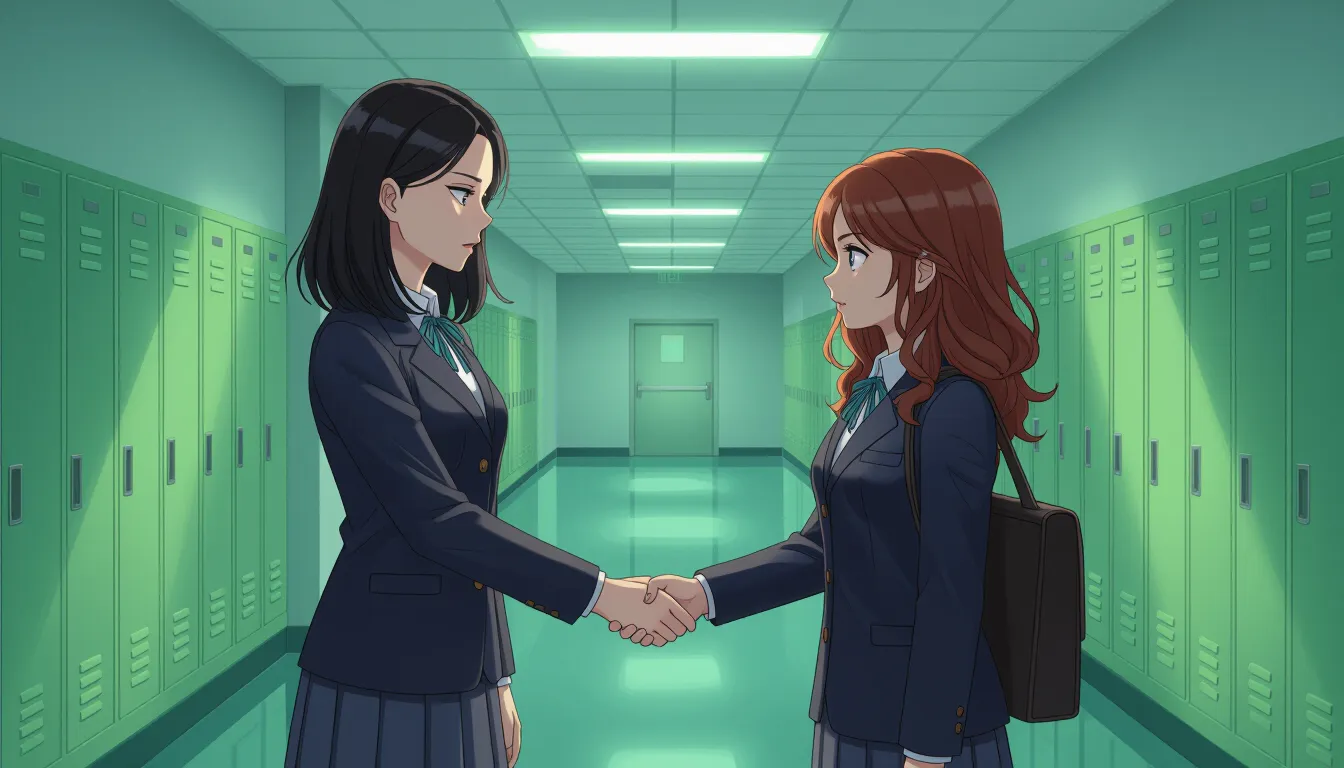
The hallway lights buzzed, casting a sickly green hue over the polished floors. Maya Chen walked beside Clara, her posture a study in controlled grace. ‘Professor Althor offered you a butterscotch, didn’t he?’ she asked, her voice flat.
Clara’s hand went instinctively to the pocket of her blazer. The crinkling wrapper was still there. “How did you know?”
Before she could answer, Maya’s hand closed briefly around her wrist, a startling, cold contact. Her fingers were slender, her grip firm. “Their kindness is a locked room,” she whispered, her dark eyes holding Clara’s. “The door only opens from the inside.”
She released Clara’s wrist as quickly as she’d taken it, leaving a phantom chill. They walked on, the buzz of the fluorescents the only sound. Clara watched Maya’s profile. The older girl’s expression was smooth, unreadable, but her knuckles were white where she gripped the strap of her book bag.
“He was just being nice,” Clara said, testing the words. “He said I looked like I needed a sweet.”
Maya’s laugh was a short, dry puff of air. “They all say that. Finch gives you tea. Hargrave lends you his scarf. Althor with his candies. It’s always something.” She glanced at a closed door they passed, marked ‘Staff Lounge – Gentlemen’. A sliver of warm, yellow light bled from beneath it, a stark contrast to the sterile hallway. “The female teachers’ lounge doesn’t have a light on. It’s just a closet with a kettle.”
Clara thought of Miss Croft from orientation, her voice like shaved ice listing the infractions: untucked blouse, hair not tied, late to chapel, speaking out of turn. Then she thought of Professor Althor’s smile in the dim library nook, his eyes crinkling as he pushed the bowl of wrapped candies toward her. His hand had brushed hers. It was warm.
“They protect us from Croft,” Clara said, repeating the mantra she’d already heard from two other girls. “He told Croft my unpacking excuse was valid. He said I seemed ‘overwhelmed’.”
“And you believed him.” Maya didn’t make it a question. She stopped walking, turning to face Clara fully. The green light washed the color from her skin, making her look carved from stone. “What’s the price, Clara? For his protection? For his… warmth?”
Clara’s own defiance rose, a familiar heat in her chest. She touched the small butterfly clip holding back her hair. “There isn’t a price. It’s just kindness.”
“Nothing here is just anything.” Maya leaned closer, her voice dropping so low Clara felt the words more than heard them. “The fog outside gets in. It soaks into the stones. Into them. Their soft voices, their ‘there-there’ pats on the shoulder that linger a beat too long. The way they look at you when you bend to pick up a dropped book.” She straightened up, her mask back in place. “You’re clever. You read vibes. So read this one.”
A door clicked open down the hall. Professor Finch emerged, his tweed jacket rumpled, a kind, distracted smile on his face. “Girls? Shouldn’t you be heading to dormitory?”
“Just on our way, Professor,” Maya said, her voice suddenly bright, polite. The transformation was instant and chilling.
“Splendid. It’s a bitter night. The fog’s come in thick.” His gaze settled on Clara. “Miss Vance, was it? Settling in alright? Not too homesick?”
Clara felt Maya’s stillness beside her. She felt the weight of the butterscotch in her pocket. “I’m fine, thank you.”
“Good, good.” He took a step closer. Clara caught the scent of pipe tobacco and mint. His eyes were a soft, watery blue. “You know where my office is. Top of the west stair. My door is always open. For tea. Or a chat.” His smile deepened. “Any time you feel… overwhelmed.”
He gave a little nod and ambled away, his footsteps silent on the linoleum. The door to the male staff lounge closed behind him, swallowing the yellow light.
For a long moment, neither girl moved. The antiseptic air felt thick. Clara’s skin prickled, the feeling she’d had since arrival intensifying into a cold certainty in her gut. It was the feeling of being studied behind a pane of glass.
Maya finally exhaled. “See?” she whispered. The single word hung in the buzzing silence. It wasn’t ‘I told you so’. It was a key, offered. A terrible, necessary key.
Clara’s fingers found the wrapper in her pocket. She didn’t take the candy out. She just pressed the crinkling cellophane against her thigh, feeling the shape of it through the wool of her skirt. A sweet, offered in a dim room. A door, always open. A lock, she now understood, she did not hold the key to.
“Come on,” Maya said, her voice flat again, drained of its performative brightness. “Curfew.” She turned and walked down the hall, her figure being swallowed by the greenish haze. Clara followed, the taste of butterscotch and dread thick on her tongue.
Clara glanced back at the closed staff lounge door. The frosted glass panel was dark, but she felt the weight of eyes behind it, a pressure against the back of her neck.
She hurried to catch up to Maya, the greenish light making the hallway seem to stretch and warp. The silence between them was different now. It was shared.
“How long have you known?” Clara asked, her voice low.
Maya didn’t look at her. “Known what? That they’re kind? That they care? Everyone knows that.”
“You know what I mean.”
“It’s not about knowing. It’s about seeing.” Maya’s steps were measured, her polished shoes clicking a soft, even rhythm. “The first week I was here, Professor Hargrave found me crying in the library. Homesick. He brought me a cup of sweet, milky tea and a handkerchief. He sat with me. Didn’t touch me. Just talked in that soft voice until I stopped.”
“That sounds… nice.”
“It was.” Maya’s jaw tightened. “The next time I was upset, I went to find him. He was in the staff room. The door was open. He saw me, smiled, and got up to close it. Just… gently. Click. He said, ‘We mustn’t let the girls see us fraternizing too much, Miss Chen. It wouldn’t be proper.’”
Clara felt a cold trickle down her spine. “He locked you out.”
“He taught me the rules.” Maya finally glanced at her.
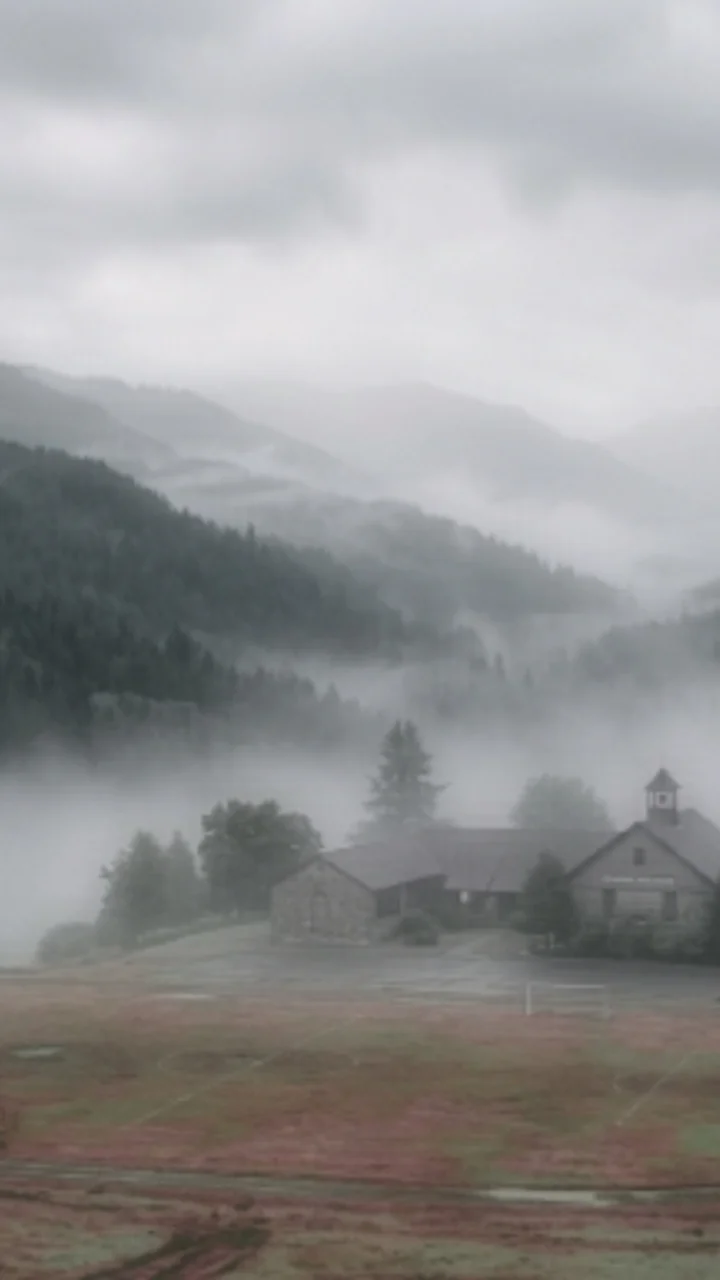
They turned a corner, leaving the main academic wing. The lighting shifted from harsh fluorescence to dim, yellow sconces. The air grew colder, damper, carrying the smell of old stone and wool.
Clara’s hand went back to her pocket. The butterscotch was a hard lump. “What do they want?”
Maya stopped walking. They were at a junction: one corridor led to the dormitory stairs, the other, darker one, toward the music rooms and, Clara remembered, Professor Althor’s office. “They want you to want it,” Maya said, her voice barely a breath. “They want you to choose the locked room. To see the closing door as protection. To thank them for it.”
A door creaked open down the dark corridor. Both girls froze. No one emerged, but a rectangle of warm, firelit glow spilled onto the stone floor. A murmur of deep, pleasant male laughter floated out, followed by the faint, sweet scent of cigar smoke.
It was the most inviting sound Clara had heard all day.
Maya’s hand closed around Clara’s wrist again, not cold this time, but urgent. She pulled her toward the dormitory stairs. “Don’t look,” she hissed.
Clara started to get annoyed at Maya's overprotectiveness cause she actually enjoys older male teacher attention specially fatherly ones a lot. she has her own past traumas making her crave that fatherly wamrth and enjoy the playfulness too.
Clara looked. In the slice of light, she saw a shadow move—a man’s silhouette, leaning back in a leather armchair. A glass in his hand. The scene was a painting of warmth and safety, a sanctuary from the sterile, punishing school.
Then the door swung shut, and the darkness was absolute.
Maya didn’t let go of her wrist until they were on the stairs, the sounds of their footsteps echoing in the narrow, spiraling space. “That’s the trap,” Maya said, her voice echoing. “The contrast. Croft yells, so Finch’s quiet sounds like salvation. The halls are cold, so their firelit rooms feel like heaven. You start to crave it. You start to think you deserve it.”
Clara’s heart was pounding. It wasn’t fear, not exactly. It was a terrible, thrilling clarity. The entire school was a carefully staged play. The harshness of the women made the gentleness of the men necessary. And the gentleness of the men required the harshness of the women to exist.
“What happens,” Clara asked, her voice steady in the echoing stairwell, “to the girls who choose the locked room?”
Maya stopped on a landing, turning to face her. The dim light from above carved shadows under her cheekbones. She didn’t answer. She didn’t need to. The resignation in her eyes was the answer. They became ghosts. They became girls who learned to smile brightly in the hallways and whose eyes went quiet and distant. They became grateful.
They climbed the rest of the stairs in silence. At the top, the heavy oak door to the dormitory wing loomed. Clara could hear the muffled sounds of other girls—laughter, a hair dryer, a sob quickly stifled. Normal sounds. A world away.
Maya pushed the door open. The wave of warm, perfumed air hit Clara like a wall. It smelled of shampoo and nail polish and clean cotton. It smelled safe.
She stepped across the threshold, but the cold from the stone stairs was still in her bones. The butterscotch was still in her pocket. And the image of that firelit room, that closed door, was seared behind her eyes. A sanctuary. A locked room. An invitation she now understood.
She followed Maya down the plush-carpeted hall, the dread on her tongue finally settling into a new, familiar taste: awareness. It was bitter. It was sharp. And it was hers.
The silence between them in the dorm hall felt heavier than the fog outside. Clara stopped at her door, the brass number 7 cool under her fingers. "I get it, Maya," she said, not looking back. Her voice was quiet, but it cut through the perfumed air. "The trap. The contrast. The locked room. I'm not an idiot."
Maya turned, her posture perfect, her face a calm mask. "Knowing and not walking in are two different things."
"I don't need a keeper." Clara finally met her eyes. The overprotectiveness was a cage of its own, another set of rules disguised as wisdom. She had knives in her suitcase and a mind that had learned to map the fault lines in a person's smile by age twelve. She could handle a butterscotch.
Maya's gaze held hers for a long moment, then dropped to Clara's hands, which were clenched at her sides. "Fine," she said, the word flat. She unlocked her own door across the hall. "Just remember, the door swings shut behind you."
Clara stepped into her room and closed the door. She leaned against it, the wood solid against her back. The room was small, a cell of beige walls and a single window weeping with condensation. She unzipped her suitcase, her fingers finding the hidden lining. The cool steel of her folding knife greeted her touch. She slipped it into the pocket of her cardigan.
Her father’s voice was a phantom in the quiet—a slammed door, a shouted curse that made the dishes rattle. Warmth in that house was a space heater left on too long, a temporary, electric thing that could burn you. Professor Althor’s smile, Professor Finch’s low, rumbling voice… it wasn’t manipulation to her. It was a relief. A deep, bone-aching relief from a lifetime of harshness.
She fished the butterscotch from her pocket. The crinkling wrapper was loud. She didn’t unwrap it. She held it in her palm, the candy hard and cool. A gift. A test. A hook. It was all those things. She knew it. The thrilling clarity in the stairwell hadn’t faded; it had crystallized. She saw the game.
But seeing the game didn’t mean you had to forfeit. It meant you could play.
The next morning, Clara chose a cherry-red clip for her hair. A spot of defiance in the sea of navy and plaid. In History, Professor Finch was discussing the Treaty of Versailles, his voice a soothing, patient drone. When he asked for the implications of Article 231, the room froze. Croft’s girls knew the penalty for a wrong answer.
Clara let the silence stretch, felt the fear in the room thicken. Then she raised her hand. "The War Guilt Clause," she said, her voice clear. "It wasn't just reparations. It was designed to humiliate. To create a lasting wound."
Finch’s eyes crinkled at the corners. "Precisely, Miss Vance. A wound that festered." His gaze lingered on her, warm with approval. "A perceptive analysis."
After class, she lingered, pretending to organize her books. The other girls filed out, a rush of relieved whispers. Finch was erasing the board, the chalk dust floating in a sunbeam.
"Sir?" Her voice was softer now, younger. She traced the grain of her desk with a finger. "That concept… the crafted humiliation. It’s clever. In a terrible way."
He turned, leaning against the board. His tweed jacket was worn soft at the elbows. "It is. It recognizes that some chains are psychological. Far stronger than iron." He smiled, a fatherly, tired thing. "You seem to have a knack for seeing the architecture of power, Clara."
Her heart beat a steady, aware rhythm against her ribs. She smiled back, letting a little of her playful boldness show. "I’ve had a lot of practice reading blueprints."
He chuckled, a rich, warm sound that filled the empty classroom. "I imagine you have. This place can feel rather cold. My office is always warm. If you ever want to discuss history… or anything else. The offer stands."
"Thank you, Professor." She stood, slinging her bag over her shoulder. The knife in her pocket was a quiet weight. The butterscotch was another. She held his gaze, letting the gratitude in her eyes feel real, because part of it was. The warmth was real. The trap was in the dependency, not the heat itself. She could take the heat and leave the cage.
In the fluorescent hallway, the buzz felt louder. She saw Maya ahead, walking alone. Their eyes met for a fraction of a second. Maya’s expression was unreadable. Clara didn’t speed up or slow down. She didn’t need to report. She didn’t need to explain.
She walked the middle ground, the sharp, aware taste still on her tongue. She felt the eyes of the male teachers as she passed open doorways—kindly, approving. She felt the sharper gaze of Miss Croft from her office doorway, a silent warning. Clara kept her spine straight, her smile small and private. She was playing both sides now, walking the edge of the locked door, feeling the warmth from the crack beneath it kiss her ankles. She would never fall in. But she saw no reason to stand forever in the cold.