The hangar armory at 1800 hours was a silent theater. The rest of the unit—Miller and the other two—leaned against workbenches a respectful distance away, their postures relaxed but their eyes fixed on the ritual. Lena stood before the metal table, each piece of her kit laid out with sniper’s precision: the disassembled rifle, the scope, magazines, field dressing, knife. Roman Hayes stood on the other side of the table, a wall of granite and ozone. He didn’t speak. His ice-blue gaze traveled over each item, a physical weight.
He started with the rifle. His hands, broad and scarred, moved with a familiarity that was its own language. He inspected the barrel, checked the bolt, his fingers probing for grit or imperfection. Lena watched, her own hands loose at her sides, her thumb brushing once, slowly, over her knuckles. The only sounds were the metallic clicks of components and the distant hum of the desert cooling outside. He set the barrel down. “Scope.” His voice was low, a gravel rumble in the quiet. She handed it over. He raised it to his eye, pointed it at the blank hangar wall, and his jaw tightened slightly. A good sign. He’d found nothing wrong.
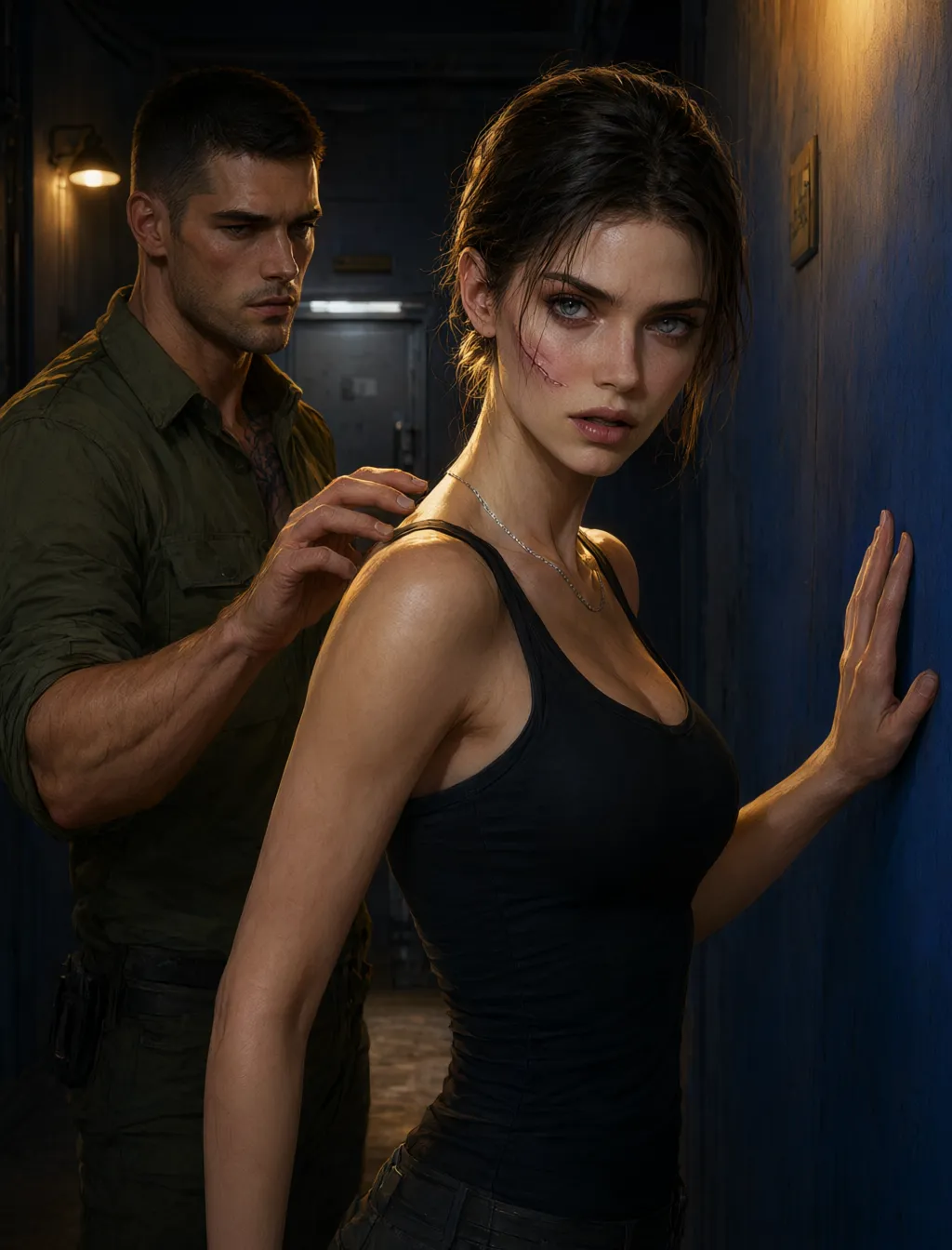
He moved down the line, his silence more punishing than criticism. The magazines, the knife, the medical pack—each received the same ruthless, wordless audit. Then he reached for her sidearm, the standard-issue pistol lying clean and oiled on the tablecloth. His fingers closed over the grip at the same moment hers, following some ingrained instinct to present it properly, touched the slide. His knuckles brushed hers. The contact was electric, deliberate. He didn’t pull the weapon away. His eyes snapped up, locking onto hers.
He took the pistol. His thumb slowly traced the textured grip where her hand had just been, a slow, deliberate stroke over the warm metal. The air in the hangar thickened, the watching men forgotten. Lena felt the phantom heat of his touch on her skin. Her breath shallowed. He broke the stare, looking down at the weapon in his hands, but the question he’d asked with that touch hung between them, charged and unresolved.
He ejected the magazine, checked the chamber, his movements now sharp, almost aggressive. He slid the magazine back home with a definitive click. He placed the sidearm back on the table, exactly in its original position. “Gear’s satisfactory.” The words were a dismissal, a verdict. But he didn’t step back. He stood there, his presence enveloping her side of the table, his eyes narrow and calculating. The inspection was over. The test, she understood, was just beginning.
Lena holds his stare, her own gaze steady, unblinking. The question hangs in the quiet, deliberate and clear. “Is that all, Sergeant?”
Roman doesn’t answer. For three full seconds, the only sound is the hum of the hangar lights. His ice-blue eyes dissect her face, tracing the line of her scar, the set of her mouth. His jaw works once, a subtle grinding of teeth. He leans forward, planting his palms on the cold metal table between them, the gear shifting slightly under the vibration. His voice drops, a low rumble meant only for her. “The gear is.”
The distinction is a blade. He straightens, but his presence doesn’t lessen. It expands, filling the space with unspoken criteria. Lena’s thumb brushes over her knuckles once, a slow pass. She can feel the weight of the other men’s attention from the workbenches, a silent audience to this second, more intimate inspection. Roman’s eyes drop to her hands, then back to her face. He’s cataloging her breathing, the pulse he can probably see at her throat.
“You pack your medical kit like someone who’s used it,” he says, the observation sharp and sudden. “Tourniquet on top. QuikClot accessible. Not by the book.”
“The book isn’t bleeding out,” Lena replies, her voice still calm, but there’s an edge there now, a sliver of the past she never discusses. She sees his eyes narrow, the faintest tell. It’s not disapproval. It’s recalculation.
He gives a single, curt nod. A concession. Then he steps back, finally breaking the oppressive circle of his proximity. The desert air feels cooler where he’d been standing. “Dawn. Perimeter run. Miller will give you the route.” He turns to leave, the ritual complete, the verdict still suspended. But he pauses, half-turned, and throws the words over his shoulder like a challenge he can’t resist. “Try to keep up.”