
They ate the almond pastries on the bench. This was not dignified, but it was good.
The museum had twenty minutes until closing. They had drifted back through the galleries slowly, not quite ready to reach the exit, moving from room to room as if the building itself were a conversation they weren't finished with.
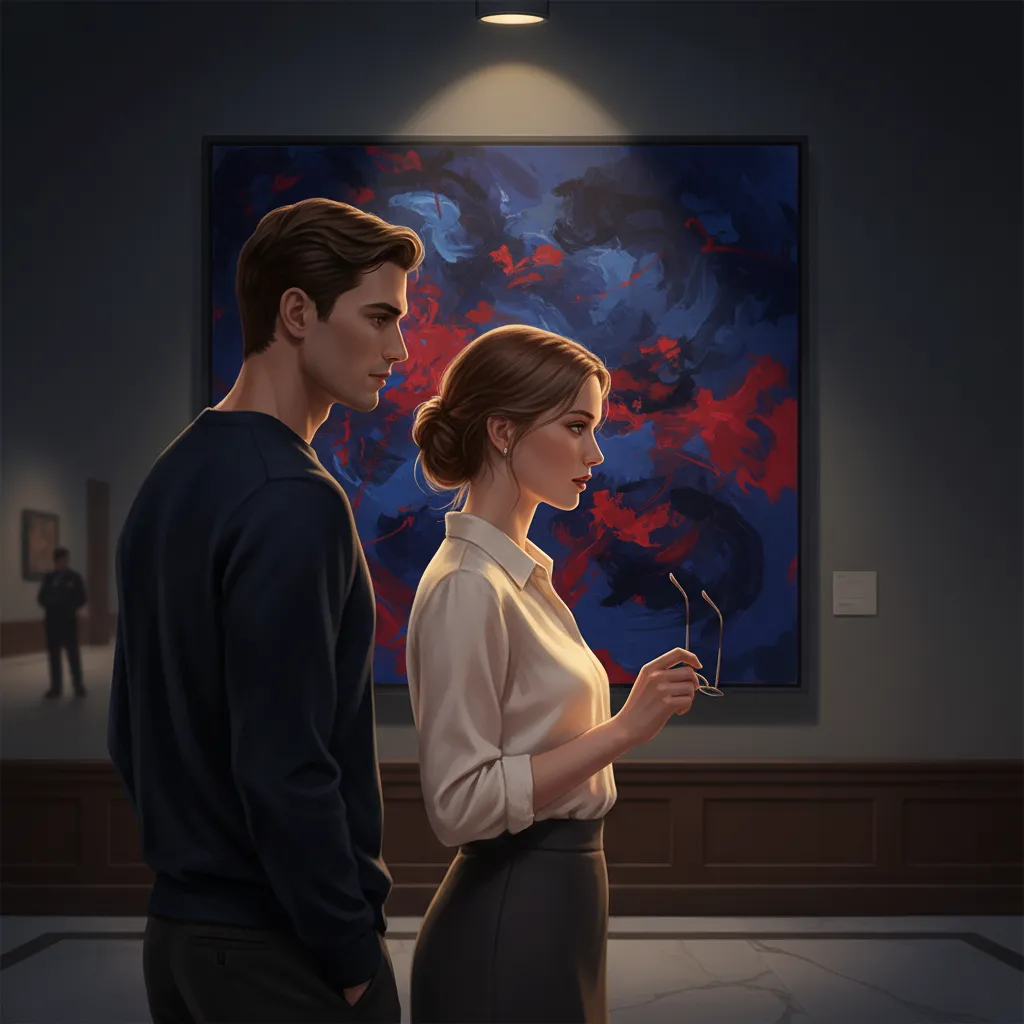
They stopped in front of a large canvas — a landscape, nineteenth century, a storm over flat farmland. Dark sky, single tree, a light in the distance that might be a window or might be lightning.
"What do you think it means?" James asked.
"I'm a philosopher, not an art historian."
"You have an opinion. You always have an opinion."
She looked at the painting for a long moment. "I think the light is the point. Everything else — the storm, the darkness, the tree — is just context for that one small light. The painter wanted you to feel how much that light matters because of how much dark there is around it."
James turned to look at her rather than the painting.
"That's not about the painting," he said.
"Of course it is."
"Claire."
It was the first time he had used her name all evening. Not Ms. Renaud, which students used. Not the careful professional distance of professor. Just her name, said quietly, like something he had been holding carefully and had now set down.
She turned to face him. They were standing close — closer than she had registered until this moment. In the low gallery light, his eyes were very dark, and he was looking at her with the same quality of attention he had brought to every conversation they had ever had, except that now it was directed not at an idea but at her, specifically, with no academic framing around it.
"I'm not your student anymore," he said. Not aggressively. Just clearly. As if he wanted to remove any ambiguity before anything else.
"I know," she said.
"I'm not sure you do."
She looked at him steadily. "James."
"Yes."
"I know," she said again, and this time it meant something different.
A guard appeared at the far end of the gallery and announced, without particular urgency, that the museum would close in ten minutes.
Neither of them moved.
His hand found hers — not dramatically, just his fingers brushing the back of her hand, waiting. She turned her palm and let her fingers close around his. It was a small thing. It was not a small thing at all.
"There's a courtyard outside," he said. "The museum closes, not the courtyard."
"Is that true?"
"I checked," he said. "Specifically."
She looked at their hands. She thought about the monk in the manuscript room, cold and honest in the margin of something enormous.
"Okay," she said.