
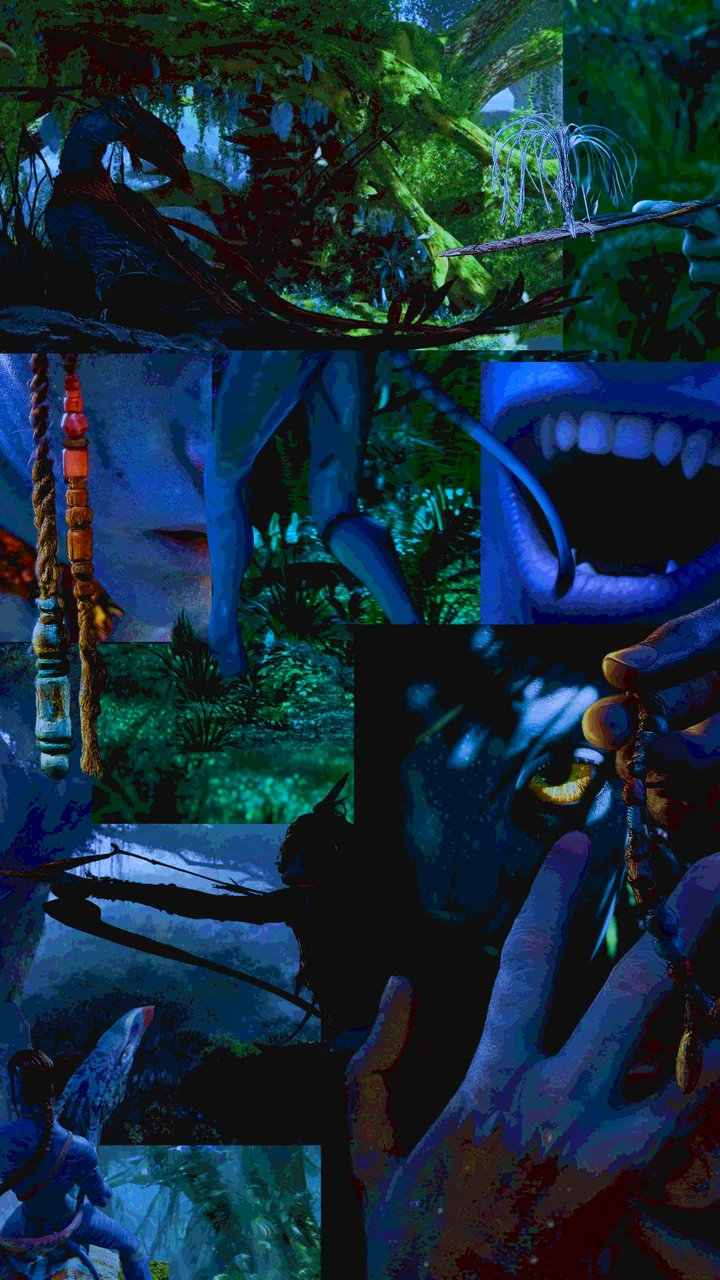
They flew until the mountains became memory.
No one spoke at first. There was nothing to say that would not make the leaving worse by giving it a sound. The ikran moved through low cloud and sea-heavy wind in a loose formation that had begun as strategy and become instinct somewhere over the first reach of open water. Tsu’tey flew at the rear more often than the front, though every part of him had been trained to lead from where warriors could see him. He could not stop looking back. Jake saw it each time Tsu’tey turned his head, each time Katir’s wing dipped half a degree because his rider had let attention hook backward toward the place they had left. At first the Hallelujah Mountains remained visible behind them, vast and impossible, floating stone suspended in mist and late light, familiar shapes rendered strange by distance. Then clouds took them. Then the curve of horizon. Then nothing remained of home but direction, ache, and the weight of everyone not there.
The children slept or pretended to sleep against their ikran.
Neteyam’s eyes were closed, but his posture was too straight for true rest. He rode with one hand still looped loosely near his bow and the other resting against the pack secured in front of him, as if supplies might vanish if he trusted them to stay tied. Even in exhaustion he looked ready to respond to an order no one had given, his face smoothed into the careful blankness he used when the feelings beneath it threatened to become inconvenient. Kiri rode beside him with her chin tipped toward the wind and her fingers trailing over her ikran’s neck, not sleeping at all. She had gone quiet in the eerie way that meant she was listening beyond hearing, reaching through a world she had never known as if Eywa’s voice might be carried even across salt water, even into places where roots became reef and forest song had to learn another shape. Lo’ak slept in pieces, jerking awake whenever the formation shifted, anger keeping him shallow. He never looked back. That was how Jake knew he wanted to. Tuk slept because her body had betrayed her into it at last, too young to sustain grief and terror without collapse, tucked against Jake’s front with her cheek pressed beneath his collarbone and one hand fisted in the leather strap across his chest.
Jake held her with one arm and flew Bob with the other, and beneath Tuk’s warm weight, beneath the ache in his wounded side, beneath the salt mist drying on his lips, he felt the pregnancy like a private, terrifying pulse.
It was not a heartbeat yet. He knew that. Mo’at had been clear and unsentimental because mercy, from Mo’at, rarely wore softness when truth would serve better. It was early. Too early for certainty beyond beginning. Too early for shape, for movement, for the kind of presence Jake’s body had once learned to recognize in the dark hours before dawn. His belly was flat beneath the travel wrap. His body showed nothing. No one looking from a distance would know that he carried anything except a child clinging to his chest and grief strapped beneath his ribs. But Jake knew. Tsu’tey knew. Neytiri knew. Mo’at knew, left behind in the mountain with all the other roots they had torn themselves from. Every wingbeat made the knowledge move through him like a second rhythm: not enough to show, not enough to name, but enough to make the whole journey feel like theft. He was not only taking his living children away from home. He was carrying the future away from the soil where it had first been chosen.
The sea opened beneath them.
At first Jake hated it.
Not because it was ugly. That would have been easier. The ocean was impossible in the way Pandora made all new things impossible before it made them beloved. It stretched beneath the ikran in wide shifting plates of blue, green, and silver, its surface broken by white teeth of surf where reefs rose unseen below. Light moved through it differently than through leaves. The forest filtered sun, caught it in canopies, made shade a living architecture. The sea threw light back. It glared. It flashed. It had no branches, no roots, no paths Jake could read from above except currents and color changes and the dark moving shapes of creatures below. There was nowhere to land if someone fell. Nowhere to hide if aircraft found them in open sky. The vastness made every child look smaller. Every ikran became a scrap of color against something ancient enough not to care whether they survived crossing it.
Tsu’tey hated it too. Jake could tell by the set of his shoulders, by the way he held Katir too controlled, by the hard line of his mouth whenever the water rolled unbroken beneath them for too long. Tsu’tey had been born to forest and height, to branches and stone, to battles fought from above and through, to ground that answered when touched. Water gave him nothing to command. It moved as it wished. It did not care that he had been olo’eyktan. It did not care that he had laid his title down with more dignity than Jake could bear to remember. It did not care that he was father, mate, warrior, protector. It offered no foothold for duty.
Neytiri flew near the children, never still for long. Sometimes she was beside Kiri, sometimes above Lo’ak, sometimes near Neteyam, sometimes close enough to Jake that Tuk could lift one sleepy hand toward her before sinking back against Jake’s chest. She had packed light and lethal and looked carved from fury even when soaked by sea mist, but every time Tuk whimpered in sleep, Neytiri’s head turned. Every time Lo’ak drifted too far, Neytiri’s ikran angled him inward without a word. Every time Tsu’tey looked back, she looked at him, then away, as if refusing to witness too openly the part of him that had been forced to leave his own center behind.
The first fracture came just after the second chain of islands, when the rain thinned and the formation dropped lower over the water to cut under a bank of cloud.
Tuk stirred against Jake’s chest, her fingers tightening weakly in his strap. “Mom?”
The word was small enough that the wind almost took it.
Jake bent his head. “I’m here, baby.”
Her eyes opened halfway, unfocused with sleep and salt. For one merciful second she looked young enough to have forgotten everything. Then memory came back. Her mouth turned down. She looked past Jake’s arm at the water, the sky, the distant shapes of islands that were not the Hallelujah Mountains, and her little body went rigid against his.
“When are we going home?”
The question moved through the formation without needing to be repeated. Neteyam’s eyes opened. Kiri’s hand stilled against her ikran’s neck. Lo’ak turned his head sharply and then looked away again. Tsu’tey did not look back this time. He went very still.
Jake had answered questions under fire with less difficulty.
“Soon as we can,” he said, and hated himself for how thin it sounded.
Tuk heard the thinness. Children always did. “But when?”
Jake tightened his arm around her. The honest answer was a wound. I don’t know. Maybe not soon. Maybe not while the baby inside me is still nothing but a secret pulse. Maybe not until Spider is found or lost or changed into something we cannot bring back. Maybe not until Quaritch is dead again and stays dead this time. Maybe not until the war stops building cities over the bones of the world. None of those answers belonged in a child’s ear with the sea endless below.
“We have to be safe first,” he said.
Tuk’s face crumpled. “I was safe at home.”
No one answered well because no answer existed that did not betray someone.
Lo’ak gave a harsh laugh that was not laughter. “Yeah. Until I ruined it.”
“Lo’ak,” Neteyam said.
The name came out too controlled, too careful, and that made Lo’ak’s anger snap toward him like a spark finding dry bark.
“What? You want to say I didn’t?” Lo’ak’s voice carried badly over the wind, rough with sleeplessness and shame. “Go ahead. Do the big brother thing. Tell me it’s not my fault while looking like you’re trying not to think it.”
Neteyam’s jaw tightened. “This is not the time.”
“It’s never the time with you. You just stand there and do the right thing and make everyone else look stupid.”
Neytiri’s ikran drifted closer, her eyes narrowing.
Jake felt Tuk tense and forced his own voice low. “Enough.”
Lo’ak’s ears pinned back. “No. I’m tired of enough. I’m tired of everyone acting like if we just keep our heads down and follow orders, everything works out. Spider followed us because I went. Quaritch took him because I went. Now we’re all leaving because I—”
“Because Quaritch came back,” Tsu’tey said.
His voice cut through the wind without rising.
Lo’ak closed his mouth.
Tsu’tey finally looked back. The sea wind had pulled strands loose from his braids. His face was exhausted in the cruel way flight made exhaustion visible, stripping away the distractions of camp and battle until only the bone of the thing remained. He did not look angry. That made Lo’ak look away.
“You made wrong choices,” Tsu’tey said. “They had consequences. We will not lie about this. But you did not make Quaritch. You did not make the RDA. You did not bring the sky people back from their dying world. Do not make yourself so important that you become blind to the enemy.”
Lo’ak swallowed. The reprimand struck deeper because it did not let him keep the shape of guilt he had chosen. Guilt could become pride if held wrong. Jake had learned that too late in his own life and saw the danger in Lo’ak now: the seductive misery of believing every disaster somehow centered on him because that at least made the world feel ordered.
Neteyam’s eyes dropped, not in shame exactly, but recognition.
Tsu’tey saw that too. “And you,” he said.
Neteyam straightened automatically.
Tsu’tey’s expression softened by a fraction. “You do not need to become stone because your brother becomes fire.”
Neteyam looked as if he had been struck more gently than he knew how to bear.
Jake wanted to touch both boys. He could not reach either from Bob without breaking formation, and Tuk was still tucked against him, awake now and listening with wide, wet eyes. So he held the child he could hold and let Tsu’tey father the ones beyond his arms.
Kiri spoke then, her voice so quiet that the comms carried it more by accident than intention. “Eywa sounds different over water.”
Everyone looked at her, grateful and unsettled by the interruption.
She did not look at any of them. Her gaze was fixed downward, into the shifting blue beneath the ikran. “Not gone. Just… far and close in another way. Like hearing someone speak through shell.”
Neytiri’s face changed. Of all of them, she understood that sort of statement least and trusted Kiri saying it most. “Does she say we should go back?”
Kiri closed her eyes.
For a long time there was only wind.
“No,” she said at last. “She says the roots are not the only things that remember.”
No one knew what to do with that either.
So they flew.
Time passed strangely after that. Rain came and went. The sky opened into hard blue, then veiled itself again in pearl-gray cloud. They passed rugged islands where surf exploded against black cliffs, atolls like rings of green cupping water so clear Jake could see reef structures beneath the surface, vast shallows streaked with sandbars and coral fingers, deep channels where immense shadows moved below like thoughts too large to finish. The ikran tired. The children tired. Everyone smelled of salt, leather, fear, and the sour edge of hunger eaten too quickly on brief landings where no one truly rested. Tuk stopped asking when they were going home. That was worse.
By the time they crossed the outer reef of the Metkayina territory, the sun had begun to slant westward, turning the water beneath them a violent turquoise bright enough to hurt the eyes.
The surf rose like a wall.
For one breathtaking stretch, the ikran skimmed above the huge breaking waves of the outer reef, their wingbeats cutting through sea-spray flung high by water smashing itself white against coral. Bob snarled under Jake, not afraid but deeply offended by the chaos of air above waves, where updrafts snapped sideways and salt struck his eyes. Jake leaned low over Tuk, shielding her face with his shoulder. She made a small sound—not fear this time, wonder—and lifted her head just enough to see the lagoon open beyond.
The world changed.
Inside the reef, the water calmed into a wide bright basin, clear as glass over shifting coral gardens. Fish flashed beneath the surface in impossible schools, silver and yellow and blue, moving as if the water had nerves. Sandbars curved pale through shallows. Mangroves rose from the lagoon in immense tangled structures, their roots arching above and into the water like living bridges. Among those roots hung the village.
The marui were suspended over water from the great mangrove limbs, woven structures hanging like nests or wasp hives, beautiful and strange, connected by walkways that curved with the roots rather than forcing the roots into human lines. People moved everywhere: along the suspended paths, in canoes, through the water, over platforms built above shallows. Broad tails flashed below the surface. Children dove from high root-walks into the lagoon and surfaced laughing. Ilu cut through the water like bright living knives. The whole village seemed not built upon the sea but woven into conversation with it.
The shell-horn sounded.
Its call rolled across the lagoon, deep and resonant, and the village changed in an instant. People turned. Bodies gathered. Children ran out along walkways. Swimmers surfaced. Ilu riders circled beneath suspended houses and then rose near the sand-spit where the strangers descended. The Sullys banked in a tight arc around the edge of the village, not because Tsu’tey wanted spectacle but because they needed space to land all the ikran without trampling people who had already crowded too close. Neytiri gave the formal cry, sharp and carrying, announcing arrival without asking permission to exist. Heads lifted everywhere.
They landed under every eye.
The ikran struck sand and shallow water in a rough line, panting, wings shaking spray. Jake dismounted carefully with Tuk in his arms and felt at once the wrongness of ground that shifted beneath his feet. Sand gave way where root and stone would have held. The air tasted of salt and fish and sun-warmed seaweed, so different from the forest’s leaf-rot sweetness that his lungs seemed uncertain what to do with it. Bob shook himself violently, spraying Jake’s legs and making Tuk squeal despite everything.
“Bob,” Jake muttered.
The ikran snapped his teeth near Jake’s shoulder, not close enough to bite, just enough to announce he had opinions about the ocean and every person responsible for bringing him to it.
Tuk hiccuped a laugh into Jake’s neck.
For half a second, that laugh saved him.
Then the crowd closed in.
The Metkayina looked like Na’vi and did not. That was Jake’s first stupid thought, and he hated how much it sounded like something a human scientist would think before finding kinder language. They were Na’vi, unquestionably, but adapted to a world Jake did not know. Broader chests. Stronger tails, thick and finned for water. Arms and legs shaped by swimming, hands wider, forearms powerful, skin tones shifted toward sea-green blue, tattoos curving over faces and shoulders in patterns that seemed to move like currents. Their eyes went first to the ikran, then to the children, then to Jake, then to Tsu’tey, then to Neytiri’s bow. Curiosity moved through them in waves. So did suspicion.
Jake set Tuk down but kept one hand at her shoulder. Tsu’tey moved to his left, not in front of him, but near enough that every Metkayina eye could read mate, guard, threat if needed. Neytiri stepped to Jake’s other side with her bow in hand and her face already saying she would hate this place if it gave her reason. Neteyam stood just behind, too composed. Kiri’s gaze had gone past the crowd to the water, her ears lifting as if the lagoon had spoken. Lo’ak stared despite himself at a reef girl rising from the shallows with water streaming down her hair and shoulders, then remembered grief, guilt, and exile and looked sharply away. The reef girl noticed anyway. Her expression softened with curiosity.
Three skimwing riders came in from seaward.
They glided over the lagoon like creatures cut from wave and sky together, touching down beyond the crowd with a grace that made even the ikran seem abrupt by comparison. The riders slipped down and waded ashore. The leader came forward first, tall and powerfully built, tattooed across face and body, presence steady enough that the crowd quieted before he spoke. Tonowari, Jake knew. Olo’eyktan of the Metkayina. A tough leader, Norm had said once, though Norm’s information about sea clans had been filtered through old anthropological notes and the humbling fact that most sea clans had no reason to answer human questions.
Jake stepped forward and made the formal greeting, fingers to forehead, then outward.
Tonowari returned it.
“I See you, Tonowari,” Jake said, forcing his Na’vi into its clearest shape despite the exhaustion in his mouth. “Olo’eyktan of the Metkayina.”
Tonowari’s gaze moved over him, weighing not the legend but the man standing before him with a child’s salt-wet hand gripping his wrap. “I See you, Jakesully.”
Then his eyes moved to Tsu’tey.
That was when the air changed.
Tonowari’s face did not harden. He was too practiced for that. But the recognition was there, followed by the question that every adult in the village seemed to sense before it was spoken. Jake Sully was problem enough: Toruk Makto, war leader, demon-blood, forest-born by choice and body remade through Eywa’s mystery. But Tsu’tey was another kind of trouble. Not a warrior seeking refuge. Not a mate trailing behind his family. An olo’eyktan without his clan at his back, standing on another leader’s sand.
Tsu’tey gave the greeting with perfect form. “I See you, Tonowari.”
Tonowari returned it after the smallest pause. “I See you, Tsu’tey te Rongloa Ateyitan.”
The use of his full name rippled through the gathered people.
Tsu’tey’s ears did not move. “I come as father and mate.”
“Not as olo’eyktan?”
The question was quiet. It struck like a spear.
Tsu’tey’s jaw tightened once. “My clan remains in the mountains. Their defense is held by those I trust.”
“That is not what I asked.”
Jake felt Neytiri go sharp beside him.
Tsu’tey inclined his head, the movement so controlled it could have been submission if one did not know him well enough to see the cost. “I have laid down the visible part of that title so the People are not hunted for my family’s presence. But I am Omaticaya. I will always be Omaticaya.”
Tonowari studied him, and Jake thought, with a tired clarity that almost made him laugh, that this was going badly and had not yet reached the hard part.
Then the crowd parted.
Ronal came forward.
She did not walk like someone entering a conversation. She walked like judgment given a body. Her tattooed face was stony, her headdress marking her as tsahìk, her belly round with late pregnancy beneath the fall of her ornaments and wraps. She carried the weight of it with the same unsoftened authority Mo’at had always carried sacred knowledge: not fragile, not decorative, not a reason for anyone to speak over her. Her eyes moved over the family with sharp, surgical precision. Forest bodies. Thin tails. Narrow hands. Children with wrong fingers, wrong proportions for water, grief in their scent, smoke under their skin. Neytiri, all fang and forest fury. Tsu’tey, an uprooted leader trying to stand like he had not been cut from his own center. Then Jake.
Ronal stopped.
Jake felt the moment she knew.
It was not dramatic. She did not gasp. She did not soften. Her nostrils flared once, and her eyes dropped very briefly to the place where Jake’s hand had unconsciously moved low against his abdomen before he forced it to his side. That was enough. A tsahìk did not need Mo’at’s hands to recognize what stress and early pregnancy did to scent, what grief did to a sa’eveng’s body, what exhaustion did beneath bravado. Ronal saw him whole and did not like what she saw.
Her gaze snapped to Tsu’tey with open anger.
“You flew him across the ocean like this?”
The crowd went silent.
Jake’s stomach dropped.
Tsu’tey’s body reacted before his mind could decide whether offense or fear came first. His shoulders lifted, ears flattening, tail going rigid behind him. The alpha in him took the accusation as threat. The mate in him took it as proof that danger had been visible from the outside. The father in him, newly aware again, looked half a breath from violence.
Jake stepped in before he could speak. “Tsahìk Ronal—”
Her eyes cut to him. “Do not spend breath pretending I did not see.”
Neytiri’s lips peeled back from her teeth.
“Neytiri,” Jake warned softly.
Ronal heard it. Her eyes moved to Neytiri and narrowed further. “And you knew.”
Neytiri lifted her chin. “I knew.”
“And still you brought him?”
“I came to make sure he arrived alive.”
The crowd stirred. Tonowari’s gaze sharpened, but he did not interrupt his mate.
Ronal stepped closer to Jake. Close enough that Tsu’tey made a low sound in his throat. Jake lifted one hand without looking at him, not touching, just warning. Please. Not here. Not this way.
Ronal circled him once, not as contemptuously as the screenplay-shaped nightmare Jake had expected from old human memories of being inspected, but with anger so controlled it was worse. Her eyes took inventory: the healing wound at his side, the way Tuk’s fingers dug into his hip, the tension under his breath, the faint tremor in his hands from too little food and too much flight, the salt dried across his shoulders, the old grief at his throat, the newer fear beneath it. She reached for his wrist. Tsu’tey shifted.
Jake gave him a look.
Tsu’tey stopped, barely.
Ronal took Jake’s wrist between her fingers and pressed two fingers to the pulse there. Her touch was cool, efficient, not gentle. Jake held still because Mo’at had trained him to recognize medical authority even when it irritated him. Ronal’s gaze flicked to his face, then to his abdomen again.
“How far?”
“Early,” Jake said.
“That is not an answer.”
“It’s the only one I have.”
Ronal’s eyes narrowed. “You smell of blood, ash, fear, grief, and flight. You are thin from stress. Your body is holding a beginning so new it should still be guarded by quiet, food, sleep, and familiar ground. Instead you cross open water with war behind you and children in front of you.”
“We didn’t have familiar ground anymore,” Jake said.
Ronal released his wrist. “Then you should have left sooner.”
That was unfair and true in too many directions to answer cleanly.
Tsu’tey spoke through his teeth. “Do not judge what you do not know.”
Ronal turned on him at once. “I judge what stands on my shore asking shelter.”
“Tsu’tey,” Jake said.
But Tsu’tey had already been struck where he was rawest. His hands were open at his sides, fingers flexed, no weapon drawn, but every part of him was bristled. “I brought my mate because the enemy hunts him. I brought my children because the enemy touched them. I left my clan because my presence would draw fire to them. Do not mistake exile for carelessness.”
Ronal’s expression did not soften. “An olo’eyktan who comes without his People is either dead, cast out, or dangerous.”
A hiss moved through Neytiri.
Tsu’tey went still.
Jake felt the blow land. He wanted to shield him from it and could not. That was the cruelty of it: Ronal was not entirely wrong to ask. A leader severed from the center of his people was not a small thing. Among the Na’vi, titles were not portable ornaments. They were relationships. Tsu’tey standing here without the Omaticaya behind him meant something had been broken, however nobly, however necessarily.
Tonowari finally spoke. “Ronal.”
She did not look at him. “No. They bring war. They bring children who cannot breathe our water. They bring forest bodies and flying demons and an enemy who burns villages to find them. This one—” She pointed at Tsu’tey without fear. “—carries command like a spear even after laying the title down. This one—” Her finger turned to Jake. “—is called Toruk Makto and thinks that means the world will bend around his family long enough for him to learn new ground. And he carries again.”
The last word moved through the crowd like a current.
Jake felt Neteyam go still behind him. Kiri’s face closed. Lo’ak’s ears flattened, guilt and protectiveness rising together. Tuk pressed against Jake’s side. Neytiri stepped forward half a pace, and this time Jake did not know whether he could stop her if Ronal said one more sharp thing.
“Say that like accusation again,” Neytiri said, very softly, “and we will have a problem.”
Ronal’s head turned.
The air tightened.
Neytiri looked magnificent and terrible, hair wind-tangled, bow at her back, every inch of her forest-born fury sharpened by grief and exhaustion. She was not Jake’s mate, not these children’s mother by blood, not bound to stand here except by love and choice. That made her more dangerous, not less. She had no political role to moderate her. No title to protect. She had come because Quaritch had touched children she considered hers, because Jake carried new life, because Tsu’tey was family, because the forest behind them held too many graves. Her patience had been left somewhere over the ocean.
Jake turned his head just enough. “Neytiri.”
Ronal’s eyes flashed. “You threaten the tsahìk of the clan you beg from?”
Neytiri bared her teeth. “I threaten anyone who spits on a pregnant sa’eveng because war found him before rest did.”
Tonowari moved then, not between them exactly, but into the center of the storm before it became blood. “Enough.”
His voice was not loud. It carried.
The crowd quieted at once.
Tonowari looked first at Ronal, and whatever passed between them was not submission or command but the long-practiced balance of mates who had argued before and would again. Then he turned to Jake.
“You seek uturu.”
Jake drew himself upright. It hurt. He did it anyway.
“Yes,” he said. “Sanctuary for my family. Not war for your people. We don’t want to bring danger here. We came because the islands are many. Because the sea is unknown to those hunting us. Because if we vanish into another world, maybe the forest gets to breathe.”
Ronal’s mouth tightened. “And if your demon follows?”
“Then we leave before he burns you for us,” Tsu’tey said.
Jake glanced at him sharply. Tsu’tey did not look away from Tonowari.
The offer cost him. Jake knew it did. To stand on strange sand and promise not to let his family become another clan’s wound, even if it meant moving again, meant admitting that he could no longer command safety into existence. He could only keep fleeing the shape of danger until it changed or caught up.
Tonowari heard the cost. His gaze moved over the children, pausing on Tuk’s tear-streaked face, Neteyam’s too-straight shoulders, Lo’ak’s anger, Kiri’s distant stillness, Neytiri’s barely leashed violence, Jake’s hidden pregnancy, Tsu’tey’s grief-wounded pride. Then he looked back at Ronal.
“They are tired,” he said.
“They are trouble,” Ronal answered.
“Yes.”
Jake almost laughed. He managed not to.
Tonowari’s face remained grave. “But uturu is asked. It cannot be dismissed because the asking is difficult.”
Ronal’s eyes narrowed. “Uturu does not mean blindness.”
“No.”
“Then hear me before you answer.”
Tonowari inclined his head.
Ronal turned back to Jake. This time, when she approached, she did not touch him. Her words were enough. “Water does not care who you were in the forest. It does not know Toruk Makto. It does not bow to olo’eyktan. It does not hold you up because songs say you are mighty. If you panic, it fills your lungs. If your children fight it, it tires them. If your mate thinks command can make currents obey, the sea will teach him otherwise. If you hide pain from me, I will know. If you endanger what you carry through pride, I will not be gentle because legends bruise easily.”
Jake swallowed.
Tsu’tey’s hand twitched toward him and stopped.
Ronal’s gaze dropped once more, briefly, to Jake’s belly. “This beginning may live or may not. I do not say this to wound. I say it because beginnings are not protected by wanting. If you stay, you will be under my eye. You will eat what I tell you. You will rest when I tell you. You will learn breath before you learn speed. You will not pretend forest strength is water strength.”
Mo’at, Jake thought suddenly, would like her.
He was horrified by that.
Jake inclined his head. “I hear you.”
“No,” Ronal said. “You hear a warning. Understanding comes later.”
Neytiri made a low sound that was almost unwilling approval.
Tonowari looked at Tsu’tey. “And you. You were leader of your people.”
“I was.”
“Here, you are not.”
Tsu’tey’s face went very still.
Jake felt the pain of it move through him like a hand closing around his ribs.
Tonowari did not say it cruelly. That made it harder in a different way. “You may advise your family. You may guard them. You may fight if fight comes. But you do not command my warriors, my waters, or my children. You do not take offense when you are taught. You do not shame my instructors because they correct yours. You do not bring forest hierarchy onto reef walkways and call it respect.”
Tsu’tey was silent long enough that several Metkayina shifted uneasily.
Then, slowly, he brought his fingers to his forehead and lowered them in formal acknowledgment.
“I hear you.”
Jake could see how much it cost him not to add more.
Tonowari nodded once, satisfied enough but not comforted.
Ronal looked at Neytiri next. “And you.”
Neytiri’s ears angled back.
Ronal’s eyes were flat. “You will not start a war on my sand because your grief has teeth.”
For one impossible second, Jake thought Neytiri might smile.
She did not. But her mouth changed just enough to show she respected the accuracy of the strike.
“My grief has a bow also,” Neytiri said.
Tonowari’s brows lifted slightly.
Ronal stared at her.
Then, astonishingly, Ronal’s mouth twitched. Not kindness. Not acceptance. Recognition, perhaps, predator to predator.
“Then keep it pointed at enemies,” Ronal said.
Neytiri inclined her head by a fraction. “If your people do not become them.”
“Neytiri,” Jake and Tsu’tey said together.
Kiri, from behind them, whispered, “That almost went well.”
Lo’ak snorted before he could stop himself.
Tuk’s grip loosened slightly at Jake’s side.
Tonowari’s gaze moved to the children, and something in him softened just enough to change the air. “My children will teach yours our ways. Tsireya. Ao’nung. Rotxo.”
A boy at the edge of the crowd made a face that suggested he had not volunteered for this honor and already regretted being born near enough to be named. The reef girl Lo’ak had noticed—Tsireya, then—looked at the forest children with open curiosity and a gentleness that made Jake’s throat tighten unexpectedly. She did not stare at their hands the way others did. She looked at Tuk first and smiled.
Tuk, exhausted and suspicious, hid behind Jake’s thigh.
Tonowari continued. “You will learn to breathe. To swim. To ride ilu. To live here without fighting the water every moment. Until then, you do not go beyond the shallows without one of us. You do not hunt. You do not fly your ikran low over the village without warning. You do not bring weapons onto the teaching platforms unless asked.”
Lo’ak opened his mouth.
Neteyam grabbed his wrist.
Lo’ak closed his mouth.
Jake noticed and felt a tired flicker of gratitude.
Tonowari turned back to the gathered people. “The family of Jakesully is granted shelter.”
Murmurs rose at once.
Ronal’s voice cut through them. “Conditional shelter.”
The murmurs quieted.
She looked at Jake when she said it, but the warning was for all of them. “They are not Metkayina because they stand on our sand. They are not safe because they have arrived. They are not forgiven for the danger that follows them because they have children. They will learn. They will obey. They will be watched.”
Jake lowered his head.
Not enough to submit as lesser. Enough to accept the truth of being received under terms.
“Thank you,” he said.
Tsu’tey said nothing, but his hand found Jake’s briefly behind the line of their bodies. His fingers were cold from sea wind. Jake squeezed once.
The crowd began to loosen, curiosity rushing in where ceremony had held it back. Children whispered about tails and fingers. Adults looked at the ikran with open distrust. Someone laughed at Bob when he snapped irritably at a fish flopping too close in the shallows, and Bob lunged so violently the laughter became a quick retreat. Tuk turned to watch, giggled once, then looked guilty for it. Kiri had already drifted a step toward the water, her toes sinking into wet sand, her whole face altered by the nearness of the lagoon. Neteyam stood as if waiting for someone to tell him where to put the packs. Lo’ak looked toward Tsireya and then away again, ears darkening. Neytiri watched Ronal. Ronal watched Jake.
Tsu’tey watched the water.
That was when Jake understood the first real shape of the new danger.
Not Quaritch. Not only Quaritch. Not the RDA burning its way across distance. Not even the pregnancy, though that fear had set up a second pulse beneath his heart. It was this: Tsu’tey standing on unfamiliar sand, surrounded by people who did not owe him obedience, facing a world he could not read or command or protect against by force of will. In the forest, his authority had been a structure others could shelter under. Here, it was a blade he would have to sheath often enough not to cut their hosts. Here, safety would not come because he named it necessary.
Tsu’tey realized it too.
Jake saw the moment land. His mate’s shoulders did not slump. Tsu’tey would sooner let the tide take him. But something in his stance adjusted, not surrendering, not accepting, just understanding that the ground beneath them had changed into water and would not become root because he wanted it badly enough.
Jake looked at Tuk, at Kiri already listening to the reef, at Neteyam trying to be useful, at Lo’ak burning with shame and curiosity, at Neytiri standing like a drawn bow beside them, at Tsu’tey forced into humility by geography, at Ronal’s hard eyes and Tonowari’s measured mercy.
“Sullys stick together,” he had told the children once, because it was the only mantra he knew how to give them when the world broke too large for explanation.
It was still true.
It was also no longer enough by itself.
The sea moved in around Jake’s ankles, warm and indifferent, pulling sand from beneath his feet grain by grain.
Absolutely — shifting the emotional center back onto Jake/Tsu’tey, with the reef and children mostly functioning as pressure around them.
The first night among the Metkayina did not feel like shelter.
It felt like being displayed.
Jake had known, in the abstract, that arriving as strangers would mean eyes. He had expected curiosity, suspicion, gossip, the careful hostility of people deciding whether refugees were guests or infection. He had lived long enough among the Omaticaya to understand that clan hospitality was never simple softness. Uturu might be sacred, but sacred things were not easy things. A person could be fed and watched in the same breath. A family could be granted a roof and still feel every glance counting the costs of their presence. He understood all of that.
Knowing it did not make the first evening easier.
The marui Tonowari assigned them hung over shallow water at the edge of the village, close enough to be included and far enough away to make the boundary obvious. It was beautiful, because everything the Metkayina made seemed to know how to belong to the sea before it knew how to be useful. The woven walls curved with the shape of the mangrove limbs that held them. Open panels faced the lagoon so wind could pass through and salt air could breathe across sleeping mats. Beneath the floor, water moved constantly, lapping against roots and support ropes in soft irregular rhythms that kept making Jake’s ears twitch. The whole structure swayed—not dangerously, not much, but enough that his forest-born body never stopped noticing. Enough that each subtle shift told him he was not on stone, not on root, not on any ground that could be trusted to remain where he had left it.
Tsu’tey hated it.
He had said nothing. That was how Jake knew it was bad. Tsu’tey’s irritation was usually precise, articulate, and happy to be shared with anyone within range. Silence meant he was arranging himself around something too large to insult properly. He moved through the marui like a warrior forced into ceremonial clothing cut by an enemy: controlled, upright, offended by every necessary accommodation. His tail flicked low and hard whenever the floor shifted beneath him. His ears kept turning toward noises under the water, toward splashes, toward the hollow knock of waves against mangrove roots. More than once, his hand went to a support beam as if testing whether the entire structure could be trusted to hold the weight of his family.
Jake watched him from near the open wall while pretending to unpack.
The children had been sent out almost immediately, though sent was a generous word for the awkward herding that had followed Tonowari’s decree that the Metkayina youth would begin teaching them in the morning. Tuk had collapsed into sleep first, overwhelmed beyond pride. Kiri had drifted toward the lagoon after Tsireya with the helpless magnetism she had toward anything that spoke in more than words. Lo’ak followed because Lo’ak followed trouble, guilt, beauty, and anything that looked like it might offer distraction from his own thoughts. Neteyam had remained behind until Jake told him twice to go and once to stop hovering. Even then, he had left with the careful obedience of someone who thought distance itself was a failure of duty.
At the edge of the walkway, Ao’nung had been waiting with all the subtlety of a reef shark pretending it had not circled twice.
Jake had noticed. Tsu’tey had noticed. Neytiri had noticed and immediately looked amused in the vicious private way she had when something promised entertainment at someone else’s expense.
Ao’nung had aimed most of his first-day disdain at Lo’ak because Lo’ak made himself easy to aim at, but his eyes had kept sliding toward Neteyam when he thought no one watched. Not with softness exactly. More like challenge looking for a place to land and finding a person who refused to give him the satisfaction of obvious reaction. Neteyam, exhausted, wounded, grieving, and trying very hard to be the best-behaved refugee in the village, had met those looks with polite blankness so complete it could have been used as a shield.
Jake almost felt bad for Ao’nung.
Almost.
Now the children were gone, Neytiri had gone with them after announcing that someone had to make sure Lo’ak did not begin an interclan incident before breakfast, and the marui had narrowed to Jake, Tsu’tey, the sea, and the newly impossible fact of silence.
Tsu’tey checked the ties on the entry flap for the third time.
Jake set down the bundle of medicine wraps he had been pretending to sort. “Baby.”
Tsu’tey did not turn. “Do not call me that when I am inspecting a structure.”
“I’m gonna call you that especially when you’re inspecting a structure.”
“This is not a structure. It is a basket over water.”
Jake huffed despite himself. “It’s held together for generations, I’m pretty sure it can survive one night of you glaring at it.”
Tsu’tey tugged once at the woven tie, ears flattening when the whole panel swayed slightly. “Forest homes do not move when the wind breathes.”
“Forest homes are giant trees. They absolutely move.”
“They move correctly.”
Jake smiled before he could stop himself.
Tsu’tey finally turned, and the smile became harder to hold.
He looked tired in the blue-green evening light. Not just worn down from flight or battle, though there was that too. Salt had dried along his shoulders in faint pale streaks. His braids were wind-tangled. The bandage at his upper arm, where bark and metal had sliced him during the rescue, had begun to darken in one place despite Ronal’s healer already rewrapping it when they arrived. But the deepest exhaustion sat behind his eyes. Tsu’tey had not slept since before the rail raid. He had laid down his title, left his clan, crossed an ocean, stood before another olo’eyktan as a man without command, and been told by a stranger that his mate’s pregnancy smelled like danger.
Jake wanted to go to him.
He also knew that if he did, Tsu’tey might finally break in the way neither of them could afford.
So he made his voice light instead. “You’re gonna hurt the house’s feelings.”
“The house is wet.”
“You are impossible.”
“That is yours.”
The answer came so quickly, so dryly, that Jake laughed.
Tsu’tey’s mouth softened for half a breath. Then the movement faded. He looked past Jake, through the open wall, toward the village where lanterns glowed over water and Metkayina voices moved in low unfamiliar rhythms. His ears angled back. His tail stilled.
Jake crossed the space then.
Not quickly. Not in the rush instinct wanted. He went carefully, giving Tsu’tey time to rebuild whatever wall he needed if he chose to. Tsu’tey did not move away. He stood there rigid until Jake reached him and set one hand against his chest.
Tsu’tey’s heart was beating too fast.
Jake kept his palm there. “Talk to me.”
Tsu’tey’s eyes lowered to him. “About what?”
“Do not do that.”
“I do not know what you mean.”
“You know exactly what I mean.” Jake’s thumb moved once over the warm skin beneath Tsu’tey’s collarbone, grounding himself as much as his mate. “You’re standing there like if you clench hard enough, the whole ocean might apologize for existing.”
Tsu’tey exhaled through his nose. “It should.”
Jake almost smiled again. Almost.
Then Tsu’tey’s hand came up, not to Jake’s face or shoulder, but to his lower belly. He stopped before touching.
That hesitation hurt more than touch would have.
Jake took his wrist and guided the hand down.
Tsu’tey’s palm settled against him with such careful reverence that Jake’s breath caught. There was nothing there yet. No swell. No proof. No body-shape for Tsu’tey to cradle. Just flat skin and the layered wrappings of travel, Jake’s body tired and salt-sticky and bruised by flight. But the moment Tsu’tey touched him, the marui seemed to go quieter around them. The sea still moved beneath the floor. Voices still drifted from the village. Somewhere outside, an ilu clicked and splashed. None of it mattered as much as Tsu’tey’s hand, large and warm and trembling against the place where possibility lived.
“They knew,” Tsu’tey said.
Jake leaned into him slightly. “Ronal knew.”
“The whole shore knew after she spoke.”
“Yeah.”
“I should have stood in front of you.”
Jake looked up sharply. “No.”
Tsu’tey’s jaw tightened. “She judged you before strangers.”
“She judged you too.”
“I can bear judgment.”
“Can you?”
The question landed before Jake could soften it.
Tsu’tey’s eyes flashed. Not anger, not exactly. Pain protecting itself. Jake waited. The old Tsu’tey would have turned away, would have made pride into a wall and dared Jake to climb it. This Tsu’tey stayed. That was one of the ways years had changed them. Not made him softer. Made him braver in places no one sang about.
At last he said, “Not this kind.”
Jake’s throat tightened.
Tsu’tey’s hand remained over his belly. His other hand closed loosely around Jake’s hip, thumb brushing the edge of the wound dressing beneath his wrap. “In the forest, they knew what I was. Even when they disagreed. Even when I was wrong. Even when I was young and proud and not yet worthy of what would be placed on me. They knew the shape of me. Here, I am…” His mouth twisted faintly, disgusted by his own uncertainty. “A problem with a famous mate.”
Jake made a soft sound. “That’s not all you are.”
“No. But it is what they can see first.”
Jake could not argue.
The Metkayina did not know Tsu’tey as the boy raised beneath Hometree’s future. They did not know the warrior who had once hated Jake because his hatred was the only honest response to invasion. They did not know the man who had accepted a dreamwalker as mate before the People knew what to do with either of them, who had held Jake through birth and stillbirth and heat and war, who had carved a new bead each year for a child buried beneath roots because grief needed work for the hands. They did not know the olo’eyktan who had stayed with his people through the first return of the sky, through raids and hunger and fear, and then walked away not because he loved them less but because danger had learned the scent of his family.
They saw a forest alpha too proud for borrowed sand.
A leader without his clan.
A blade carried into a house that had not asked for war.
Jake set his hand over Tsu’tey’s. “They’ll learn.”
Tsu’tey’s ears lowered slightly. “And if they do not?”
“Then they’ll be wrong.”
“That does not protect you.”
“No.” Jake looked toward the water beyond the open wall, where the lagoon reflected the first stars in broken pieces. “Guess nothing protects us all the way anymore.”
Tsu’tey’s hand tightened.
Jake hated saying it. Hated how true it was. In the forest, there had been danger everywhere, but it was danger with language. He could read root paths, wind shifts, animal calls, the difference between distant thunder and aircraft. He knew where to hide, where to run, how to make the canopy close around him. Here the world had changed alphabets. Water did not care who he had been. Ronal had said it cruelly because she was angry, but the cruelty did not make it less true. The reef did not know Toruk Makto. The sea would not hold his head above water because he had once flown the great shadow. It would not keep Tsu’tey from drowning because he had commanded warriors. It would not spare the child inside him because that child was wanted.
Jake pressed his forehead against Tsu’tey’s chest.
For a moment, Tsu’tey only held him.
Then the purr started.
Low. Rough. Almost unwilling, as if Tsu’tey’s body had decided comfort was necessary even while his mind continued cataloging every danger within reach. The vibration moved through Jake’s cheek and into his bones. It loosened something in him so abruptly that his eyes burned.
“Don’t,” Tsu’tey murmured.
Jake swallowed. “I didn’t do anything.”
“You are about to cry.”
“That is not illegal.”
“It wounds me.”
Jake laughed wetly. “Me crying wounds you?”
“Yes.”
“That’s stupid.”
“It is true.”
Jake lifted his head enough to glare at him. “You are not allowed to make my hormones about you.”
Tsu’tey blinked, then huffed a quiet laugh, the sound caught somewhere between pain and relief. “Your hormones are very loud.”
“Oh, fuck you.”
“I have.”
Jake smacked his chest.
The laugh that escaped Tsu’tey then was small, private, and so painfully familiar that Jake had to close his eyes. There he was. Not the exiled olo’eyktan. Not the leader stripped of ground. Not the alpha bristling at Ronal’s judgment. Just Tsu’tey. His mate. His baby, ridiculous as the word still was in Na’vi air. The man who could make him laugh in a wet hanging basket over an alien ocean after the world had broken under them for the third or fourth time, depending on how one counted.
Tsu’tey bent and pressed his mouth to Jake’s brow.
The kiss was not hunger. It was not even reassurance. It was inventory. You are here. You are warm. You are breathing. Beneath your skin, something may be beginning. I am touching you. I am not too late.
Jake understood because he had kissed their children that way in the dark.
He slid both arms around Tsu’tey’s waist and held on.
For a while, that was enough.
Then someone cleared her throat outside the entry.
Tsu’tey went still so violently Jake almost laughed again, though this time the sound died when he smelled who it was: salt, medicinal resin, something sharp and floral, unfamiliar but not hostile.
Ronal stood at the threshold with a covered bowl in one hand.
Behind her, slightly back and to the left, stood a younger Metkayina woman Jake did not know. She was tall, broad-shouldered, with dark hair braided close on one side and left loose on the other, tattoos curling down her throat in wave patterns that disappeared beneath a woven chest piece. She had the posture of a hunter and the eyes of someone trying very hard not to appear interested in Neytiri, who was currently behind her on the walkway with one hand on her knife and an expression of deep suspicion.
Jake looked from the woman to Neytiri.
Oh, he thought, exhausted and suddenly delighted despite everything. Interesting.
Ronal did not wait to be invited. She stepped inside and set the bowl on the low woven shelf near the mats. “Eat.”
Jake’s eyebrows lifted.
Tsu’tey’s body immediately placed itself half between Jake and Ronal without fully moving. It was impressive, in a deeply irritating way.
Ronal noticed. “If I meant to poison him, I would not waste good fish.”
Tsu’tey stared at her.
Jake sighed. “Thank you.”
Ronal’s gaze cut to him. “Do not thank me. Eat.”
“Wow,” Jake muttered. “You and Mo’at would either be best friends or destroy each other.”
Ronal’s ears twitched. “Mo’at is the forest tsahìk.”
“She is.”
“She told you to eat.”
“Several times.”
“And you did not.”
Jake opened his mouth, then closed it.
Ronal’s face said exactly.
Tsu’tey, traitor that he was, looked faintly satisfied.
Jake pointed at him. “Do not.”
“I said nothing.”
“You thought loudly.”
Ronal looked between them, and for the first time there was something in her expression that was not merely judgment. Not softness. Not yet. Assessment shifting by a single degree. Perhaps she had expected Toruk Makto and the discarded olo’eyktan to stand in dramatic nobility, heavy with legend and male pride. Instead she had found them tired, tangled, afraid, and married in the way long bonds made people: intimate enough to insult each other in front of a hostile healer and somehow make it devotion.
The younger Metkayina woman outside the doorway made a small sound that might have been smothered amusement.
Neytiri’s eyes snapped to her.
The woman met her gaze, not flinching.
Neytiri’s ears angled back, but not in anger this time. Interest sharpened through her suspicion like a blade catching light.
Ronal noticed that too. Of course she did. Tsahìks noticed everything inconvenient.
“This is Veyä,” Ronal said, gesturing slightly to the woman without turning. “She knows the outer currents and the mangrove paths. She will show your sister where she may hunt without offending our waters or being eaten.”
Neytiri bristled. “I do not need—”
“You do,” Ronal said.
Veyä’s mouth twitched.
Neytiri saw it. “Something is funny?”
“No,” Veyä said. Her voice was low and smooth, reef-soft around the edges but not meek. “Not yet.”
Jake coughed.
Tsu’tey looked at him in warning.
Neytiri’s eyes narrowed at Veyä for a long, charged beat. Then, to Jake’s deep and immediate entertainment, she lifted her chin. “Then show me.”
Veyä’s smile appeared slowly, small and dangerous. “At dawn. The water is not kind to tired forest hunters.”
Neytiri stepped closer. “The forest is not kind either.”
“I know. I have seen what it sends us.”
The words could have been insult. They were not. Not quite. Neytiri seemed to hear the difference. Her tail gave one sharp lash, but her mouth changed at one corner.
Ronal exhaled through her nose. “Do not bleed on my walkways before morning.”
“That depends on her manners,” Neytiri said.
Veyä’s eyes flashed. “And yours.”
Jake looked at Tsu’tey.
Tsu’tey looked back, expression flat in the way that meant he was refusing to be dragged into whatever this was becoming.
“Background problem?” Jake murmured.
“Large one,” Tsu’tey replied.
Ronal turned on both of them. “Eat.”
Jake obediently sat.
It was easier than standing, though he would not have admitted that aloud. The bowl held warm broth thickened with shredded fish, soft sea greens, and something starchy Jake did not recognize. It smelled strange, briny and rich, but not unpleasant. His stomach rolled once in warning and then, suddenly, hunger struck so hard that his hands shook around the bowl.
Tsu’tey saw.
So did Ronal.
Jake hated them both briefly.
He took a cautious first mouthful, then another. The warmth spread through him, not comfort exactly, but something near enough that his body leaned toward it. Tsu’tey sat beside him, one knee pressed to Jake’s thigh, not hovering but close. Ronal watched the first several bites with the severity of someone prepared to personally force-feed him if necessary.
“I can eat without supervision,” Jake said eventually.
“No,” Tsu’tey and Ronal said at the same time.
Jake stared at Tsu’tey.
Tsu’tey did not look sorry.
Outside, Veyä made another amused sound. Neytiri, astonishingly, did not threaten her.
Ronal crouched before Jake, close enough now that her voice dropped below performance. “You will come to me at first light.”
Jake swallowed. “For what?”
“For examination. Breath work. Food. A discussion of what plants from your forest medicine may harm a reef pregnancy. What foods here may help. What pains are expected and what pains are not. Whether your wound has angered your body. Whether the flight has caused bleeding.”
Tsu’tey’s hand tightened against his own knee.
Jake’s appetite faltered.
Ronal’s gaze sharpened. “Have you bled?”
“No.”
The answer came quickly enough to be true.
She held his eyes for another heartbeat anyway. “Cramping?”
Jake hesitated.
Tsu’tey turned toward him at once.
Jake closed his eyes. “A little. Not bad.”
“Jake,” Tsu’tey said.
“It wasn’t bad.”
“Do not begin this here.”
“I’m not beginning anything.”
“You are hiding.”
“I am trying not to make every ache a crisis.”
Ronal’s voice cut in, flat and merciless. “Every ache is not a crisis. Every hidden ache is foolishness.”
Jake looked at her. “You really are Mo’at with water.”
That earned him the faintest upward flick of one brow.
“Mo’at allowed you to become like this?” Ronal asked.
Tsu’tey made a low sound, instantly offended on his mother’s behalf.
Jake put a hand on his arm. “Careful.”
Ronal watched that too, the way Jake calmed him with touch, the way Tsu’tey accepted it despite the whole of his body still being angled toward defense. Her expression shifted again. “He listens to you.”
“When he wants to.”
Tsu’tey’s ears flattened. “I am sitting here.”
“I know, baby.”
Ronal’s eyes narrowed at the endearment.
Tsu’tey closed his eyes briefly, as if praying for patience from any deity willing to lend him some.
Veyä, from outside, finally laughed aloud.
Neytiri made a sound like she disapproved of laughter on principle and then, unmistakably, laughed once too. Sharp. Surprised. Immediately swallowed.
Jake turned just enough to see her.
Neytiri glared at him as if daring him to comment.
Jake wisely did not.
Ronal stood. “At first light,” she repeated. “Do not fly. Do not swim without me. Do not let him convince you that pacing all night is guarding.”
Tsu’tey’s spine stiffened.
Jake bit the inside of his cheek.
Ronal gave Tsu’tey one last look. “If you cannot sleep, sit. If you cannot sit, breathe. If you cannot breathe, wake him. Do not stand over him all night making fear stink in the room.”
Tsu’tey looked genuinely affronted. “I do not stink.”
Jake lost the fight and laughed into his bowl.
Ronal swept out before either of them could recover. Veyä stepped aside for her, then glanced once more toward Neytiri.
“At dawn,” she said.
Neytiri lifted her chin. “Do not be late.”
“This is my village.”
“And yet.”
Veyä smiled again. Then she followed Ronal down the walkway, leaving Neytiri standing at the threshold with an expression that suggested she had just been challenged, insulted, and possibly entertained, which for Neytiri were not always separate categories.
Jake waited until the footsteps faded.
Then he looked at her.
Neytiri pointed one finger at him. “No.”
“I didn’t say anything.”
“You breathed mockingly.”
“I did not.”
“You did.”
Tsu’tey looked between them. “You did.”
Jake’s mouth fell open. “You’re both against me now?”
Neytiri stepped inside and leaned her bow near the entrance. “Eat your fish.”
Jake looked down at the bowl. “Everyone’s very bossy here.”
“You like it,” Neytiri said.
Tsu’tey’s ears went up.
Jake choked on broth. “Okay, wow, not in front of my sister.”
Neytiri’s grin was sudden and vicious. “I did not say in what way.”
“I hate this family.”
“No,” Tsu’tey said, calmer now, hand warm at Jake’s back. “You do not.”
The laughter faded gently after that.
Neytiri sat near the doorway, one leg hanging over the edge of the marui, eyes on the water. She was giving them privacy without leaving. Jake understood and loved her for it. Tsu’tey remained beside him while he ate, occasionally pushing the bowl closer when Jake paused too long. The sea moved under them. The village settled slowly around them into night: voices quieting, children being called inside, the slap of tails in water, the creak of woven homes suspended from living roots. Strange sounds. Not hostile. Not home.
When the bowl was empty, Jake set it aside and leaned back against Tsu’tey before he could overthink the need.
Tsu’tey’s arm came around him at once.
Neytiri did not look back, but her ears softened.
For a long time, they sat that way.
Then Tsu’tey spoke, so quietly Jake almost missed it beneath the water.
“I do not know how to be here.”
Jake closed his eyes.
There it was. The truth under all the bristling, all the offense, all the inspections and snapped answers and careful restraint. Not I hate it. Not they insulted me. Not I want to go home. Those things were true, but they were armor. Beneath them was the thing Tsu’tey had not had to say in years because the forest had always known him even when the world changed.
I do not know how to be here.
Jake took Tsu’tey’s hand and placed it over his belly again.
“Me neither,” he said.
Tsu’tey’s breath caught.
Jake turned his face into his mate’s shoulder. “But we learned worse.”
The answer was not enough.
It was all they had.
Outside, on the dark walkway, Neytiri watched Veyä’s distant silhouette cross one of the farther bridges and vanish into lantern light. The corner of her mouth shifted before she forced it still.
Beneath the marui, the sea kept moving, indifferent and alive, pulling at the roots that held them over water.
Inside, Tsu’tey held Jake as if his arms could become ground.
And Jake, exhausted, newly afraid, newly fed, laid one hand over Tsu’tey’s and tried to believe that roots were not the only things strong enough to hold a family.