

Charlie's POV:
I wake up before the sun does. That’s the thing about a new house—your body doesn’t trust it yet. It keeps one ear cocked all night, listening to the unfamiliar creaks, the unfamiliar sigh of pipes, the unfamiliar nothing where your old street used to be. So I’m awake at five-something, staring at a ceiling I don’t recognize, in a bed that isn’t mine, in a room that’s apparently called the blue room even though the wallpaper is closer to a faded grey-green and the blue is really just the carpet, which is the color of a swimming pool at dusk.
My boxes are still stacked against the wall. I didn’t unpack last night. I sat on the window seat with my knees up and watched the garden go black, and then I slept in yesterday’s shirt because my suitcase was somewhere in the pile and I couldn’t be bothered to find it.
Now I lie here and listen. Somewhere below, the house is doing its morning routine—a door, a kettle, the low murmur of a voice on the phone. I should go down. I should be the good daughter, the one who makes an effort, the one Cate keeps telling everyone I am when she’s nervous.
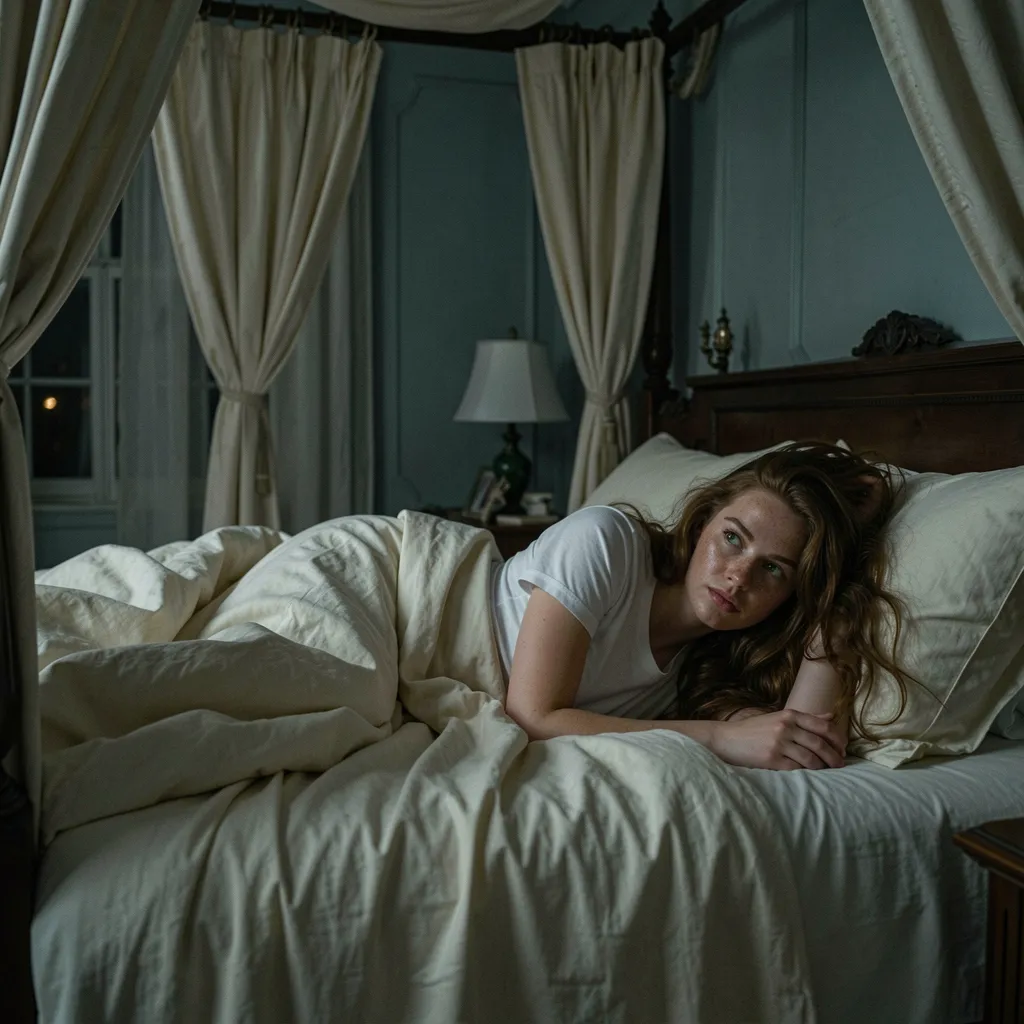
But the shirt smells like the car and the last coffee I had before we turned onto this street, and I’m not ready to be perceived.
So I do what I always do when I’m not ready.
I get up anyway, and I go looking for somewhere to hide.
I find the back stairs by accident, a narrow wooden flight tucked behind a door that looks like it should be a closet. It spits me out near the kitchen—I can smell coffee, real coffee, the kind that’s been brewed and not just left to sit in a pot—and then I see the door to the porch.
It’s glass, old glass with bubbles in it, and beyond it the morning is doing that thing where it’s not quite light yet but the dark has given up.
I push it open and step out onto the bricks.
The cold hits my feet first.
Bare feet, of course. I didn’t think about shoes. The bricks are wet with dew and freezing, and my toes curl against them like they’re trying to climb back into my ankles.
I close the door quietly behind me.
Then I reach into the pocket of my sleep shorts and pull out the crumpled pack of cigarettes I shoved in there before I left my room.
It’s not really a habit.
That’s what I tell myself, anyway.
A habit is something you do because your body asks for it. This is something I do because sometimes my brain won’t shut the fuck up, and standing outside for five minutes with something burning between my fingers gives it another problem to focus on.
New house.
New bedroom.
New almost-stepfather.
New almost—
Whatever Vivienne is.
I put a cigarette between my lips and flick the lighter.
Nothing.
I try again.
Nothing.
“Fuck.”
“Good morning.”
I nearly drop the cigarette.
Vivienne Ashford is sitting in one of two wooden chairs at the far end of the porch.
I didn’t see her.
That bothers me more than it should.
She’s curled into the chair with one leg crossed beneath the other, a ceramic mug balanced against her knee. She’s wearing a silk robe the color of oatmeal, her dark hair loose around her shoulders, her face completely bare.
And she looks—
I don’t know how to say this.
She looks like a photograph of a woman who doesn’t know she’s being photographed.
It’s the most unguarded I’ve seen her.
It’s also, annoyingly, the most beautiful.
“Jesus Christ.” I press a hand to my chest. “Do you just materialize in dark corners?”
“It’s my porch.”
“That doesn’t answer the question.”
Her eyes drop.
Not to my legs this time.
To the cigarette between my fingers.
“You smoke.”
“Sometimes.”
“That’s not an answer.”
“It was to the question you didn’t ask.”
Her mouth tightens.
There it is.
That tiny clench.
I saw it yesterday on the staircase, and something about being able to summon it this easily gives me an entirely unreasonable amount of satisfaction.
“Does this place always make this much noise?” I ask, trying the lighter again.
Nothing.
“The house?”
“No, Vivi, the local marching band.”
Her eyes lift to mine.
“The house is two hundred years old.”
“So, haunted.”
“Every house like this is haunted.” She takes a sip of coffee. “It’s just a question of by what.”
I stop fighting with the lighter.
“That’s deeply unsettling.”
“It’s six in the morning.”
“Five forty-three.”
“That’s worse.”
I walk toward her, each freezing brick its own small act of stupidity, and that’s when I notice the second cup sitting on the wide arm of the empty chair beside her.
Marine blue ceramic.
Steam still curling from the top.
I look at it.
Then at her.
Then back at it.
“Is that for me?”
“It was.”
I stop. “Was?”
“I’ve reconsidered.”
I sit down and take it anyway.
“Too late.”
Her eyes narrow.
I wrap both hands around the mug. The warmth goes through my palms and up my wrists, and for a second I don’t say anything because I’m too busy being surprised.
It’s good coffee.
Dark and bitter and exactly strong enough that I can feel it starting to work.
“Were you expecting me?” I ask.
“No.”
“You just habitually make coffee for imaginary people?”
“I heard you on the stairs.”
“So you made me coffee.”
“I poured coffee that already existed into a second cup.”
“For me.”
“Don’t make it significant.”
I look at her over the rim.
“Wouldn’t dream of it.”
She looks back out over the lawn.
I smile into the coffee.
For a while, neither of us says anything.
The sky is starting to go grey at the edges, the way it does before it commits to being morning, and somewhere beyond the lawn a bird is trying out one note over and over like it’s not sure it remembers the rest of the song.
I watch Vivi’s hands.
She has good hands.
Long fingers. Dark manicure. A thin gold ring on her index finger that she keeps turning without seeming to notice she’s doing it.
I realize I’m staring and look away.
“You didn’t have to carry my box,” I say.
“I know.”
“So why did you?”
She doesn’t answer right away. She takes another drink, eyes somewhere out on the dark lawn.
“Because you looked like you were about to do it yourself,” she says finally. “And it was heavier than it looked.”
“That’s not an answer.”
“It’s the answer you’re getting.”
I laugh.
I can’t help it. It comes out before I can stop it, and it’s not a polite laugh, it’s a real one.
Vivi’s head turns toward me like I’ve done something unexpected.
“What?”
“Nothing. You’re just—” I gesture at her with my cup. “You’re very committed to the whole ice-queen thing. It’s almost impressive.”
“I’m not an ice queen.”
“You told me last night you’d have the movers re-sort my boxes because they put a kitchen box in the library.”
“They did put a kitchen box in the library.”
“That’s my point. Normal people would just move the box. You’re going to make a whole project of it. You’re going to make a list.”
She’s quiet for a second.
Then, dryly:
“I already made a list.”
And there it is again.
That flicker. That crack in the marble.
She’s funny.
She doesn’t want anyone to know she’s funny, but she is, and I’m starting to think the ice-queen thing is less a personality and more a costume she puts on every morning the way other people put on mascara.
“So what’s on the list?”
“Coffee. Breakfast. What time you’re leaving for campus.”
“Why do you care what time I’m leaving?”
“Because you don’t have a car.”
I look at her.
“How do you know I don’t have a car?”
“There’s no unfamiliar car in the drive.”
Of course.
“You’ve inventoried the driveway.”
“I live here.”
“You’ve inventoried the driveway.”
“I know which cars belong at my own house.”
I point at her with the dead lighter.
“That’s exactly the kind of thing an ice queen would say.”
“That’s exactly the kind of thing a person with eyes would say.”
I grin.
Her gaze drops again.
Cigarette.
Lighter.
Back to my face.
“You’re going to put that out before my father sees you.”
“It’s not lit.”
“You know what I mean.”
I turn the cigarette between my fingers.
“Does Alexander Ashford disapprove of smoking?”
“Probably.”
“You don’t know?”
“No.”
“Then why do I have to hide it from him?”
“You don’t.”
She says it simply.
Then she looks at me.
“But you clearly don’t want your mother to see you doing it.”
My smile disappears.
Not dramatically.
Just enough.
Vivi sees it.
Of course she fucking sees it.
“What makes you think that?”
“You closed the door quietly.”
I look toward the glass door.
“I was trying not to wake anyone.”
“You were already awake.”
“Other people exist.”
“You put the cigarette in your mouth before you checked whether anyone was out here, but you checked the kitchen before you opened the door.”
I stare at her.
She takes another sip of coffee.
“You do this to everyone?”
“Do what?”
“Notice everything they do and then make it weird.”
“I didn’t make it weird.”
“You made it weird.”
“You asked.”
“I absolutely did not.”
For the first time, the corner of her mouth moves.
Barely.
But I catch it.
“Whatever,” I mutter.
I shove the unlit cigarette back into the pack.
Vivi doesn’t say anything else about it.
And somehow that’s worse.
The porch door opens behind us.
“There you two are!”
My mother’s voice comes spilling into the cold—bright, warm, unmistakably Cate—and the whole temperature of the morning changes.
She’s standing in the doorway in a pink silk robe, her hair already blown out, her face already made up even though it’s not even six. She has tea in one hand and an expression of absolute delight on her face.
I know that look.
I’ve known that look my whole life.
It’s the look she gets when something is going exactly the way she wanted it to and she’s trying very hard not to gloat.
“I was worried you’d both slept through breakfast. Alexander’s making eggs.”
“It’s not breakfast yet,” Vivi says, at the exact same time I say:
“It’s still last night, technically.”
We look at each other.
Cate’s delight somehow increases.
“You two.” Her voice is so fond it makes my teeth ache. “Look at you, already finishing each other’s sentences.”
“We’re not—” I start.
“We’re not,” Vivi says.
“Of course not.” Cate beams. “Come in before you freeze. Charlie, put some shoes on, for God’s sake.”
She disappears inside.
The door swings shut.
I look at Vivi.
Vivi looks at me.
“Your mother,” she says, “is a lot.”
“You have no idea.”
“I have some idea. She’s been here four days.”
She stands, gathers her robe at the collar, and picks up her coffee.
I glance toward the cigarette pack still in my hand.
Then at her.
“You’re not going to tell her?”
Vivi pauses.
“You’re twenty-one.”
“That’s not what I asked.”
“No.” She reaches for the door. “I’m not going to tell her.”
Something about that lands strangely.
Before I can decide why, she opens the door.
“And Charlie.”
“Yeah?”
“The lilies.”
She’s looking at the glass instead of me, at our warped reflections caught together in the old pane.
“I noticed them too. The first day. I just didn’t say anything.”
Then she’s gone.
I’m alone on the porch with my cooling coffee, an unlit cigarette, and the bird that’s finally remembered the rest of its song.
Breakfast happens in the kitchen, which is the kind of kitchen that makes you want to be a different person—a person who cooks, a person who has a favorite pan, a person who knows where the good knives live.
It’s all white marble and dark wood and a stove that looks like it could heat a small village, and Alexander Ashford is standing at that stove in shirtsleeves with a spatula in his hand.
He turns when I come in and gives me a smile that’s so genuinely pleased to see me that I almost feel bad for all the things I said about this wedding in the car on the way up.
Almost.
“Charlotte,” he says. “Good morning. Sleep well?”
“Like a rock,” I lie.
He slides eggs onto a plate—real eggs, from actual chickens somewhere, with chives on top—and hands it to me.
“Cate tells me you’re a writer.”
“She tells everyone that.” I take the plate. “It’s aspirational.”
“She also tells me you’re funny. I’m inclined to believe"
“Don’t encourage her,” Vivi says, sliding into a chair at the long wooden table. “She’ll never stop.”
“Noted.”
Alexander turns back to the stove, and Cate drifts in from the hallway with her tea, and just like that we’re a family at breakfast.
Four people around a table, passing toast, arguing about whether the eggs need salt—which they don’t, Alexander, they’re perfect—and the whole thing is so aggressively normal that I keep waiting for someone to knock on the door and tell me it’s a joke.
It isn’t.
This is my life now.
I live here.
I eat breakfast with Vivienne Ashford, who is currently cutting her toast into precise triangles and refusing to look at me, and her father, who keeps asking questions about my major like he actually cares about the answers, and my mother, who is glowing so hard she’s practically radioactive.
“So,” Cate says, halfway through her second cup. “Charlie, honey, how are you getting to campus?”
“I was thinking helicopter.”
Cate gives me a look.
“I don’t know. I’ll figure it out.”
“She doesn’t have a car,” Vivi says.
“I am sitting right here.”
“I know.”
Cate looks between us.
Then her entire face brightens.
Oh, no.
“Well, that’s perfect. Vivi can take you.”
Vivi stops cutting her toast.
I stop chewing.
“No,” we say together.
Cate looks delighted.
Again.
“I can walk,” I say.
“It’s four miles,” Vivi says.
“I like walking.”
“In those shoes?”
She glances under the table.
Then looks back at me.
“You’re not even wearing shoes.”
I look down.
Fuck.
I never went upstairs.
“I’ll find some.”
“Charlie.” Cate’s voice gets that edge—the one that means stop being difficult in front of the nice man who’s marrying me. “Just go with Vivi. It’s practical.”
Practical.
Right.
Because nothing about sitting in a car with Vivienne Ashford for four miles, with her hands on the wheel and her jaw set and her silence filling the space between us like water, sounds particularly practical.
My mother is looking at me.
Alexander is very carefully looking at his eggs.
Vivi is looking at her toast.
I know when I’ve lost.
“Fine,” I say. “But I’m picking the music.”
“No,” Vivi says.
“You don’t even know what I’d pick.”
“I know enough.”
“That’s not—”
“It’s my car.”
She finally looks up at me, and there’s something in her eyes that might be a challenge and might be something else entirely.
“My car, my music.”
“So it’s going to be four miles of piano sonatas.”
“It’s going to be four miles of whatever I feel like.” She stands, takes her plate to the sink, and glances back over her shoulder. “You can walk if you don’t like it.”
She leaves the kitchen.
Alexander is very carefully not smiling.
Cate is very carefully not saying anything, which for Cate is a Herculean effort.
I sit at the table with my eggs going cold and my mother’s joy radiating off her like heat, and I think, not for the first time, that I have made a terrible mistake moving here.
Then I think about the porch.
The coffee.
The way Vivi turned the ring on her finger without noticing.
The way she noticed me checking the kitchen before I slipped outside.
The way she said I’m not going to tell her like keeping my secret was the most ordinary thing in the world.
Maybe not that terrible.
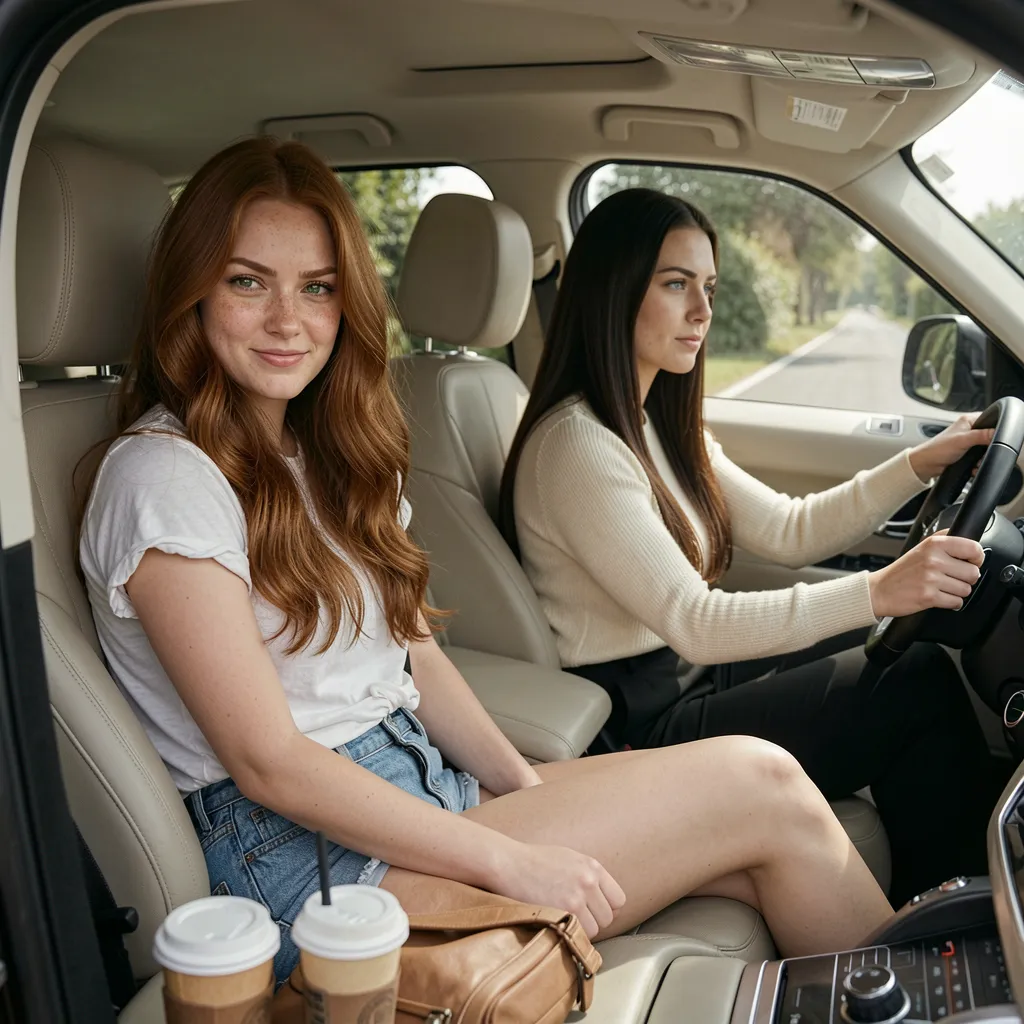
Vivi’s car is a black Range Rover that smells like leather and cedar and something faintly floral I can’t place, and it is aggressively clean. Not clean like someone wiped it down last week. Clean like it has never known a crumb, a receipt, a single stray hair.
I climb in with my bag and my cold coffee and my bare feet shoved into the first pair of flats I could find, and I feel like a stain the moment the door closes.
Vivi doesn’t say anything. She adjusts the mirror, pulls out of the drive, and drives.
For the first mile I wait for the piano sonatas.
Instead she puts on a playlist I don’t recognize—something low and instrumental, cello and a woman’s voice in a language I don’t speak—and I decide not to comment because commenting would mean admitting I noticed.
“You don’t have to do this,” I say finally.
“I know.”
“I mean it.”
“I heard you the first time.”
She takes the turn onto the main road and the estate disappears behind us, that whole enormous house swallowed by trees.
“You could’ve just let me walk,” I say.
“Four miles. On the road. With no sidewalk.” She glances at me. “You’d have been hit by a landscaping truck within the hour.”
“That feels specific.”
“There are three landscapers on this road before eight.”
“You’ve inventoried the landscapers.”
“I’ve lived here my whole life.”
I look out the window so she can’t see my face do the thing it’s doing.
A few minutes later we turn onto a busier street lined with little shops and restaurants, most of them built into old brick storefronts that look like they’ve been here longer than the students walking past them.
There’s already a line outside one of them.
Green awning. Narrow windows. A little painted rooster on the glass.
“What’s that?”
Vivi glances toward it.
“The Roost.”
“That sounds like somewhere chickens should be serving me breakfast.”
“It’s coffee.”
“Is it good?”
“It’s the only coffee near campus worth paying for.”
I look at her.
“That’s a strong opinion.”
“It’s a correct opinion.”
Of course it is.
The campus comes up slow, then all at once—red brick, white columns, a lawn so green it looks painted. Students everywhere. Bikes chained to railings. A kid in a hoodie playing guitar badly outside the library.
It’s a movie set of a college, and apparently I’m supposed to know how to belong in it.
Vivi pulls into a lot behind a building with HAWTHORNE HALL carved over the door.
“That’s your building,” she says.
“I know.”
“Your class is on the second floor. Room two-oh-four.”
I turn to look at her.
“How do you know my schedule?”
“Your mother texted it to my father. He forwarded it to me.” She puts the car in park. “In case you got lost.”
“I’m not going to get lost.”
“You couldn’t find shoes this morning.”
“That’s—”
I stop.
Because she’s not wrong.
She looks at me, deadpan, and for half a second there’s that flicker again—that tiny crack in the marble—and then it’s gone and she’s looking through the windshield.
“Do you want me to pick you up?” she asks.
“No.”
“What time does your last class end?”
“I said no.”
“I heard you.”
“Vivi.”
She holds my gaze for a beat too long.
“Fine,” she says.
It doesn’t sound like fine.
It sounds like she’s filing it away.
I get out.
I don’t look back.
But I feel her watching me cross the lot. I know it the way you know someone’s eyes are on the back of your neck, and I walk a little straighter than I need to because of it.
Hawthorne Hall smells like old paper and floor wax and the specific misery of a nine a.m. lecture.
I find two-oh-four, slide into a seat in the back row, and I’m pulling out my laptop when someone drops into the chair beside me hard enough to rattle the desk.
“Charlotte Whitmore.”
I look up.
Priya Raman.
Dark curls, gold hoops, a mouth that has never once stayed shut when it should have.
We met freshman year at a party where we both hated everyone and ended up on a fire escape talking until three in the morning. Different majors and increasingly incompatible schedules did the rest, but Priya is one of those people I can go six months without seeing and immediately pick back up with.
“Priya.”
“You disappeared.”
“I did not disappear.”
“You absolutely disappeared. I texted you twice this summer.”
“I answered.”
“You sent me a heart reaction. That’s not answering.”
“It communicates affection.”
“It communicates laziness.”
“Also true.”
She hits my arm.
“So where the hell have you been?”
“Moving.”
Her expression changes immediately.
“Oh, God.”
“What?”
“Your mom got married again?”
“Engaged.”
“Same difference.”
“Not technically.”
“Where’s the lucky guy?”
“Ten minutes from here.”
Priya’s eyebrows go up.
“He lives on the hill?”
“He lives on the hill.”
“Which house?”
“I don’t know. A big one. With a porch.”
“Charlotte.” She leans in. “There are like four houses on the hill and they all have names. Which one?”
“Ashford,” I say.
And watch her face change.
Priya goes very still.
“Ashford.”
“Yeah.”
“As in Ashford House.”
“I guess.”
“As in the Ashfords.”
“That’s generally how names work.”
“As in Vivienne Ashford.”
I don’t answer.
The professor walks in and starts writing on the board, and Priya slowly sits back in her chair with the expression of someone who has just been handed a gift.
“Okay,” she whispers. “We’re getting lunch.”
“I have class.”
“After.”
“Priya—”
“After.”
Lunch is a café off the quad with too many plants and a chalkboard menu, and Priya orders for both of us without asking because that’s Priya.
The second we sit down, she folds her arms on the table.
“Start at the beginning.”
“There’s no beginning. My mom’s marrying her dad. That’s it.”
“That’s it?” Priya stares at me. “Charlie, you just told me you’re living in Ashford House. With Vivienne Ashford.”
“Temporarily.”
“Your mother is marrying her father.”
“I’m aware.”
“You’re going to be—”
She pauses.
I see it coming.
I already hate it.
“—stepsisters.”
Something in my chest tightens.
“Don’t say that.”
Priya blinks.
“Why not? It’s true.”
“It’s not—we’re not—it’s just a word.”
“It’s a word that’s going to be on a wedding program in like three weeks.” She stirs her coffee. “Future stepsister. That’s wild.”
I pick at the edge of my sandwich.
I don’t know why it bothers me.
It’s accurate. It’s what’s happening. But hearing it out loud, in Priya’s mouth, in the daylight, makes it sound like something I agreed to instead of something that happened to me.
“Anyway,” I say. “What’s the deal with her?”
“With who?”
I give her a look.
She smiles.
“You made a face when I said her name.”
“I made a face?”
“You made a face.”
Priya leans back.
“Vivienne Ashford is a legend here.”
I snort.
“I’m serious. Like, actual legend. She’s the one they put on the brochures. Student government, debate, the finance thing—she runs the investment club and they actually make money, which is insane for a college club. She has some fellowship with the econ department. Every professor wants her. And she’s—”
Priya waves a hand.
“She’s her. You know?”
“No.”
“She walks into a room and everyone just sort of… adjusts.”
“Adjusts.”
“Yeah. Like the volume goes down.”
I think about the porch.
The coffee.
The bare face and loose hair.
The way she turned that ring around her finger without seeming to know she was doing it.
The tiny movement at the corner of her mouth when she’s trying not to laugh.
“She’s not that scary,” I say.
Priya stops stirring.
“What?”
“Nothing. Just—she’s not. She’s just a person.”
“A person who has never once spoken to me in three years, even though we’ve been in two classes together.”
“That’s not scary. That’s just—”
I shrug.
“Standoffish.”
Priya looks at me for a long moment.
“You’re defending her.”
“I’m not defending her. I’m correcting you.”
“Same thing.”
“It’s not.”
“It’s a little bit the same thing.”
She grins.
“You’ve been living with her for two days and you already have a take on Vivienne Ashford.”
I take a bite of my sandwich so I don’t have to answer.
After lunch I have a two-hour gap before my seminar.
I walk the quad with no particular destination, cut down one of the side streets, and somehow end up standing underneath a green awning.
The Roost.
I stop.
I stare at the painted rooster on the window.
I don’t know why I stop.
Except that’s not true.
It’s the only coffee near campus worth paying for.
I have reasons.
I need coffee anyway.
I’m scouting the neighborhood.
It looked good when we drove past.
It’s nearby.
It’s not particularly nearby.
I go in.
The coffee is, annoyingly, excellent.
Of course it is.
I take it to a bench at the edge of the quad and I’m halfway through it, half-reading something for class, when I look up.
And there she is.
Vivi.
Across the quad, outside the doors of the big stone building that houses the economics department.
Except she’s not the person I ate breakfast with.
She’s something else.
She’s in a grey blazer and dark trousers, her hair sleek again, and she’s standing in a loose circle of people—two professors, judging by the way they’re dressed, and a cluster of students leaning in.
Vivi is talking.
Everyone else is listening.
Not politely.
Actually listening.
One of the professors says something. Vivi answers. The professor nods like she’s the one who’s supposed to be impressed.
She’s different here.
She takes up more space.
Her hands move when she talks, which they don’t at home. She smiles—a real one, quick and sharp—and one of the students laughs like it’s the best thing he’s heard all day.
I watch her for longer than I mean to.
Then a woman comes out of the building and walks straight toward her.
She’s shorter than Vivi by several inches, dark-skinned, with a cloud of curls she keeps pushing out of her face and a leather jacket thrown over one shoulder despite the cold.
She’s beautiful.
Not in a polished, untouchable way.
In a warm way.
The kind of face that looks like it’s always one second away from smiling.
She walks into Vivi’s circle like she belongs there.
Which she clearly does.
Then she puts a hand on Vivi’s arm.
Just like that.
Easy.
Familiar.
Her thumb moves once.
Vivi doesn’t flinch.
Doesn’t step away.
If anything, something in her posture loosens.
Barely.
Then she says something that makes the woman laugh.
I realize I’ve stopped drinking my coffee.
I realize I’m staring.
I look down at my cup like it’s suddenly the most interesting object on campus.
It’s not jealousy.
It’s not.
I have no claim on Vivienne Ashford.
I’ve known her for one day.
She’s my future stepsister, which is a phrase I’ve decided I hate, and she is not mine to wonder about.
But the question is already there.
I can’t get rid of it.
Who is that?
And underneath it, quieter:
Worse.
Does she date women?
I press my thumb into the cardboard seam of the cup.
It shouldn’t matter.
That’s the part I keep coming back to.
It shouldn’t matter at all.
But across the quad, the woman says something else, and Vivi turns toward her fully this time, listening in that particular way she does when she’s actually interested.
The woman hooks her arm through Vivi’s.
Vivi lets her.
I take another drink of coffee.
Cold now.
I tell myself I’m only looking because Vivi looks different here.
Because Priya said she was some kind of campus legend.
Because I’m curious.
Curiosity is normal.
Curiosity doesn’t mean anything.
Then Vivi glances across the quad.
Not at me.
Near me.
Close enough that my stomach does something stupid anyway.
I look down immediately.
By the time I look back, the two of them are walking away toward the library, the woman still looped through Vivi’s arm.
Vivi’s head is bent toward hers.
I watch them go.
Then I stand up and head to my seminar like none of it mattered.
Which would be more convincing if I hadn’t spent the entire walk wondering whether Vivienne Ashford dates women.
My seminar ends at four-forty, and I stand outside the building with my phone in my hand.
Vivi didn’t text.
I didn’t ask her to.
I told her no this morning, and I meant it, and I’m not going to be the person who says no and then calls anyway.
So I figure out another way home.
Which turns out to be a bus, followed by a twenty-minute walk from the stop, followed by the long stretch of road with no sidewalk.
I survive despite the landscaping trucks.
By the time I walk through the kitchen door, I’m cold and tired and my feet hurt and I want a shower and a very large glass of wine.
Vivi is at the table.
Her laptop is open.
She looks up when I come in.
“Where were you?”
“The bus.”
“The bus.”
“Yeah. It exists. I found it.”
She closes the laptop.
Slowly.
“I waited for you.”
I stop.
“What?”
“I waited in the lot behind Hawthorne. For fifteen minutes.”
“I told you not to.”
“You told me not to pick you up.”
“Yes. That’s generally what no means.”
“I drove you there. Obviously I was driving you home.”
“Obviously?”
“Yes. Obviously.”
I set my bag down.
I’m aware that I’m about to be unreasonable, and I can’t stop it.
“It’s not obvious. Nothing about this is obvious. You don’t get to decide you’re my ride for the rest of my life because you drove me one time.”
“It’s not for the rest of your life. It’s for today.”
“You didn’t ask.”
“I did ask. This morning. You said no.”
“So then why—”
“Because you said no to me picking you up, which is a different thing from you having a way home, and I assumed—”
She stops herself.
Presses her mouth flat.
“I assumed wrong.”
“You assumed I’d let you take care of it.”
“Yes.”
“I don’t let people take care of things for me.”
“I’m aware.”
“Then why would you—”
“Because it’s not a favor, Charlie. It’s logistics.”
She stands.
“You’re here. I’m here. We’re going to the same place. It’s not a gift you have to repay. It’s just—”
She gestures at the room, the house, all of it.
“—the obvious arrangement.”
“I hate the obvious arrangement.”
“I’ve noticed.”
We stare at each other.
Somewhere in the house, a door closes.
Cate’s laugh drifts in from the living room, followed by Alexander’s lower voice, the two of them somewhere being happy and oblivious.
“You could’ve just texted me,” I say, quieter.
“You could’ve texted me.”
“I didn’t have your number.”
Vivi holds my gaze.
“Then maybe that’s the problem.”
She picks up her laptop and walks out of the kitchen.
That night I finally unpack.
Not because I’ve decided to stay.
Just because I can’t find anything and I’m tired of living out of a suitcase like a person passing through.
I open the boxes one by one and put things where they go—books on the shelf by the window, clothes in the closet that’s bigger than my old bedroom, my grandmother’s little brass alarm clock on the nightstand.
By the time I’m done, the room looks less like a storage unit and more like somewhere a person lives.
I stand back and look at it.
Something uncomfortable shifts beneath my ribs.
I decide not to investigate.
Then there’s a knock.
“Yeah.”
Vivi pushes the door open.
She’s changed into a sweater and jeans, her hair down again, her face bare.
She’s holding something.
“Here.”
She holds it out.
A lighter.
Small. Matte black. Silver at the hinge.
I look at it.
Then at her.
“You’re giving me a lighter.”
“Yours doesn’t work.”
“I know mine doesn’t work. That’s the point of—”
I stop.
“You noticed my lighter didn’t work?”
“It was hard not to. You tried it four times.”
“You were counting?”
“I was observing.”
She sets the lighter on my nightstand beside the brass alarm clock and steps back.
“It’s from the kitchen drawer. It works. I checked.”
“You checked.”
“I’m not going to give you a broken lighter.”
I pick it up.
It’s heavier than mine. Real metal. The kind of thing that feels like it might actually last.
I turn it over between my fingers.
“You know you’re encouraging a bad habit.”
“I’m not encouraging anything. I just don’t want to hear you swearing at a lighter before the sun’s up.”
“That’s very generous of you.”
“It’s not generous. It’s self-interest.”
“Right.”
Her eyes flick toward the desk.
The pack of cigarettes is half-hidden underneath a book.
“When do you smoke?”
“When I feel like it.”
She looks at me for a second longer than the answer deserves.
I can practically see the decision happening behind her eyes.
Ask.
Don’t ask.
Push.
Don’t push.
She lets it go.
“We’re leaving at eight tomorrow.”
“I said I don’t need a ride.”
“Eight.”
“Vivi—”
“Eight.”
She’s already turning toward the door.
“Goodnight, Charlie.”
The door clicks shut behind her.
I stand there with the lighter in my hand.
I should give it back.
That’s the reasonable thing.
I don’t need her lighter. I don’t need her rides or her coffee or her noticing things about me. I can buy my own lighter. I can figure out my own way to campus. I can keep my own life in my own hands.
I open the nightstand drawer.
The photograph from Vermont is inside—me at sixteen on my grandmother’s porch, sunburned, one hand wrapped around Deacon’s collar.
I look at the lighter.
I should give it back.
I put it beside the photograph instead.
Then I close the drawer.